
The first shot drops and the crowd doesn’t wait to react. It’s immediate. Sharp. Familiar. Caitlin Clark doesn’t test the waters — she steps into rhythm like it never left. A step-back from deep follows, the kind that bends defenses and shifts attention in seconds. For a moment, the nine-month absence feels like a rumor that never quite happened.
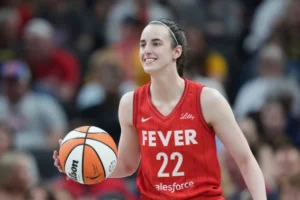
Indiana Fever don’t just play better — they move differently with her out there. The ball travels faster. The spacing stretches wider. There’s a pull to everything, a gravity that forces defenders to make decisions earlier than they want to. It’s not loud dominance. It’s controlled disruption.
Across the court, New York Liberty feel that shift in real time. This isn’t about preseason execution or missing pieces — both teams have those. It’s about tempo being dictated, not shared. The 109–91 scoreline reflects it, but it doesn’t fully capture how quickly the game tilts when Clark is involved.
Here’s where it sharpens: this version of Caitlin Clark is more composed than the one before the injury. Not slower — more precise. She picks moments instead of forcing them. She moves like someone who understands timing, not just speed. That’s a different problem for defenses, and a bigger one.
The misses late in her stint don’t change that. If anything, they underline it. She’s getting clean looks. She’s arriving on balance. The rhythm is there — and rhythm, for a player like this, is everything. Once it locks in, it doesn’t loosen easily.
She walks off without forcing a statement, but the game already made one. The pace shifts when she’s out there, and once you see it, you don’t unsee it.