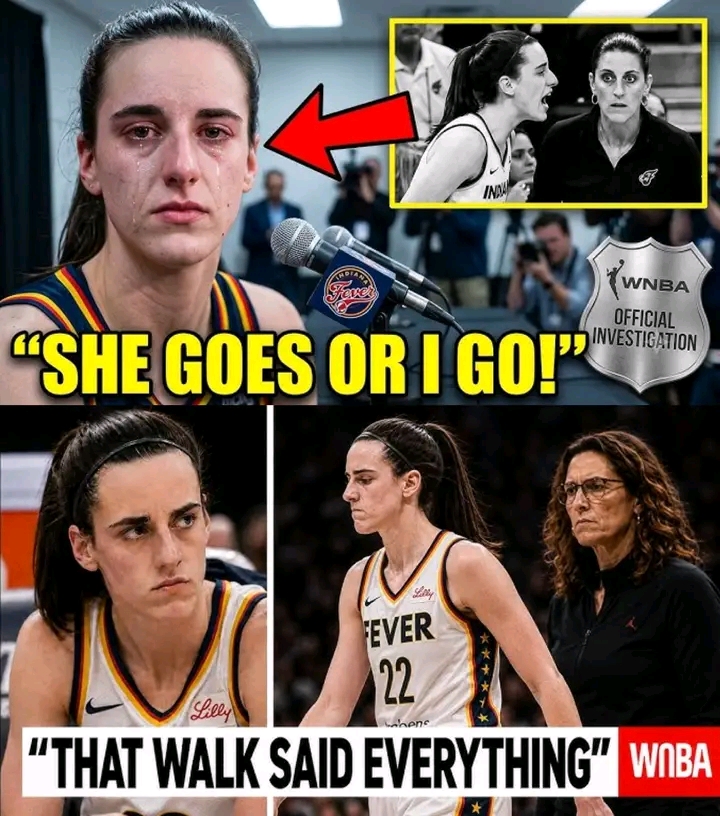
The situation surrounding the Indiana Fever has become one of the most talked-about storylines in women’s basketball, with growing criticism aimed at the organization’s leadership and overall direction. As speculation continues to circulate about internal tensions, many observers believe the franchise has struggled to maximize the opportunities that come with having one of the sport’s brightest young stars. Whether those concerns are justified or not, the ongoing debate has placed the team’s decision-makers under intense scrutiny from fans and analysts alike.
Caitlin Clark arrived in the WNBA carrying enormous expectations after one of the most celebrated college basketball careers in history. Her popularity, elite playmaking ability, and ability to attract new audiences have made her one of the league’s biggest attractions almost immediately. Because of that, many supporters expected the Indiana Fever to build an environment that would fully embrace her talents while developing the roster around her strengths. Instead, every coaching decision, lineup adjustment, and game strategy has been dissected, fueling conversations about whether the organization has established the best possible foundation for its franchise player.
The criticism directed at the Fever largely stems from the belief that organizations with transformational athletes should prioritize long-term development and stability above everything else. Fans have argued that when a player has the potential to redefine a franchise both competitively and commercially, every major decision should be made with the goal of maximizing that player’s impact. Whenever results fail to meet expectations, however, questions naturally arise about leadership, communication, and the overall vision guiding the team. Those discussions have become increasingly loud as the season has progressed.
At the center of the conversation is the perception that Indiana has not consistently capitalized on the momentum generated by Clark’s arrival. Supporters point to moments where coaching decisions, player rotations, or overall team execution have become flashpoints for debate, leading some to wonder whether the organization is fully aligned behind a unified strategy. While every rebuilding team experiences growing pains, the intense spotlight surrounding Clark has magnified every setback, making even routine decisions appear far more significant than they otherwise might.
Social media has amplified these discussions, with fans passionately expressing opinions about the direction of the franchise and the role of the coaching staff. Every game seems to generate fresh debates over substitutions, offensive schemes, defensive adjustments, and player usage. This constant scrutiny has created an environment where speculation often spreads faster than verified information, making it increasingly difficult to separate emotional reactions from objective analysis. As a result, narratives about internal conflict have continued to gain traction despite limited confirmed details.
Much of the frustration expressed by supporters reflects the high expectations placed on both Clark and the Indiana Fever. Her arrival was viewed as the beginning of a new era, one capable of transforming the franchise into a consistent championship contender while elevating the league’s popularity. Because of those expectations, every disappointing performance or controversial decision is viewed through a much larger lens, adding pressure on coaches, executives, and players to deliver immediate progress despite the natural challenges of building a successful team.
It is important, however, to distinguish between passionate fan speculation and confirmed facts. Headlines suggesting ultimatums, dramatic confrontations, or demands for coaching changes often circulate widely online without credible evidence supporting those claims. While criticism of strategy and leadership is a normal part of professional sports, extraordinary claims require reliable reporting before they should be accepted as true. The conversation surrounding the Fever is undoubtedly intense, but separating verified developments from speculation remains essential.
Regardless of differing opinions, one fact is clear: Caitlin Clark remains central to the Indiana Fever’s future and one of the WNBA’s most influential players. How the franchise develops its roster, manages expectations, and responds to the ongoing public scrutiny will shape its trajectory in the seasons ahead. Fans will continue watching closely, hoping the organization can transform the current controversy into an opportunity for growth and ultimately build a team capable of competing at the highest level.