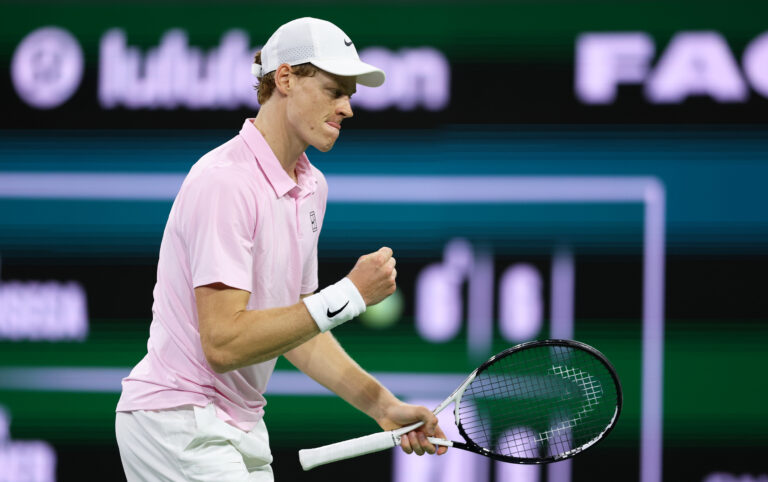
The tennis world was treated to another compelling chapter in one of the sport’s most exciting emerging rivalries as Jannik Sinner secured a statement victory over Carlos Alcaraz at the prestigious Monte Carlo Masters. The match, played on the iconic clay courts of Monaco, showcased not only the evolving brilliance of both young stars but also drew the attention of seasoned champions, including Andy Murray, who was quick to share his thoughts on the encounter.

Sinner’s triumph over Alcaraz did not come easily. The Italian star demonstrated remarkable composure, blending powerful baseline hitting with improved tactical awareness. Facing an opponent known for his explosive speed and creativity, Sinner managed to dictate key moments, particularly during the crucial stages of the match. His ability to remain calm under pressure ultimately proved decisive in securing the win.
Alcaraz, widely regarded as one of the most electrifying talents in modern tennis, showed flashes of his brilliance throughout the contest. The Spaniard’s signature drop shots, aggressive net play, and relentless energy kept fans on edge. However, inconsistencies at critical junctures allowed Sinner to capitalize and gain the upper hand, highlighting the fine margins that often separate victory from defeat at the highest level.
Following the match, Murray offered a measured and insightful response, reflecting both his experience and his appreciation for the sport’s next generation. The three-time Grand Slam champion praised Sinner’s growth, noting how the Italian has matured into a more complete player capable of challenging anyone on the tour. Murray emphasized Sinner’s improved movement on clay, an area that had previously been considered a relative weakness.
Murray also acknowledged Alcaraz’s performance, pointing out that defeats like this are a natural part of development for young players. Drawing from his own career, he suggested that such high-stakes losses often serve as valuable learning opportunities. Murray’s perspective carried weight, given his extensive experience competing against tennis legends and navigating the pressures of elite competition.
The victory further cements Sinner’s status as a serious contender on clay, a surface traditionally dominated by specialists. His success in Monte Carlo signals a shift in perception, as he continues to expand his versatility and adaptability across different playing conditions. For many observers, this win represents another step toward potential Grand Slam success.
Meanwhile, Alcaraz’s defeat is unlikely to diminish his standing in the game. If anything, it reinforces the competitiveness of the current ATP landscape, where multiple young stars are pushing each other to new heights. The rivalry between Sinner and Alcaraz, already rich with memorable encounters, appears set to define the sport for years to come.
Murray’s reaction also underscores the importance of veteran voices in tennis. As someone who has witnessed and contributed to several generational transitions, his analysis provides valuable context for fans and players alike. His comments serve as a reminder that the sport is in a period of exciting change, with a new wave of talent rising to prominence.
Looking ahead, both Sinner and Alcaraz will undoubtedly use this match as motivation. For Sinner, it is proof of his growing confidence and capability. For Alcaraz, it is a challenge to refine his game and come back stronger. Their journeys will likely intersect many more times on the biggest stages.
In the end, Murray’s response captures the essence of the moment: respect for excellence, recognition of growth, and anticipation for what lies ahead. As the tennis world continues to evolve, matches like this—and the insights they inspire—will remain central to the sport’s enduring appeal.