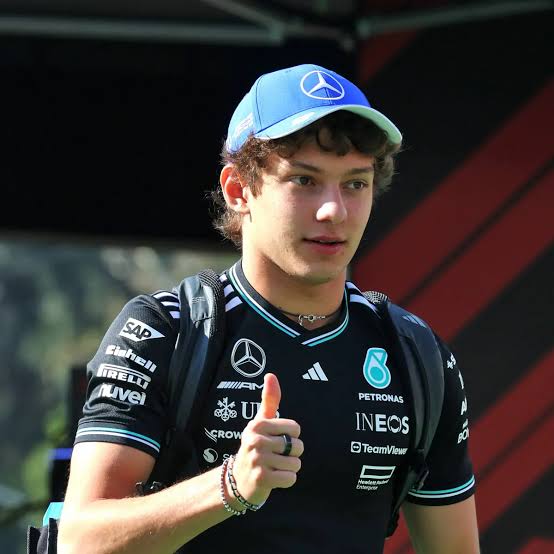
Formula 1’s 2026 season has reached a genuinely fascinating juncture as the paddock works through the Dutch Grand Prix weekend at Zandvoort, with championship leader Kimi Antonelli continuing to hold a commanding advantage at the top of the standings despite a bruising Saturday that saw him lose valuable track position, while at the other end of the competitive spectrum, Aston Martin’s much-hyped Honda-powered project continues to generate almost as many headlines for its off-track turbulence as for anything happening on the circuit itself. Between Antonelli’s ongoing march towards what could be a maiden World Championship in only his second full season, and the increasingly messy backdrop at Silverstone surrounding the Aston Martin leadership structure, there’s plenty for followers of the sport to digest as the campaign heads into its decisive closing stretch.
Starting with the title picture, Antonelli’s season has been every bit as remarkable as the hype that surrounded his rapid ascent through the junior categories suggested it might be, even accounting for the inevitable rookie errors and setbacks that come with adapting to Formula 1’s unforgiving learning curve. The young Italian arrived at Zandvoort holding a genuine points advantage over Mercedes teammate George Russell, and while Saturday didn’t go entirely to plan, an off during the opening segment of Sprint Qualifying cost his car a reported twenty-five points of downforce due to floor damage, dropping him down the grid and handing Russell the initiative for both the Sprint and the main Grand Prix qualifying that followed. Antonelli responded with real character, though, carving his way from fifth on the Sprint grid up to fourth by the chequered flag, including a bold and well-executed overtake around the outside of Oscar Piastri at the very first corner, and closing right onto the back of Lando Norris’s McLaren in the closing laps in a pursuit of the final podium position that ultimately fell just short. Even with that Saturday setback, Antonelli extended his overall championship advantage by a further three points, moving to somewhere in the region of fifty-three points clear of Russell at the top of the standings, a lead that speaks to the remarkable consistency he’s shown across a season that’s included five pole positions and genuine head-to-head battles with the very best drivers on the current grid.
It’s worth pausing to appreciate just how quickly Antonelli’s stock has risen within the sport, given that barely eighteen months ago he was still working his way through Formula 2 having bypassed Formula 3 entirely on his way up the junior ladder, an almost unprecedented career trajectory that had Mercedes team principal Toto Wolff talking him up as a generational talent well before he’d turned a wheel in a Grand Prix car in anger. That confidence has been vindicated by results, even through some inevitable rookie growing pains along the way, including a difficult weekend at the British Grand Prix earlier in the season where late-race car damage and a track-limits penalty cost him a result his pace had otherwise fully merited, temporarily shrinking his championship cushion to as little as twenty-five points. He’s bounced back from those setbacks with the kind of maturity that belies his age, and with Zandvoort potentially marking the final Dutch Grand Prix on the calendar for the foreseeable future, there was a certain symbolism to Antonelli continuing to build his title credentials at a circuit that’s become so synonymous with Max Verstappen’s own extraordinary rise, even as the Dutchman himself endured a relatively modest Saturday in front of his own home crowd.
Turning to the situation at Aston Martin, it’s fair to say the picture there stands in stark contrast to the momentum Mercedes and Antonelli have generated this season. The Silverstone-based squad arrived at Zandvoort having taken delivery of Honda’s updated power unit ahead of the weekend, following its initial track debut during a filming day in Hungary the previous month, and the early signs from that first proper race-weekend outing have been thoroughly underwhelming. Both Aston Martin drivers failed to progress beyond the opening segment of both Sprint Qualifying and the main Grand Prix qualifying session at Zandvoort, a result that led Lance Stroll to offer a blunt and fairly damning assessment of where things currently stand with the new Honda unit, describing the drivability of the power unit as simply not good and likening the experience to something of a lottery given the inconsistency of engine braking and a series of rejected downshifts that have plagued the car’s performance through corners. Fernando Alonso, for his part, echoed those frustrations after his own difficult Sprint Qualifying session, pointing specifically to power unit issues as a significant factor behind his struggles and stressing that there was relatively little the team could do purely from a trackside perspective to address problems that fundamentally need resolving back at the factory.
That kind of public criticism from two experienced, results-driven drivers speaks to genuine frustration building within the team as Aston Martin’s ambitious “super-team” project, built around the combined star power of Adrian Newey’s design genius and Honda’s return to Formula 1 as a full works engine partner, continues to fall well short of the lofty expectations set when the various pieces of this puzzle were first assembled. It’s a particularly uncomfortable position given the scale of investment Lawrence Stroll has poured into the operation over recent years, from a new state-of-the-art technology campus to the high-profile capture of Newey himself from Red Bull, all built around the promise that the 2026 regulation changes, bringing entirely new power unit rules with a much greater emphasis on electrical deployment and efficiency, would represent the perfect moment for Aston Martin to leapfrog the established order and establish itself as a genuine championship contender. Instead, the early evidence from a season now well past its midpoint suggests a team still very much finding its feet, with Honda’s power unit in particular identified as a significant drag on overall competitiveness, so much so that the FIA’s newly introduced Additional Development and Upgrade Opportunities system, designed specifically to give manufacturers found to be more than ten per cent off the pace additional development leeway, has already been applied in Honda’s case given just how far off the ultimate benchmark their unit has been judged to be.
Compounding those on-track struggles has been a persistent and increasingly awkward saga surrounding the future of Chief Strategy Officer Andy Cowell, one of the most respected engineering minds in the sport given his central role in Mercedes’ era of hybrid dominance between 2014 and 2020. Cowell’s Aston Martin journey has been a genuinely turbulent one since he first arrived at the team back in 2024 as Group Chief Executive Officer, a role that saw him initially praised for implementing sweeping structural changes as the team transitioned towards becoming a full Formula 1 works outfit ahead of the new regulations. That standing shifted considerably once Newey’s own position within the organisation expanded to include Team Principal duties from the start of this season, a reshuffle that saw Cowell moved into the more narrowly defined Chief Strategy Officer role, tasked primarily with overseeing the integration of Honda’s new power unit alongside fuel partner Aramco and lubricant partner Valvoline. While Aston Martin has consistently and publicly framed that shift as a natural evolution designed to play to both men’s individual strengths, persistent reporting throughout the year has painted a rather different picture behind the scenes, with various outlets suggesting a genuine and increasingly bitter philosophical clash between Cowell and Newey over the fundamental direction of the team’s 2026 project, with Cowell said to favour a greater focus on powertrains and operational processes while Newey has prioritised aerodynamics and chassis development.
The upshot of that reported tension has been a steady drumbeat of stories throughout the year suggesting Cowell’s Aston Martin tenure is drawing towards a close, with various reports over recent months pointing towards an expected departure date somewhere around the June period, coinciding roughly with the season’s summer break, only for those specific timelines to come and go without any formal confirmation of an exit. As recently as early July, BBC Formula 1 correspondent Andrew Benson reported that Cowell remained expected to leave the team before the conclusion of the 2026 campaign, even as Aston Martin themselves have continued to publicly reject the notion, insisting through official statements that Cowell remains fully committed to the project and that speculation regarding his future should be treated as exactly that: speculation, rather than confirmed fact. It’s a pattern that’s now played out on multiple separate occasions throughout the year, dating back to reports emerging as early as last November suggesting the team was preparing to part ways with Cowell entirely, each time met with official denials from Aston Martin even as the underlying rumours have persisted and, if anything, intensified as the season has progressed and results have continued to disappoint.
Whatever the truth of Cowell’s precise standing within the organisation, it’s difficult to escape the sense that Aston Martin’s wider off-track turbulence, spanning senior leadership changes, reported internal philosophical disagreements, and a procession of technical staff departures over recent years, has coincided with, and arguably contributed to, the kind of underwhelming on-track performance that’s left Fernando Alonso publicly venting his frustrations at various points throughout the campaign. Alonso, still searching for the championship-contending machinery that’s eluded him for the better part of two decades, has previously described the current generation of 2026 regulation cars in notably unflattering terms, and while he’s stopped short of publicly criticising Cowell or Newey by name in connection with the team’s internal structure, the growing frequency of pointed comments from both himself and Stroll regarding the Honda power unit’s shortcomings speaks to a driver pairing whose patience is clearly being tested as the season wears on without the step forward that was so widely promised heading into this new regulatory era.
Looking at where this leaves both storylines as the season continues to unfold, the contrast between Mercedes and Aston Martin’s respective trajectories in 2026 could scarcely be starker. Antonelli’s continued dominance at the top of the drivers’ standings, built on a foundation of genuine speed allied with an increasingly mature approach to managing the inevitable setbacks that come with a rookie title campaign, has firmly established Mercedes as the team to beat this season, even with Russell continuing to apply meaningful pressure from within the same garage. Aston Martin, by contrast, finds itself grappling simultaneously with a power unit partnership that’s yet to deliver anywhere near the performance gains that were promised, and a leadership structure that appears to be generating as much internal friction as external speculation, all while two experienced drivers in Alonso and Stroll continue to publicly voice their frustrations at a project that was supposed to represent Formula 1’s next great success story. With the Dutch Grand Prix weekend still to fully play out and a genuinely compelling championship battle continuing to build towards its conclusion in the season’s closing rounds, it’s clear there remains plenty still to be decided both at the front of the field and in the increasingly consequential power struggles playing out further down the paddock at Silverstone