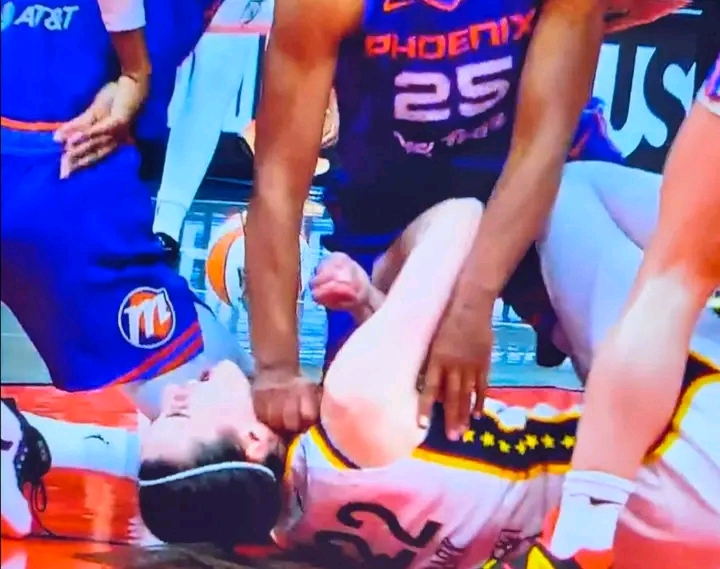
The debate surrounding officiating in the WNBA has once again exploded across social media, and this time, Indiana Fever fans are demanding answers.
A recent sequence involving Indiana Fever superstar Caitlin Clark has ignited widespread frustration among fans who believe the league continues to apply inconsistent standards when it comes to physical play and technical fouls. The incident quickly gained traction online after video clips showed Clark on the floor while play continued without a whistle, prompting heated reactions from basketball fans across the country.
The controversy comes at a critical point in the Fever’s season, where every possession, every game, and every player health concern carries major implications for playoff positioning and championship aspirations.
WHY FEVER FANS ARE SO ANGRY
The frustration isn’t simply about one missed call.
Many fans are comparing this incident to previous situations where Clark received technical fouls or warnings for actions they considered relatively minor, such as emotional reactions, clapping, or gestures toward officials. Seeing a more physical sequence go unpenalized has intensified concerns that officiating standards are not being applied consistently.
Basketball is an emotional sport. Players compete with intensity, especially in close games. Fans generally accept that referees will occasionally miss calls. What becomes harder to accept is the perception that similar situations are being judged differently depending on the moment or the player involved.
For Fever supporters, this latest incident has become another example in a growing list of moments where they believe Clark has not received the same protection afforded to other star players.
CAITLIN CLARK’S UNIQUE POSITION IN THE WNBA
Few athletes in professional basketball face the level of scrutiny that Caitlin Clark experiences on a nightly basis.
Since entering the league, Clark has transformed television ratings, ticket sales, merchandise revenue, and overall interest in women’s basketball. Every game she plays attracts significant attention from fans, media outlets, and opponents.
That spotlight creates both opportunities and challenges.
Opposing teams often design defensive game plans specifically to disrupt Clark’s rhythm. Physical defense has become a common strategy, forcing her to fight through contact on nearly every possession.
As a result, every questionable foul call—or lack thereof—receives immediate national attention.
Whether fans believe Clark is being treated unfairly or not, there is no denying that officiating decisions involving her generate far more discussion than those involving most players in the league.
THE IMPACT ON INDIANA FEVER’S CHAMPIONSHIP HOPES
The Fever have emerged as legitimate contenders thanks to a talented roster built around Clark and a growing supporting cast.
For a team with championship ambitions, player safety and officiating consistency are not minor concerns.
If physical play escalates without whistles, it increases the risk of injuries and can alter the flow of games. When a franchise cornerstone like Clark spends significant time absorbing contact, every Fever fan naturally worries about long-term consequences.
Indiana’s success depends heavily on Clark’s ability to orchestrate the offense, create scoring opportunities, and stretch opposing defenses with her elite shooting range.
Any situation that potentially impacts her availability or effectiveness becomes a major storyline for the organization.
THE WNBA’S OFFICIATING CHALLENGE
To be fair, officiating professional basketball is one of the most difficult jobs in sports.
Referees must make split-second decisions while tracking ten players moving at high speed. Mistakes are inevitable.
However, perception matters.
The WNBA has experienced tremendous growth over the past two seasons, and with increased visibility comes increased scrutiny. Every controversial call is now dissected on social media, sports television, podcasts, and digital platforms within minutes.
The league’s challenge is ensuring that fans trust the process.
When supporters consistently question why certain actions receive technical fouls while seemingly more serious incidents go uncalled, confidence in officiating can suffer.
Maintaining transparency and consistency will be essential as the WNBA continues its rapid expansion.
SOCIAL MEDIA REACTION CONTINUES TO GROW
Fan reaction to the incident was immediate and intense.
Many supporters expressed disbelief that play continued while Clark remained on the floor. Others focused on what they viewed as a contradiction between previous technical foul decisions and the lack of a whistle during a more physical sequence.
The conversation reflects a broader trend surrounding Clark’s career. Nearly every controversial moment involving the Fever star becomes a national talking point.
That level of engagement demonstrates both her popularity and the growing passion surrounding women’s basketball.
While opinions remain divided, one thing is clear: fans are paying attention.
WHAT THIS MEANS MOVING FORWARD
Expect discussions about officiating and player protection to remain a major storyline throughout the season.
As the Fever push toward the playoffs, every game will carry increased significance. Close contests can be decided by a single possession, making officiating decisions even more impactful.
League officials, coaches, players, and fans all share the same goal—competitive games decided by talent and execution rather than controversy.
For Indiana, the focus will remain on winning games and continuing their development as a championship contender. For Clark, the challenge is the same as it has always been: stay composed, keep competing, and let her performance speak louder than the debate surrounding her.
FINAL THOUGHTS
The latest Caitlin Clark controversy highlights an issue that extends beyond one game or one call. It touches on consistency, player safety, competitive fairness, and the future perception of officiating in a rapidly growing league.
Whether fans believe the missed call was egregious or simply part of the game, the passionate response demonstrates how much attention now surrounds the Indiana Fever and their superstar guard.
As the playoff race intensifies, expect every whistle—and every non-whistle—to face greater scrutiny than ever before. And if the Fever continue their ascent toward championship contention, these conversations are unlikely to disappear anytime soon.