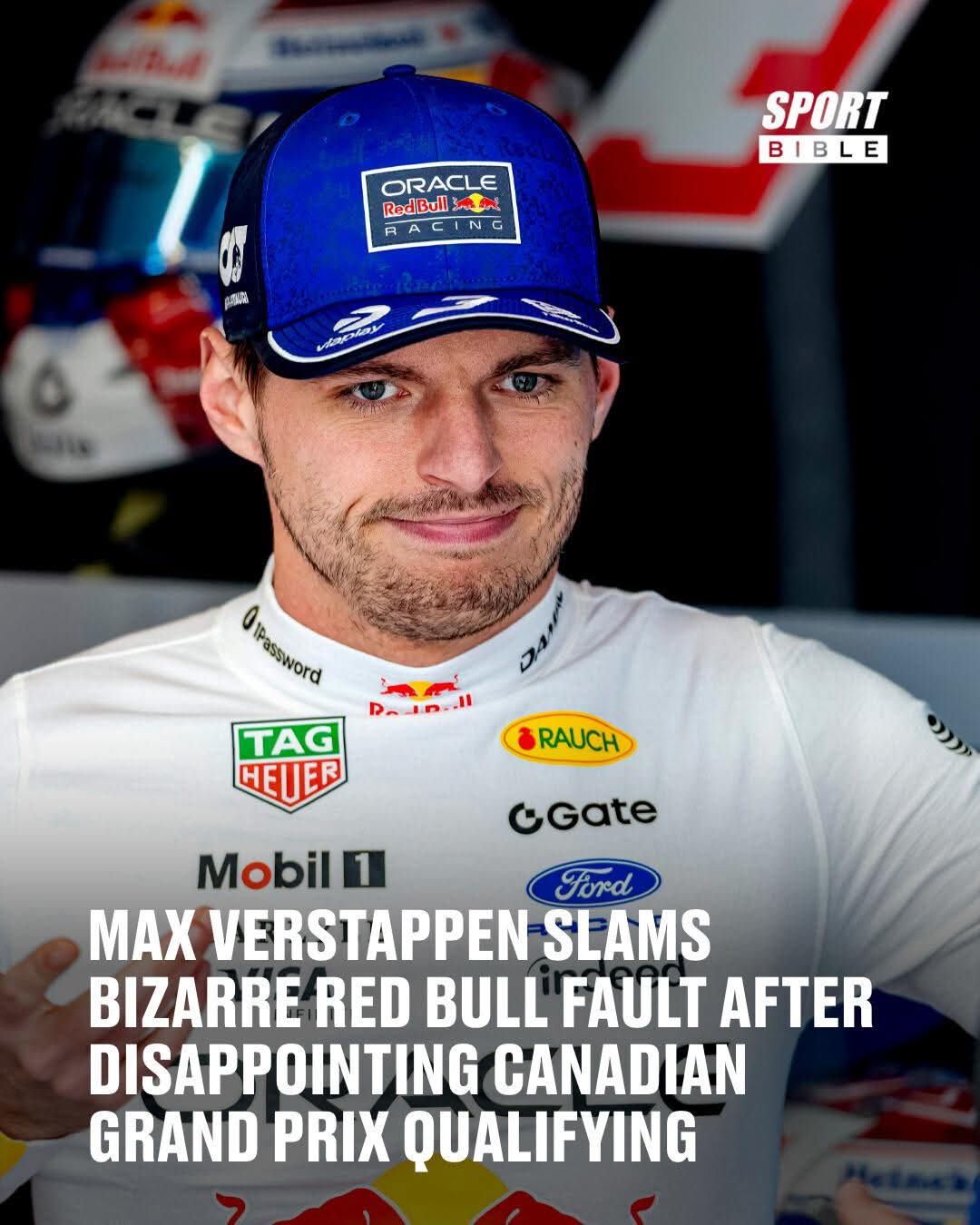
Max Verstappen entered the Canadian Grand Prix weekend expecting another battle at the front, but Friday’s Sprint qualifying in Montreal delivered an unexpected setback for the reigning world champion. Rather than fighting for pole position, the Dutch driver found himself buried in seventh place after a bizarre issue inside the cockpit disrupted his rhythm and exposed fresh concerns for Red Bull. The result immediately raised questions about whether the team has uncovered a deeper problem beneath the surface of its 2026 package.
The session initially looked promising for Verstappen. He appeared competitive in the opening stages and finished the first segment in third place, showing signs that Red Bull could once again challenge Mercedes and McLaren. However, momentum quickly disappeared as qualifying progressed. George Russell eventually secured Sprint pole ahead of teammate Kimi Antonelli, while McLaren’s Lando Norris and Oscar Piastri continued to demonstrate the pace that has made them serious title contenders this season. Verstappen, meanwhile, steadily slipped backward and ultimately ended the session nearly half a second away from the front.
What made the situation especially unusual was Verstappen’s explanation after climbing out of the car. Rather than blaming tire preparation or strategy errors, the four-time champion described a physical problem that severely affected his ability to drive the car consistently. According to Verstappen, the ride over Montreal’s bumps became so aggressive that his feet were literally lifting from the pedals during parts of the session. For a Formula 1 driver operating at extreme speeds, even the smallest disruption in pedal control can create enormous consequences.
The Circuit Gilles Villeneuve has always been known as one of the rougher tracks on the calendar. The circuit combines long straights with aggressive kerbs and heavy braking zones that constantly unsettle the car. If Verstappen’s feet were struggling to remain planted during acceleration and braking phases, it suggests Red Bull may have encountered a suspension or ride-height issue that prevented the car from maintaining stability over bumps. In modern Formula 1, where milliseconds determine grid positions, losing confidence in braking points or throttle application can instantly destroy a qualifying lap.
There is also a larger concern for Red Bull beyond one difficult session. Parc fermé regulations prevent teams from making significant setup changes before the Sprint race, meaning Verstappen entered Saturday with little opportunity to solve the issue immediately. That creates pressure on Red Bull engineers, who now face a race against time to identify whether the problem stems from mechanical settings, suspension behavior, or a deeper flaw in the car’s balance characteristics.
The contrast between Red Bull and its rivals was impossible to ignore. Mercedes appears revitalized, with George Russell and Kimi Antonelli continuing to produce strong performances, while McLaren remains a major threat at the front. Ferrari also showed encouraging signs as Lewis Hamilton narrowly outperformed Charles Leclerc. While Verstappen has built his reputation on extracting results from difficult situations, the competition around him has become increasingly fierce in 2026.
From an analytical perspective, this weekend could become an important test of Red Bull’s adaptability. Championship-winning teams are defined not only by outright speed but by how quickly they respond to unexpected setbacks. Verstappen has repeatedly rescued difficult weekends throughout his career, but if strange mechanical behavior becomes a recurring issue, rivals will see an opportunity to close the gap in both championships.
Looking ahead, there is still enough time for Red Bull to recover before the main Canadian Grand Prix qualifying session. Verstappen’s history suggests writing him off would be a mistake. However, if Mercedes and McLaren continue to capitalize on their momentum, Montreal may become another sign that the balance of power in Formula 1 is becoming increasingly unpredictable. One strange cockpit issue may have caused Friday’s frustration, but its long-term significance could stretch far beyond a single qualifying result.