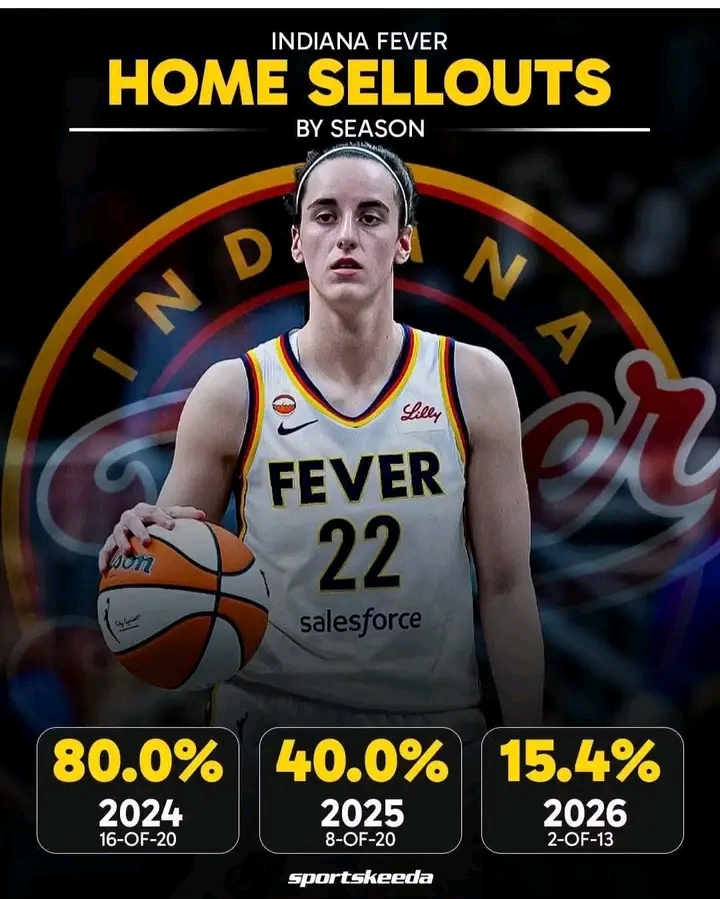
The Indiana Fever, once the hottest ticket in the WNBA thanks to the Caitlin Clark phenomenon, are sparking unease across the league as home attendance at Gainbridge Fieldhouse has shown a noticeable decline in the 2026 season. While the team remains a powerhouse in generating interest, early data reveals a dip that has fans, analysts, and executives taking notice.
In 2024 and 2025, the Fever routinely packed the house, averaging over 16,500 fans per home game with frequent sellouts of the 17,274-capacity arena. The arrival of Clark in 2024 transformed the franchise, turning modest crowds into electric atmospheres and boosting the entire league. However, 2026 has told a different story. The home opener against the Dallas Wings drew a sellout of 17,274, but subsequent games saw significant drops: 15,673 against Washington, 14,505 versus Seattle, and a low of 14,010 against Portland. Even stronger performances, like a matchup with Golden State, hit 16,742, yet the early-season average hovered around 15,868 across roughly a dozen games—still elite league-wide but notably softer than recent peaks.
League observers point to several factors. Clark has battled injuries, including back issues that led to last-minute scratches and some fan frustration. Calls for boycotts over officiating and perceived targeting of the Fever have circulated on social media, potentially keeping casual fans away on non-marquee nights. Additionally, the novelty of the “Clark effect” has normalized somewhat as the WNBA’s overall popularity surges, with teams like the Golden State Valkyries setting new benchmarks by selling out every home game at over 18,000 fans.
Despite the dip, context matters. The Fever continue to lead or rank near the top in road attendance, often forcing opponents to upgrade venues. TV ratings for Fever games remain dominant, both with and without Clark, signaling sustained national interest. The team’s on-court success—sitting competitively in standings with stars like Kelsey Mitchell and Aliyah Boston stepping up—provides a solid foundation.
WNBA executives are monitoring closely. The league’s attendance is up significantly overall, but the Fever’s home numbers serve as a barometer for superstar-driven growth. Team officials emphasize long-term season ticket sales remain strong, yet the visible empty seats in upper levels during midweek games have fueled headlines.
As the season progresses with key home matchups ahead, the Fever must recapture the consistent sellout magic. For a franchise that redefined WNBA visibility, even a relative dip carries weight. Whether it’s through healthier lineups, stronger community outreach, or leveraging remaining star power, addressing fan engagement will be critical. The broader league benefits when the Fever thrive at home—the question now is how quickly they can reverse the trend and refill those seats.