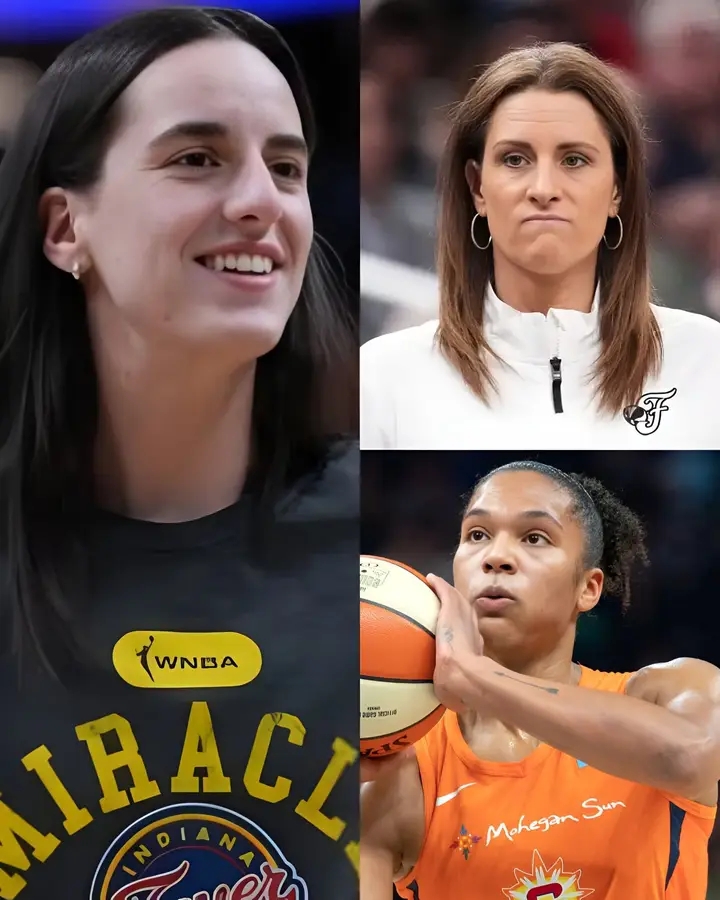
The conversation surrounding the Indiana Fever and Caitlin Clark has once again extended far beyond basketball. This time, however, the focus isn’t just on hard fouls or officiating decisions—it’s about where the line should be drawn between competitive sports and unacceptable online harassment.
Indiana Fever head coach Stephanie White has publicly addressed one of the most polarizing moments of the 2026 WNBA season, making it clear that while physical basketball deserves scrutiny, the personal attacks directed at players have no place in the sport.
Her comments arrive as the WNBA continues to balance growing popularity with increasing controversy, highlighting the unique challenges that come with the league’s unprecedented spotlight.
THE INCIDENT THAT SPARKED A LEAGUE-WIDE DEBATE
The controversy began during Indiana’s June 24 matchup against the Phoenix Mercury when Mercury star Alyssa Thomas made contact with Caitlin Clark’s throat during a physical play.
Officials did not call a foul during live action, leaving many fans frustrated as replays quickly spread across social media.
Following a league review, the WNBA upgraded the play to a Flagrant Foul 2 and suspended Thomas for one game. While some believed the punishment was appropriate, others argued it either went too far or did not go far enough.
The incident immediately reignited ongoing discussions about officiating consistency, player protection, and whether the league has done enough to prevent dangerous plays involving its biggest stars.
STEPHANIE WHITE SENDS A STRONG MESSAGE
Stephanie White has never hidden her opinion that the play itself was dangerous.
However, she made an important distinction when speaking with reporters after Alyssa Thomas revealed the level of abuse she received online.
White called the harassment “absolutely unacceptable,” emphasizing that criticism of basketball decisions should never become personal attacks.
She also expressed concern about what she sees as increasing levels of racism, homophobia, and toxic behavior surrounding the league’s growing popularity.
Her message reflected a broader issue facing professional sports today: passionate fan engagement is valuable, but threats and hateful comments toward athletes cross an undeniable line.
CAITLIN CLARK ALSO REJECTS THE HATE
One of the most significant developments came from Caitlin Clark herself.
Although Clark was the player involved in the incident, she publicly condemned the online abuse directed at Thomas.
Clark stated that threats and hateful messages toward any player are unacceptable, reinforcing that disagreements over basketball should never evolve into harassment.
Her response helped separate two conversations that often become intertwined.
Fans can debate officiating decisions.
They can analyze physical play.
They can disagree with league discipline.
But personal attacks, racist comments, and threats have no place in professional sports.
WHY THIS STORY MATTERS FOR THE INDIANA FEVER
For Indiana, this situation represents more than a single controversial play.
The Fever have become one of the league’s biggest attractions, with virtually every nationally televised game generating enormous discussion across television, podcasts, and social media.
That increased attention creates incredible opportunities for the franchise but also brings heightened scrutiny.
Every hard foul involving Caitlin Clark now becomes national news.
Every officiating decision is dissected frame by frame.
Every emotional moment can quickly dominate sports headlines.
Managing that spotlight has become an important responsibility for everyone connected to the organization.
THE WNBA’S GROWING CHALLENGE
The WNBA is experiencing unprecedented growth in television ratings, attendance, sponsorships, and media coverage.
With that success comes a much larger online audience—and unfortunately, a larger volume of toxic behavior.
League officials now face the difficult task of protecting players while maintaining the physical style of basketball that has always defined the WNBA.
Finding that balance won’t be easy.
Fans expect competitive, emotional games.
Players expect fair officiating.
Teams expect consistency in disciplinary decisions.
Meanwhile, the league must also address the increasingly hostile online environment affecting athletes across multiple sports.
WHAT THIS COULD MEAN MOVING FORWARD
The conversation surrounding player safety is unlikely to disappear anytime soon.
Expect the WNBA to continue reviewing officiating standards while placing greater emphasis on protecting players from unnecessary contact.
At the same time, league officials will likely continue encouraging fans to support their favorite teams without crossing into harassment or abuse.
For the Indiana Fever, the focus remains unchanged.
Winning basketball games is still the priority.
If the Fever continue competing near the top of the standings, the spotlight surrounding Caitlin Clark and her teammates will only become brighter as the playoffs approach.
That means every controversial play will continue generating headlines, making leadership from figures like Stephanie White increasingly important.
FINAL THOUGHTS
Stephanie White’s latest comments remind everyone that two ideas can be true at the same time.
Dangerous plays deserve review and accountability.
But players also deserve respect once the final whistle blows.
As the WNBA continues its rapid rise in popularity, maintaining that balance may become one of the league’s biggest challenges. For the Indiana Fever, navigating both championship expectations and constant national attention has become part of the journey, and how the organization responds could shape not only its season but also the league’s future conversation about competition, accountability, and sportsmanship.