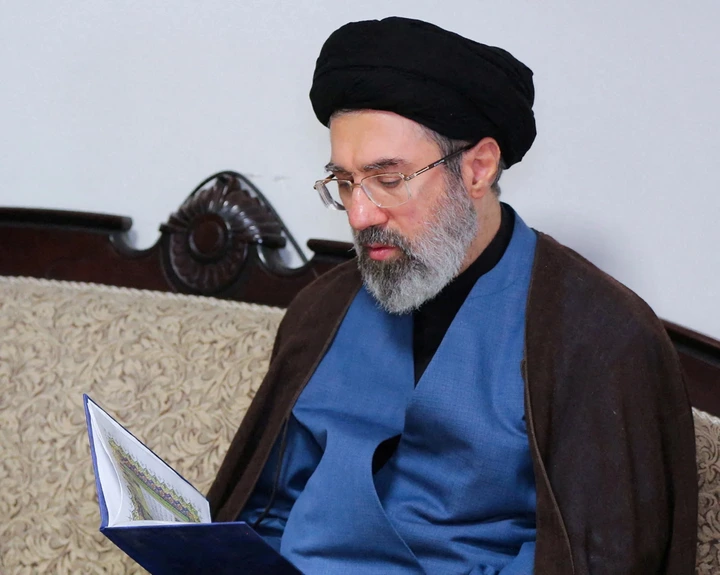
Tensions in the Middle East have escalated further after Iran’s new Supreme Leader, Mojtaba Khamenei, issued a strong warning to Iran’s adversaries, declaring that the country will seek compensation for damages caused by recent attacks. His remarks come amid an intensifying conflict involving Iran, the United States, and Israel.
In a statement read on Iranian state television, Khamenei said Iran would pursue compensation from what he described as “the enemy” for losses suffered during ongoing military confrontations. He warned that if such compensation is not provided voluntarily, Iran would take action to seize assets or target equivalent property belonging to those responsible.
The statement is widely viewed as a sign that Iran is preparing for a prolonged confrontation with its rivals. It also reflects Tehran’s determination to retaliate for the destruction and casualties caused by recent military strikes in the region. Since the conflict escalated, both sides have exchanged missile and drone attacks, raising fears of a wider regional war.
Khamenei’s remarks were part of his first major public message since taking power following the death of his father, Ali Khamenei. In the same address, he vowed that Iran would continue to respond to attacks and protect its sovereignty, promising that those responsible would eventually “pay the price.”
The new Iranian leader also praised allied groups across the region for supporting Tehran during the crisis and warned that military bases linked to Iran’s adversaries could become targets if hostilities continue.
Meanwhile, international observers fear the rhetoric could further inflame tensions in an already volatile region. Global leaders and organizations have urged restraint and called for diplomatic efforts to prevent the conflict from spiraling into a broader war that could affect global energy markets and regional stability.
As the situation unfolds, the world is watching closely to see whether the harsh warnings from Tehran will translate into further military escalation—or whether diplomatic channels might still offer a path toward de-escalation.