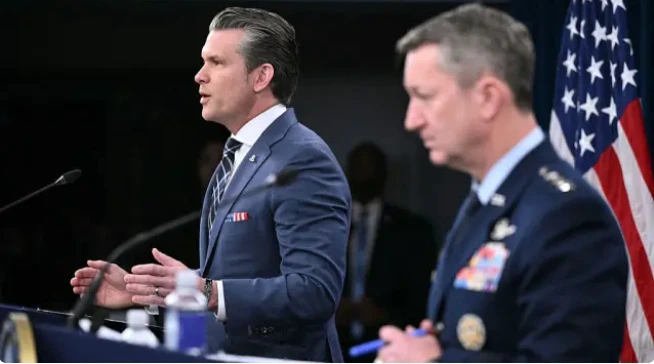
Amid escalating tensions in the ongoing conflict between the United States and Iran, U.S. Defense Secretary Pete Hegseth has sparked global attention with a striking and controversial remark: “We have decided to share the ocean with Iran, we have given them the bottom half.”
A War of Words and Firepower
The United States, alongside its allies, has carried out extensive strikes against Iranian military targets in recent weeks. According to official briefings, thousands of sites have been hit, significantly weakening Iran’s ability to project power, particularly at sea.
Hegseth has repeatedly emphasized that Iran’s naval strength has been severely diminished, at times claiming it is no longer a significant factor in the conflict. Earlier statements from the Pentagon suggested that large portions of Iran’s fleet have been destroyed, reinforcing the imagery behind his “bottom half of the ocean” remark.
Rising Regional Tensions
Despite U.S. claims of dominance, the situation remains volatile. Iran has responded with missile and drone attacks targeting energy infrastructure across the Gulf region, raising fears of a broader regional escalation. Key global shipping routes and oil facilities have also come under threat, pushing energy prices higher and unsettling international markets.
The Strait of Hormuz, a critical artery for global oil transport, has become a focal point of concern, with disruptions there carrying significant economic implications worldwide.
Strategic Messaging or Escalation?
Analysts view Hegseth’s statement as part of a broader strategy to project strength and deter further Iranian aggression. However, critics argue that such rhetoric risks inflaming tensions and reducing the chances of diplomatic resolution.
The Biden-era caution has largely been replaced by a more forceful posture under current leadership, with officials insisting the campaign is both necessary and controlled. Still, questions remain about how long the conflict will last and whether it could expand further.
Uncertain Path Ahead
While U.S. officials maintain that Iran’s military capabilities are rapidly declining, they also acknowledge that the country retains some capacity to strike back. The absence of a clear timeline for ending the war adds to the uncertainty surrounding the conflict’s future.
Hegseth’s dramatic phrasing may capture headlines, but it also underscores the gravity of a conflict that continues to evolve, with consequences that could extend far beyond the region.
As both sides dig in, the world watches closely—aware that the stakes, much like the rhetoric, are only getting higher.