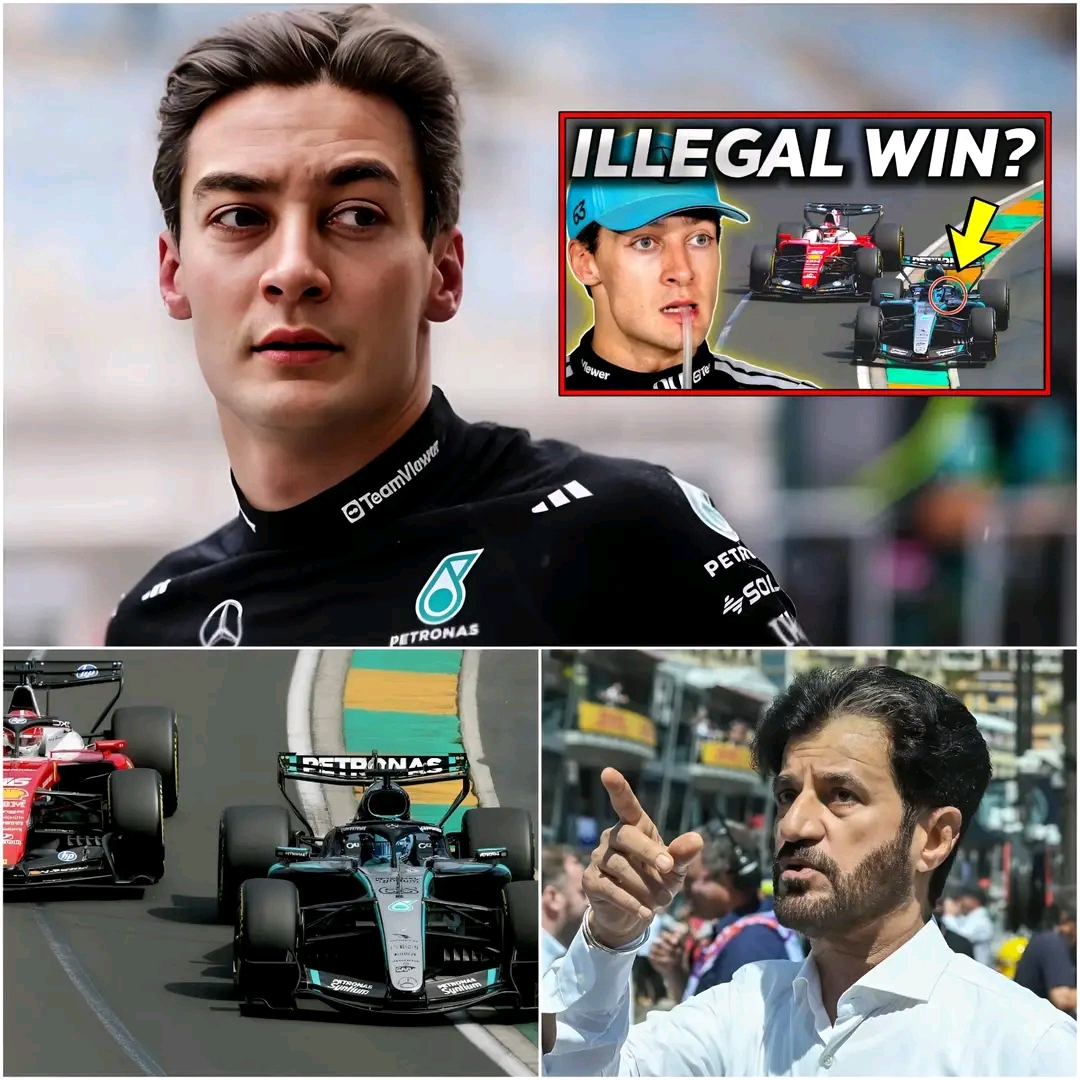
“Russell’s Victory in Danger?” FIA Launches Investigation Into Mercedes Engine After Australian GP — F1 Paddock Erupts in Shock
The aftermath of the dramatic Australian Grand Prix has taken an unexpected turn after reports emerged that officials are reviewing technical details related to the car of race winner George Russell. What initially looked like a spectacular triumph for the British driver and the Mercedes-AMG Petronas Formula One Team is now surrounded by intense scrutiny, with speculation growing around a possible engine-related controversy.
Fans, analysts, and rival teams across the Formula 1 grid have been debating whether the performance advantage shown during the race could have been linked to a clever interpretation of technical regulations. Although no rule violation has been confirmed, the situation has sparked an official review by the sport’s governing body.
A Dominant Performance That Raised Eyebrows
During the race at the iconic Albert Park Circuit, Russell delivered one of the most impressive performances of his career. From the early stages of the race, the Mercedes driver demonstrated remarkable pace, managing tire strategy and race positioning with precision.
As the laps unfolded, Russell steadily built a competitive advantage over several strong rivals on the grid, including drivers from teams such as Red Bull Racing and Scuderia Ferrari. The performance appeared strong enough to raise questions among competitors, especially regarding straight-line speed and acceleration out of certain corners.
In Formula 1, where fractions of a second can determine victory or defeat, even the smallest technical advantage can quickly attract attention.
The Engine Controversy Explained
At the center of the debate is the power unit used by the Mercedes team. Formula 1 engines are among the most complex machines in motorsport, combining internal combustion technology with advanced hybrid systems that harvest and deploy energy during a race.
Each component of the engine must comply strictly with the regulations defined by the Fédération Internationale de l’Automobile.
Following the Australian Grand Prix, technical analysts reportedly began examining telemetry data and performance metrics that appeared unusually strong in certain sectors of the track. These observations triggered discussions among rival engineers and prompted questions about whether the performance might stem from a particularly innovative design feature.
It is important to note that in Formula 1, innovation is not illegal. Teams constantly explore creative engineering solutions that push the boundaries of the rulebook while remaining within its limits.
FIA Review Begins
When technical questions arise, the FIA typically conducts a detailed inspection process. This includes analyzing data collected during the race, reviewing the car’s physical components, and comparing them with regulatory requirements.
Such reviews are standard procedure and do not automatically indicate wrongdoing.
However, the fact that Russell’s race-winning car is being examined has fueled speculation among fans and commentators who are eager to understand whether the Mercedes design includes a unique advantage.
Officials have not indicated that any rule breach has been discovered.
Mercedes Responds With Confidence
Inside the Mercedes camp, the mood appears calm despite the growing debate. The team has a long history of engineering excellence and has repeatedly emphasized that its designs follow the regulations set by the governing body.
Engineers working on the car have suggested that the performance gains observed in Melbourne could simply be the result of improved setup, aerodynamic efficiency, and refined power unit deployment strategies.
In modern Formula 1, the smallest refinements can produce measurable gains, especially on circuits where acceleration and energy recovery play a crucial role.
Russell Focused on Racing
Meanwhile, George Russell has remained focused on his performance rather than the surrounding controversy.
The British driver described the victory as a result of teamwork and preparation, highlighting the effort made by engineers, strategists, and mechanics throughout the race weekend.
For Russell, the win represents an important milestone in his career, demonstrating his ability to compete at the very top level of Formula 1.
Rival Teams Watching Closely
Other teams on the grid will undoubtedly monitor the outcome of the FIA review with great interest. In such a competitive championship, any potential performance advantage can shift the balance of power between teams.
If the design element under discussion is confirmed to be legal, rival teams may attempt to develop similar concepts for their own cars.
This process of innovation and adaptation has always been part of the technological arms race that defines Formula 1.
–The Final Decision
For now, Russell’s victory at the Australian Grand Prix remains official.
The FIA’s review will determine whether any clarification of the rules is necessary, but there is currently no confirmation of a regulation breach.
Until the governing body releases its findings, the debate will likely continue across the Formula 1 community.
What began as a thrilling race victory has quickly evolved into one of the most intriguing technical discussions of the season — reminding everyone once again that in Formula 1, the battle for performance extends far beyond the track itself.