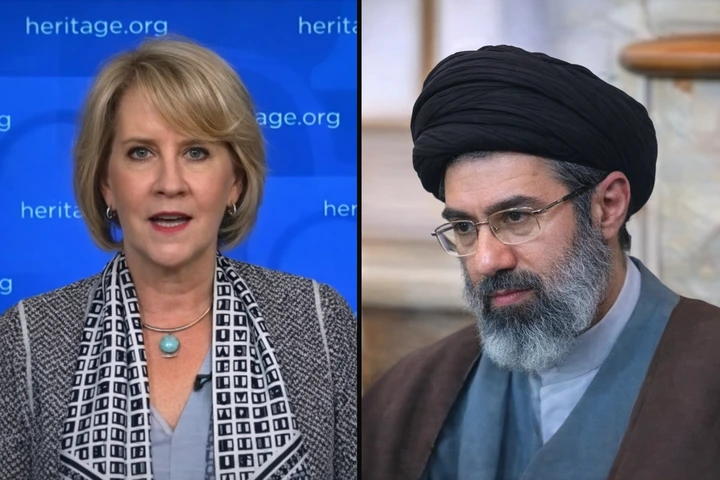
Former U.S. national security official Victoria Coates has sparked fresh debate about Iran’s leadership after raising concerns about alleged overseas assets linked to Mojtaba Khamenei. Coates claimed she had read reports detailing properties supposedly owned across London, suggesting that such revelations could anger ordinary Iranians already grappling with economic hardship.
Speaking during a policy discussion on Middle East affairs, Coates said that information circulating in political and media circles about luxury real estate holdings connected to Mojtaba Khamenei paints a picture that may contradict the image often projected by Iran’s ruling establishment. According to her, if these reports were confirmed and widely known inside Iran, they could fuel frustration among citizens struggling with inflation, sanctions, and unemployment.
“The Iranian people are under enormous pressure economically,” Coates said. “When stories emerge about elite figures owning valuable properties abroad, particularly in places like London, it creates a perception gap that people are unlikely to accept quietly.”
Mojtaba Khamenei, the influential son of Iran’s long-time Supreme Leader Ali Khamenei, has long been viewed by analysts as a powerful figure within Iran’s political and security networks. While he holds no officially elected office, many observers believe he plays a significant behind-the-scenes role in the country’s political structure.
Allegations about foreign assets tied to powerful political families have been a recurring issue in Iranian politics. Critics often argue that such claims highlight a divide between the ruling elite and the general population. Supporters of the government, however, frequently dismiss these accusations as politically motivated or lacking credible evidence.
Coates emphasized that transparency around the wealth and lifestyles of political elites has become a sensitive issue globally, particularly in countries facing economic turmoil. She noted that the Iranian public has shown increasing willingness in recent years to question the privileges enjoyed by those close to power.
Analysts say that claims about overseas property holdings—whether verified or not—can quickly become politically explosive in Iran. With economic pressures continuing to weigh heavily on the population, narratives about elite wealth abroad have the potential to deepen public dissatisfaction and intensify scrutiny of the country’s leadership.
For now, Iranian officials have not publicly responded to the specific remarks made by Coates. However, the comments have reignited broader discussions among policy experts and political observers about accountability, transparency, and the growing expectations of citizens inside Iran.