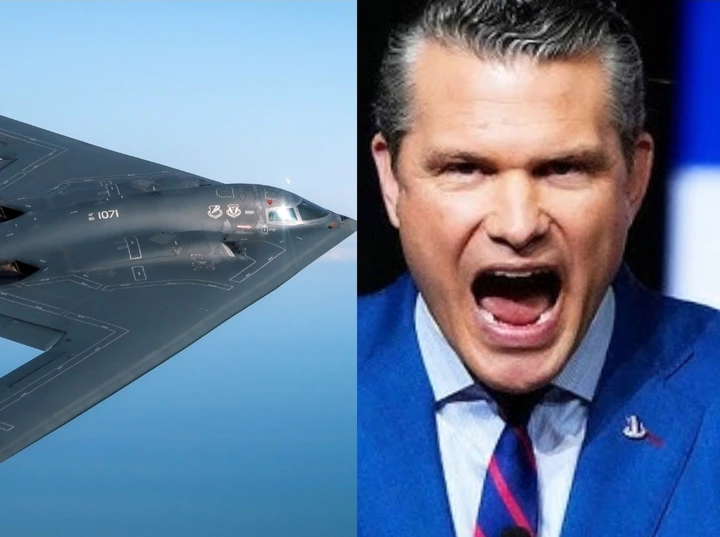
Speaking during a Pentagon briefing on the military campaign known as Operation Epic Fury, Hegseth said the United States and its allies have gained a major strategic advantage over Iranian forces after days of sustained airstrikes and coordinated operations across multiple fronts.
According to Hegseth, American and allied aircraft now operate with near-complete control of Iranian airspace, enabling them to carry out precision strikes against key military targets, including missile launch sites, drone facilities, and naval assets. He emphasized that the campaign is being conducted with a focused objective—neutralizing Iran’s military capabilities and preventing it from developing nuclear weapons.
“This is not 2003,” Hegseth said, referring to past prolonged U.S. military interventions. “Instead, we’re winning decisively with brutal efficiency, total air dominance, and an unbreakable will to accomplish the president’s objectives on our timeline.”
Military officials also reported that thousands of targets have already been struck since the operation began, significantly weakening Iran’s missile and drone capabilities. The Pentagon claims the sustained bombing campaign has reduced the frequency of Iranian retaliatory attacks and disrupted the country’s command structure.
The conflict escalated sharply after joint U.S. and Israeli strikes earlier in the campaign targeted critical Iranian infrastructure and military leadership. Washington argues the operation is necessary to prevent Tehran from threatening regional stability and advancing its nuclear ambitions.
Despite the strong claims of battlefield success from U.S. officials, tensions across the Middle East remain high, with fears that the war could expand if retaliatory attacks continue or if other regional actors become involved.
For now, Hegseth insists the strategy remains clear: maintain pressure, expand air superiority, and force Iran into a position where it can no longer pose what Washington describes as a strategic threat.