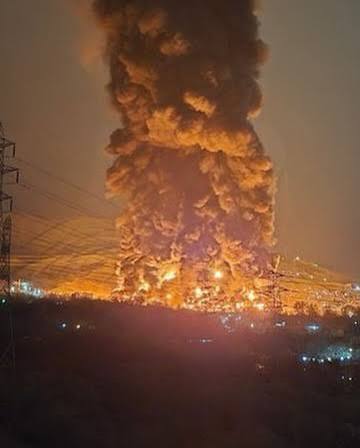
Tehran woke up under a dark cloud of smoke after a series of powerful Israeli airstrikes targeted major oil storage and fuel distribution facilities in and around the Iranian capital, marking a dramatic escalation in the ongoing regional conflict.
Massive explosions lit up the night sky as several oil depots and petroleum storage tanks were hit during the strikes. Fires quickly spread across the targeted facilities, sending towering plumes of thick black smoke across the skyline and leaving large parts of the city covered in toxic haze by morning. Iranian emergency crews rushed to contain the flames as authorities warned residents to remain indoors due to hazardous air pollution.
Iranian officials confirmed that multiple fuel storage sites were damaged and several workers were killed in the attack. The strikes represent one of the most significant hits on Iran’s energy infrastructure since the conflict began, as Israel expands its campaign beyond military and nuclear-linked targets.
The aftermath of the strikes has raised serious environmental concerns. Authorities warned that chemicals released from burning oil facilities could lead to toxic rainfall and dangerous air conditions for millions of residents in Tehran.
In response, Iran launched a wave of retaliatory attacks across the Gulf region. Missiles and drones were reportedly fired toward strategic infrastructure in neighboring states, including fuel storage facilities and water desalination plants. Some attacks damaged infrastructure in places such as Bahrain and Kuwait, while air defense systems in several countries intercepted incoming drones.
Iranian leaders defended the retaliation, saying the strikes were necessary to respond to attacks on the country’s territory and warning that any nation allowing its land to be used against Iran could face further consequences.
The rapidly expanding conflict has begun to affect regional stability and global energy markets, with analysts warning that continued attacks on oil infrastructure could disrupt supply routes across the Gulf.
As smoke continues to blanket Tehran and retaliatory strikes ripple across the region, fears are growing that the confrontation could spiral into a wider Middle East war involving multiple countries and critical global energy corridors.