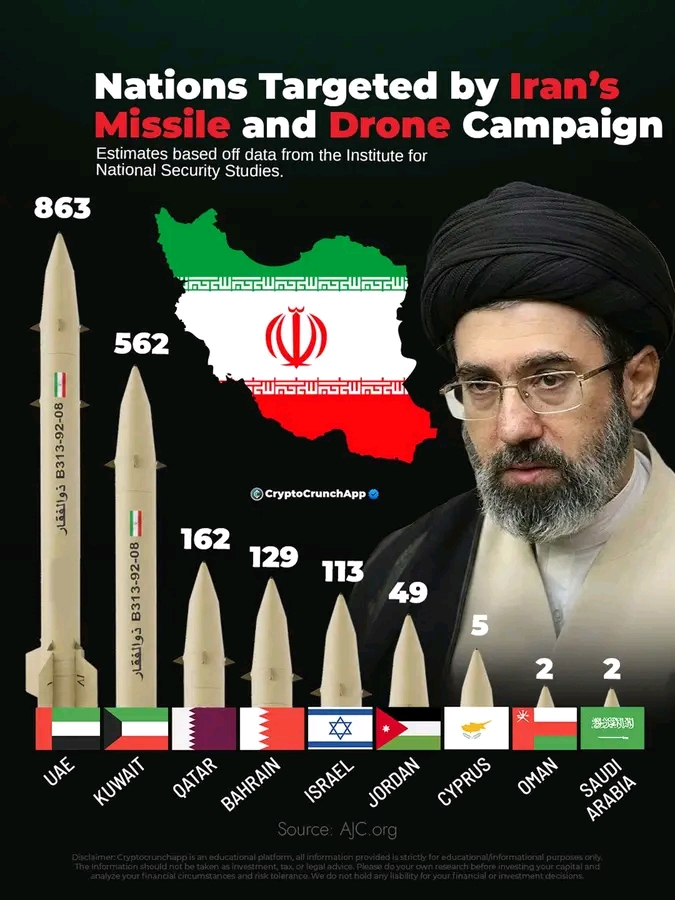
Tensions across the Middle East have escalated dramatically after reports emerged that Iran launched a large-scale missile and drone campaign targeting multiple countries across the region. The coordinated strikes allegedly affected nations including the United Arab Emirates, Kuwait, Qatar, Bahrain, Israel, Jordan, Cyprus, Oman and Saudi Arabia.
The barrage is believed to be part of Iran’s response to the ongoing regional conflict involving the United States and Israel. Military analysts say Tehran’s strategy appears aimed at striking locations linked to Western military infrastructure and strategic energy facilities spread across the Gulf and Eastern Mediterranean.
According to regional security reports, hundreds of missiles and drones have been launched since the start of the escalation. Air defense systems in several Gulf states have been activated, intercepting many of the incoming projectiles before they could reach their targets. However, debris from interceptions and a small number of successful impacts have reportedly caused damage to infrastructure and raised fears among civilians.
The United Arab Emirates and Kuwait are said to be among the countries most heavily targeted in the campaign. Reports indicate that the attacks included both ballistic missiles and unmanned aerial vehicles, many of which were aimed at military bases hosting foreign troops or strategic energy installations.
Authorities in Qatar and Bahrain confirmed that their air defense systems intercepted multiple missiles and drones approaching their airspace. Defense officials stated that the operations were carried out under emergency security protocols designed to protect both civilian populations and military installations.
Elsewhere, Jordan reported intercepting projectiles that crossed its airspace toward Israel, while Cyprus and Oman were also affected by drone activity linked to the expanding conflict. Some of the attacks reportedly targeted ports, oil infrastructure, and maritime shipping routes, highlighting the growing economic and security risks facing the region.
Security analysts believe the attacks are intended to pressure countries hosting U.S. military bases and allied forces. Many Gulf nations serve as critical logistical hubs for Western military operations, making them strategic targets during regional escalation.
Despite the intensity of the campaign, several governments have reassured citizens that their defense systems remain operational and capable of intercepting most threats. Military forces across the Gulf have been placed on high alert as officials warn that further waves of attacks cannot be ruled out.
The situation remains fluid, with diplomats and international organizations calling for immediate de-escalation to prevent the conflict from spreading further across the Middle East. Experts warn that if the cycle of retaliation continues, the confrontation could draw even more countries into what is already becoming one of the region’s most dangerous crises in recent years.