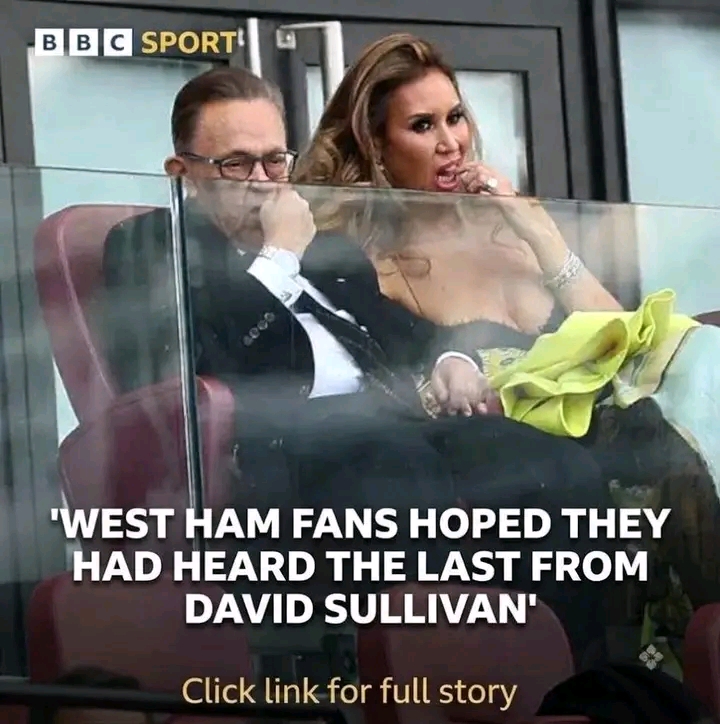
Just when West Ham United supporters thought they had finally turned the page on years of executive drama and board-level distraction, the shadows of the old era have crept back into the spotlight. For over a decade, the leadership under David Sullivan was defined by public fallouts, transfer tug-of-war disputes, and an uncomfortable friction between the front office and the fanbase. While recent seasons brought a welcome shift toward stability, professionalism, and ambitious squad building, Sullivan’s latest maneuver threatens to unravel that peace. His sudden action has sent shockwaves through the corridors of the London Stadium, dragging past grievances straight into the present and threatening to reignite the biggest boardroom row the club has seen in years.
At the heart of this unfolding conflict is a classic battle over power, control, and the future direction of the club. Sullivan’s move is widely seen by insiders as a direct challenge to the current executive hierarchy and the modern governance structure that was carefully established to move West Ham forward. By asserting his influence at a crucial moment in the season, he has reopened deep-seated ideological rifts regarding recruitment strategies and financial allocations. Key figures within the boardroom are reportedly furious, viewing his latest actions as an unnecessary interference that undermines the authority of current management and disrupts the long-term vision designed to keep the Hammers competing at the highest levels.
The timing of this power play could hardly be worse for the manager and the playing staff. On the pitch, West Ham has been striving for consistency, navigating a demanding domestic schedule where absolute focus is paramount. Boardroom instability rarely stays contained within executive suites; history shows that administrative tension almost always leaks into the dressing room, creating an atmosphere of uncertainty. Players and coaching staff, who rely on clear leadership and steady support from above, now find themselves working against the backdrop of renewed corporate infighting. Instead of dominating headlines with tactical breakthroughs or match performances, the club is once again forced to answer awkward questions about internal strife.
For the loyal West Ham faithful, this development evokes an all-too-familiar sense of frustration and fatigue. Supporters have spent years campaigning for transparency, stability, and a modern corporate framework that matches the club’s grand ambitions. Seeing the same old personal clashes and power struggles return to dominate the news cycle feels like a demoralizing step backward. Fans are rightfully worried that this escalating row will distract from essential footballing matters, potentially derailing progress and damaging the reputation West Ham has worked so hard to rebuild. If the involved parties cannot find immediate common ground, this dispute risks damaging the delicate harmony surrounding the club and plunging West Ham back into a chaotic era many hoped was permanently left behind.