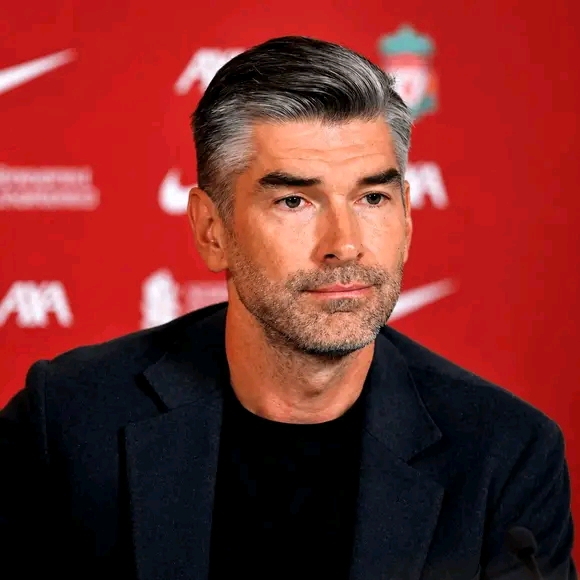
# Richard Hughes Is Leaving Liverpool for Al-Hilal — And He’s Already Working Both Jobs at Once
Football fans have grown used to transfer sagas dragging on for months before anything becomes official, but the confirmation that Richard Hughes is set to leave Liverpool for Al-Hilal still landed with a jolt. According to reporting from journalist Romain Molina, Hughes is officially departing his post as Liverpool’s sporting director to become the new sporting director at Saudi Arabian giants Al-Hilal. What makes the story even more remarkable is the timing: Hughes is reportedly already overseeing Al-Hilal’s business for this summer transfer window while simultaneously remaining responsible for Liverpool’s dealings at Anfield. In other words, one man has apparently been steering two major clubs through the same transfer window at once, a situation that raises eyebrows across the footballing world and will likely be dissected for weeks to come.
For those who haven’t followed the build-up, this news doesn’t come completely out of nowhere. Rumors linking Hughes to a move away from Liverpool have circulated for months, with several journalists across Europe reporting that his long-term future at the club was far from settled. Talk intensified over the course of the summer as it became increasingly clear that Al-Hilal held serious interest in bringing him in, and it appears that interest has now culminated in an official move. The idea of a sporting director simultaneously working for two clubs, even briefly, is unusual enough to generate real controversy, especially at a club like Liverpool, which prides itself on structure, discipline, and a buttoned-up recruitment department under FSG’s ownership model.
To understand why this is such a big deal, it helps to remember who Richard Hughes is and how he got to Anfield in the first place. He arrived at Liverpool from Bournemouth, where he had spent years building a reputation as one of the most well-regarded technical directors in English football. At Bournemouth, Hughes was credited with identifying and developing talent that punched well above the club’s transfer budget, snapping up players who would go on to become full internationals or move on for significant profits. His work on the south coast didn’t just keep Bournemouth competitive in the Premier League; it turned the club into something of a model for smart, disciplined recruitment in an era when many clubs were throwing money at the problem instead of using their brains.
When Liverpool moved to hire Hughes, it was widely seen as a shrewd appointment. He joined at a pivotal moment for the club, arriving alongside the return of Michael Edwards, who came back to Liverpool as CEO of football after a stint away from the game. Edwards himself had been central to Liverpool’s most successful modern era, working closely with Jurgen Klopp to help assemble the squads that won the Premier League and the Champions League. Bringing Edwards back into the fold, and pairing him with Hughes as sporting director, was meant to signal continuity and stability just as Klopp’s time at the club was coming to an end. The appointment carried a lot of symbolic weight: Liverpool wanted fans and rivals alike to see that even without Klopp on the touchline, the football people behind the scenes remained sharp, ambitious, and capable of keeping the club at the top.
Hughes’ tenure at Liverpool has been a story of transition from the very start. He walked into a club preparing for life after Klopp, eventually overseeing the process that led to Arne Slot taking the reins as head coach. That handover alone would have been enough pressure for most sporting directors in their first year on the job, but Hughes also had to manage a squad that needed refreshing, an ownership group with its own priorities, and a fanbase with sky-high expectations built on years of success under Klopp. Reports suggest that Liverpool’s recruitment strategy shifted meaningfully during his time in charge. Where the club had once been known for smart, value-driven signings, more recent windows saw a willingness to spend big on marquee names, with a wave of high-profile arrivals reflecting an approach that leaned far more aggressively toward star power than the frugal, data-driven model that made the club famous in the years before.
That shift hasn’t been universally popular, and it’s part of why Hughes’ looming exit is generating such a mixed reaction among supporters. Some fans have expressed real frustration, feeling that recent transfer business under his stewardship has been underwhelming relative to the money spent, with some pointed criticism aimed at how this most recent summer window in particular has unfolded. Arne Slot’s brief but eventful time in charge added even more turbulence, and by the time Andoni Iraola was appointed as Liverpool’s new head coach, a decision that Hughes himself was instrumental in making given his prior working relationship with Iraola at Bournemouth, the sporting director’s own position had already become a subject of speculation. There’s a certain irony in Hughes now potentially exiting the club just as the manager he hand-picked is trying to find his footing.
The timeline that’s emerged over the past couple of months paints a picture of a move that’s been quietly assembling itself behind the scenes for a while. Reports in June suggested that Hughes was closing in on an agreement with Al-Hilal, with talk that the Saudi club wanted him to help oversee Liverpool’s business through the summer before formally beginning his transition to Riyadh. By July, further reporting indicated that Hughes wasn’t expected to sign a new contract to stay at Liverpool beyond 2027, with suggestions that he was likely to link up with Simon Francis, a former colleague from his Bournemouth days, who has himself already made the move to Al-Hilal as technical director. That earlier reporting framed things cautiously, noting that Hughes remained fully committed to Liverpool’s transfer business at the time, even as the pathway toward an eventual Saudi move became clearer.
Now, with this latest wave of reporting, the situation appears to have crystallized into something closer to certainty. Hughes is not just linked with Al-Hilal anymore; he’s described as officially leaving to take up the sporting director role there, and crucially, he’s said to already be overseeing Al-Hilal’s transfer business for the current window. That detail is what elevates this from a fairly standard “manager linked with move” story into something genuinely unusual. It means that, for some period of time, Hughes has effectively been running the recruitment department of two major football clubs on two different continents at the same time. Liverpool are in the thick of a Premier League title defense and preparing a squad for a demanding season under a new head coach, while Al-Hilal are one of the most ambitious and well-funded clubs in Asia, backed by the broader wave of Saudi investment that has transformed the Saudi Pro League into a genuine player on the global transfer market. Balancing both of those workloads simultaneously would be an enormous task for anyone, let alone a single sporting director trying to serve both employers’ interests at once.
It’s worth pausing on just how strange that dual role actually is when you think about the mechanics of it. Transfer windows are chaotic even under normal circumstances, full of late-night negotiations, medicals, agent calls, and last-minute changes of heart. Sporting directors are expected to be plugged into their club’s recruitment meetings, scouting reports, wage structures, and squad planning at every hour of the day during peak trading periods. For Hughes to be doing that for Liverpool while also directing Al-Hilal’s own incomings and outgoings suggests either an extraordinary amount of trust from both clubs, a very carefully negotiated handover period, or simply the practical reality that his eventual departure has been common knowledge internally for a while, meaning both parties agreed to a transitional arrangement rather than a clean break. Whatever the exact structure behind the scenes, it’s not the kind of arrangement most fans would expect a club like Liverpool to sanction, given how tightly it usually guards its recruitment processes from outside influence.
From Al-Hilal’s perspective, none of this is particularly surprising. Saudi clubs have been aggressively building out their footballing infrastructure over the past few years, not just by bringing in star players but by recruiting experienced administrators, coaches, and sporting directors from Europe’s top leagues. Al-Hilal in particular has positioned itself as one of the flagship clubs of this project, regularly linked with some of the biggest names in world football and determined to build a footballing operation that can compete not just domestically but on the continental and even global stage. Bringing in someone with Hughes’ pedigree, and pairing him with Simon Francis, who already knows how he operates from their years together at Bournemouth, fits neatly into that broader strategy. It signals that Al-Hilal isn’t just interested in flashy transfers; they want the infrastructure and expertise behind those transfers too, the same kind of behind-the-scenes talent identification that made Hughes’ reputation in English football in the first place.
Back at Liverpool, the more pressing question is what happens next. An exact departure date for Hughes still hasn’t been nailed down publicly, and there’s a real possibility that the transition unfolds gradually rather than as a single clean cutover. Some reports have speculated that Hughes could effectively work out a notice period, continuing to have some involvement at Liverpool even as his focus shifts increasingly toward Al-Hilal, while others suggest he might push for an earlier release given how advanced his plans with the Saudi club appear to be. Either way, Liverpool are now faced with the challenge of identifying a successor at a moment when stability in the boardroom and recruitment department matters just as much as it does on the pitch. There has been talk that David Woodfine, who currently serves as assistant sporting director and has already taken on visible responsibilities such as showing Iraola around the club’s training facilities, could be a candidate for internal promotion. Given how much upheaval Liverpool have already experienced in their backroom staff over recent years, from Klopp’s departure to Slot’s brief and turbulent spell in charge, there’s an obvious argument that promoting from within might be the safer, more stabilizing choice rather than bringing in another external appointment during an already unsettled period.
Compounding matters further, Hughes isn’t necessarily the only senior figure at Liverpool whose long-term future is in question. Michael Edwards, the CEO of football who was so central to bringing Hughes back to the club in the first place, has also been the subject of speculation regarding his own future, with his contract similarly set to run out around the same period as Hughes’. If both men were to depart within a relatively short window of each other, Liverpool would be looking at a genuinely significant reshaping of its footballing leadership structure, something that would have been almost unthinkable a few years ago when the Edwards-Klopp axis was delivering trophy after trophy. It’s a reminder of just how quickly football clubs can shift from stability to uncertainty, even when they remain successful on the pitch, and how much of that instability often plays out quietly behind the scenes long before it becomes public knowledge.
For Liverpool supporters, the emotional reaction to all of this has been mixed, and understandably so. There’s a strand of frustration rooted in how this summer’s transfer window has gone, with some fans feeling that results on the recruitment side haven’t matched the scale of investment or ambition that the club has shown in recent windows. Against that backdrop, learning that the man in charge of those decisions was reportedly also busy building out a rival recruitment operation for a Saudi club at the very same time understandably rubs some fans the wrong way. There’s a sense of divided loyalty in that image, even if the practical reality is more mundane: outgoing executives are often given latitude to begin transitioning into new roles before their exit is finalized, and dual-tenure situations, while unusual, aren’t unheard of in the wider business world. Still, football fandom runs on emotion as much as logic, and for many Liverpool supporters, the optics of their sporting director apparently doing double duty for a rival club during a difficult transfer window will sting regardless of the technicalities.
There’s also a broader, more structural story here about the direction of world football. The rise of the Saudi Pro League as a genuine destination for elite footballing talent, both players and executives, has been one of the defining storylines in the sport over the past several years. What started with a handful of marquee player signings has steadily evolved into something much more comprehensive, with clubs like Al-Hilal now actively courting the administrative and recruitment expertise that underpins successful European clubs. Hughes’ move, alongside Simon Francis’ earlier switch to the same club, suggests that Saudi football’s ambitions extend well beyond simply paying big transfer fees and wages for aging or peak-career stars. They’re building institutions, and they’re doing it by poaching some of the sharpest football minds working in England today. That should be a wake-up call for European clubs who might have assumed that Saudi interest would remain confined to the playing side of the game. If the administrative talent pool starts shifting east as well, it changes the calculus for how European clubs think about competing with Saudi ambition in the years ahead.
As for what comes next, all eyes will now turn to how Liverpool manage this succession and how Al-Hilal integrate Hughes into their existing structure alongside Francis. Liverpool will need to move relatively quickly to identify a long-term solution in the sporting director role, whether that means promoting internally or launching a fresh external search, all while trying to keep the current squad and coaching staff focused amid the noise. Iraola, still finding his feet as head coach, will be hoping that any transition happens smoothly enough not to disrupt the club’s on-pitch performance, particularly with a title defense to manage and a squad still bedding in new arrivals from the summer. Meanwhile, Al-Hilal will be eager to get Hughes fully embedded in his new role as quickly as possible, especially given how much they’ve invested in building out their footballing hierarchy over the past year. For neutral observers, this story offers a fascinating window into the modern realities of elite football, where boundaries between clubs, leagues, and even continents are increasingly blurred, and where the people making the decisions behind the scenes are just as mobile, and just as coveted, as the players they’re signing. Whether Liverpool fans end up remembering Richard Hughes’ tenure fondly or with lingering frustration will likely depend heavily on how the next few months unfold, both in terms of how his exit is handled and how the club fares once he’s gone. But regardless of how that verdict lands, his unusual dual role this summer, quietly running two major transfer operations at once, will remain one of the stranger footnotes in an already chaotic transfer window.