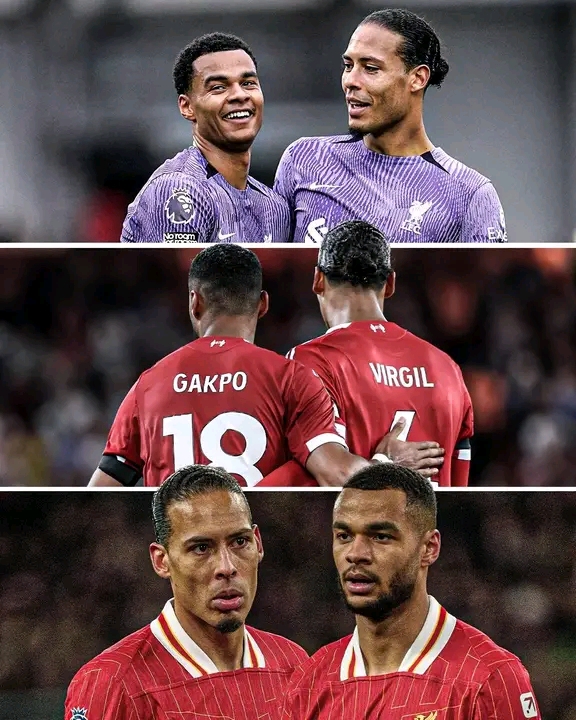
Virgil van Dijk has never been shy about saying exactly what he thinks, and with Manchester City reportedly closing in on a deal for Cody Gakpo before Tuesday’s transfer deadline, the Liverpool captain has used his platform to send an unmistakable message to both the club’s hierarchy and his compatriot. Speaking after Liverpool’s 2-2 draw with Nottingham Forest, van Dijk made it clear that he wants Gakpo to remain on Merseyside, describing him as a quality player the club should be fighting to keep rather than cash in on. It was a rare public intervention from a captain who tends to pick his moments carefully, and the timing tells you almost everything you need to know about how seriously this situation is being taken inside the Liverpool dressing room.
The backdrop to all of this is a summer that has already been eventful for Liverpool, even before a ball was kicked competitively. The club is in the early stages of a rebuild under new head coach Andoni Iraola, who was handed the reins after Arne Slot’s departure, and the early results have been mixed. Draws against Newcastle and Nottingham Forest, both of them 2-2, have shown a team capable of scoring goals but still working out its defensive shape. Gakpo has actually been one of the bright spots in those opening fixtures, contributing a goal and an assist as Liverpool twice had to come from behind just to salvage a point. That form makes the timing of City’s interest all the more uncomfortable for supporters who would rather see the Dutchman staying and building on that momentum than being shipped out for a fee just as he rediscovers his best level.
Gakpo’s numbers at Liverpool tell the story of a player who has quietly become one of the most reliable and versatile forwards in the Premier League. Since arriving from PSV Eindhoven in a deal completed in January 2023, he has racked up over 180 appearances, more than 50 goals and close to two dozen assists. He was a key contributor to Liverpool’s Premier League title win in the 2024/25 season, operating across the front line in a way that gave whichever manager was in charge genuine tactical flexibility. He can play as a central striker, drift wide onto either flank, or drop into a deeper creative role, and that adaptability is precisely why so many admirers describe him as a luxury that few squads can afford to lose. It is also exactly why van Dijk’s plea carries so much weight. This isn’t a squad player being talked about; it’s someone who has been central to the club’s identity for the better part of four years.
The financial context is where things get complicated, and it is worth remembering that football clubs rarely make transfer decisions purely on sentiment. Liverpool have been heavily active in the market themselves this summer, closing in on a deal to sign Bradley Barcola from Paris Saint-Germain in a transfer that could rise as high as £123 million, a fee that would make the Frenchman one of the most expensive players in Premier League history. Big incoming fees like that tend to have ripple effects elsewhere in a squad, and Gakpo’s situation looks like a direct consequence of that spending. With Barcola arriving and expected to compete for a starting spot in the same areas of the pitch that Gakpo currently occupies, Liverpool’s hierarchy appears to view this as a natural moment to consider offers, particularly with City reportedly ready to pay a fee in the region of £75 to £85 million. From a pure balance sheet perspective, that kind of return on a player signed for a fraction of that amount is difficult for any club’s finance department to ignore, even when the manager and the dressing room want the opposite outcome.
That tension between the boardroom’s financial logic and the dressing room’s football logic is really what sits at the heart of this story. Van Dijk’s comments read less like a passing remark and more like a captain trying to apply pressure in the only way available to him, through the public microphone rather than a private memo that nobody outside Anfield would ever see. He was careful in how he framed it, acknowledging the football departments would have their own process to work through, but leaving no doubt about where his own preference lies. He wants Gakpo around, and he wants the club to resist the temptation of a big cheque in favor of keeping a player he believes will be central to whatever project Iraola is trying to build this season and beyond.
It also helps to understand the personal relationship between the two Dutch internationals, because it adds a layer to this story that goes beyond typical transfer speculation. Van Dijk and Gakpo have shared a dressing room not just at club level but for the Netherlands national team as well, and van Dijk has previously spoken about the role he played in convincing Gakpo to choose Liverpool over other suitors when he was leaving PSV. There was a sense back then that van Dijk, as the senior Dutch figure already established in England, felt a certain responsibility for how Gakpo’s move would work out, essentially vouching for the size and character of the club he was being asked to join. Having invested that kind of personal capital in bringing him to Anfield, it makes sense that van Dijk would feel strongly about seeing him stay now that questions are being asked about his long-term future. This isn’t just a captain defending a valuable squad member; it’s someone who feels a genuine stake in a fellow countryman’s career trajectory.
City’s interest itself should not come as a huge surprise given how their squad planning has evolved over the past couple of seasons. Pep Guardiola’s side have shown a consistent appetite for signing versatile, technically gifted attackers who can be deployed in multiple roles without a drop-off in quality, and Gakpo fits that profile as well as almost anyone available in the current market. Whether he would slot into a front three, operate through the middle, or provide competition and cover on the flanks, City’s coaching staff would have no shortage of ways to use him. There is also a broader subplot here about domestic rivalry that Liverpool supporters will not enjoy thinking about. Selling a player of Gakpo’s caliber directly to one of the Premier League’s traditional heavyweights, rather than to a club abroad, always stings a little more, and it raises the uncomfortable prospect of facing him twice a season in a City shirt, potentially inflicting damage on the very club that developed him into the player he is today.
Liverpool are not without other options in attack, and it is worth stressing that this saga is unfolding alongside the arrival of Barcola and broader question marks over the shape of Iraola’s forward line. But strength in depth is not quite the same as strength in the right areas, and there is a reasonable argument that trading Gakpo’s proven Premier League output and tactical flexibility for the promise of a new signing, however talented, is a gamble Liverpool do not strictly need to take this summer. Iraola inherited a squad that won the title only a season ago but slipped since, and he will be acutely aware that his early weeks in the job are being watched closely by supporters who expect continuity of success rather than a rocky transitional period. Losing a versatile, in-form attacker at exactly the moment he needs settled options could complicate an already delicate start to his tenure, regardless of how the incoming business shapes up.
There is also the matter of Tottenham lurking in the background of this saga, a detail that tends to get lost given how loudly City’s interest has been reported. Spurs have also been credited with interest in Gakpo at various points this summer, which underlines just how highly regarded he is across the top end of the Premier League. When multiple clubs of that stature are circling the same player, it usually says as much about the player’s standing in the market as it does about any specific tactical need those clubs are trying to fill. For Liverpool, that level of outside interest should, in theory, be a source of reassurance about the value they are sitting on, but it also increases the pressure to make a decisive call one way or the other before the deadline closes the door on any further negotiation.
None of this happens in a vacuum, either. Liverpool’s summer has already featured plenty of noise around other incoming and outgoing business, and pundits and former players have not been shy about weighing in on how the club’s rebuild is being handled. Some of that commentary has focused on whether Barcola himself is walking into an ideal situation given Liverpool’s underwhelming campaign the previous season, with skeptics suggesting a move away from a treble-winning Paris Saint-Germain side to a club mid-transition is a curious career choice. Whatever the merits of that particular debate, it feeds into a wider narrative that Liverpool’s rebuild is being watched with a mixture of curiosity and skepticism from outside the club, and every subsequent transfer decision, including what happens with Gakpo, will be read through that lens.
For Gakpo himself, the situation places him in a position that many professional footballers eventually face at some point in their careers: the choice between loyalty to a club that gave him his platform in English football and the lure of a rival willing to pay a substantial fee and, presumably, offer significant personal terms to make the move happen. Players in that position rarely make their decisions in isolation. Family, agents, national team considerations, and the advice of senior professionals like van Dijk all play a part in shaping the eventual outcome. Given how public van Dijk’s comments have been, it would be a mild surprise if similar conversations were not also happening away from the cameras, with senior figures at the club making their case directly to Gakpo about what the next chapter of his Liverpool career could look like if he chooses to stay.
There is also a broader question about squad culture that tends to get overlooked when transfer stories are reduced purely to numbers and fees. Van Dijk’s willingness to speak out publicly says something about the kind of leadership he wants to provide during a period of transition at the club. Captains who stay quiet during moments of uncertainty can sometimes be read as indifferent or disconnected from the dressing room’s mood, while those who speak up, even at the risk of appearing to publicly lobby the club’s hierarchy, tend to be viewed as protective of the group’s identity. Van Dijk has clearly chosen the latter path here, framing his comments not as a complaint but as an honest reflection of what he believes the team needs if it wants to compete on multiple fronts again this season. Whether that intervention actually influences the final decision remains to be seen, but it does reinforce the sense that this is a captain fully invested in shaping the direction of a squad still finding its feet under a new coach.
From a neutral standpoint, this saga is also a useful window into just how ruthless the modern transfer market has become, even for clubs with recent silverware to their name. A title winning squad from little more than a year ago is now facing genuine questions about whether one of its most productive and versatile attackers should be sold, essentially to help fund the arrival of a different attacking option from abroad. That kind of churn is increasingly normal across the highest level of the sport, where financial fair play regulations, squad balance requirements, and simple market opportunism combine to make even successful, settled looking squads feel perpetually unfinished. Supporters who remember a time when a title-winning core might be kept largely intact for several seasons are having to adjust to a landscape where even key contributors can be one enormous offer away from an exit, regardless of recent form or manager preference.
As the deadline approaches, Liverpool’s decision makers are left balancing several competing pressures at once. There is the financial upside of a substantial fee for a player whose valuation may never again be as high as it is right now, given his age, form and contract situation. There is the football risk of thinning out a forward line just as a new coach is trying to establish an identity and generate early season momentum. And there is the human element captured so plainly in van Dijk’s comments, the sense that some relationships and some contributions to a dressing room are worth more than what a spreadsheet alone can capture. It is rare for a modern football story to combine all three of those threads so clearly in one moment, which is probably why van Dijk’s words have resonated as strongly as they have among supporters over the past day.
Ultimately, the next few days will determine which version of this story gets written. Either Liverpool resist City’s advances and Gakpo remains part of Iraola’s plans, giving the head coach one more experienced, versatile option to lean on as he tries to steady a shaky start to the season, or the lure of a significant fee proves too strong to turn down, and Gakpo becomes another name added to the growing list of talented forwards who have crossed the divide between two of English football’s most storied clubs. Whatever happens, van Dijk has made his position known in the clearest possible terms, and in doing so he has ensured that this transfer saga will be remembered as much for what was said publicly as for whatever fee eventually appears in the headlines. For a club navigating its first real period of uncertainty since winning the league, that kind of visible captaincy might end up mattering just as much as any individual transfer outcome, win, lose or draw the coming days.