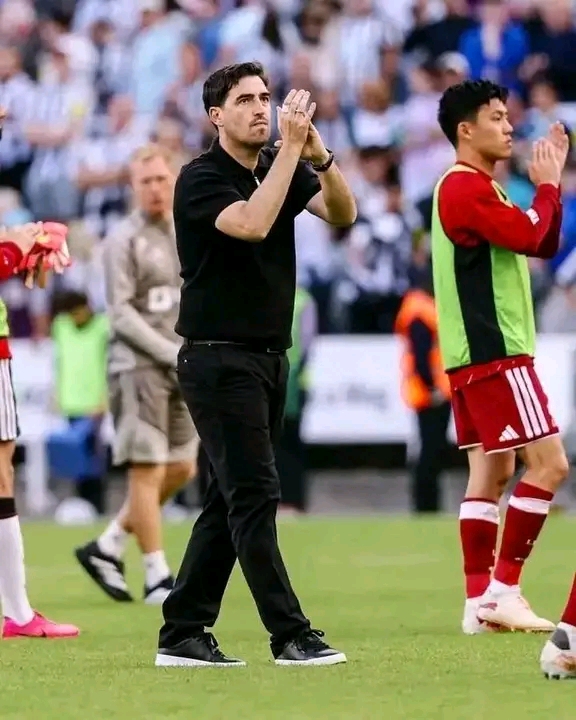
Reds, after that first game, what advice would you give Andoni Iraola? 👀🔴
Liverpool’s opening Premier League game of the 2026/27 season was one of those matches that leaves supporters with mixed emotions. A 2-2 draw away at Newcastle United may not have been the result many Liverpool fans wanted, but the dramatic circumstances of the game made sure there was plenty to discuss. Dominik Szoboszlai’s 99th-minute penalty rescued a point for the Reds after Newcastle had twice taken the lead, giving Iraola something positive to take from his first competitive match in charge. At the same time, the performance exposed several areas that the new Liverpool manager will know must improve quickly if the team is going to challenge at the highest level.
The first piece of advice should probably be simple: do not panic. One game should not define an entire season, especially when the manager is trying to introduce a new tactical identity to a team that has already gone through significant changes. Iraola is beginning a new chapter at Liverpool, and his first competitive assignment was hardly an easy one. St James’ Park is one of the most difficult places to visit in the Premier League, and Newcastle came into the game determined to make a statement under their new manager as well. Liverpool were forced to deal with an intense atmosphere, an aggressive opponent and the pressure that naturally comes with being expected to win. The fact that the Reds came away with a point after falling behind twice shows that there is already some resilience within the squad.
However, not panicking does not mean ignoring the problems. If anything, the Newcastle match gave Iraola a very useful early warning about what needs attention. Liverpool conceded inside the opening five minutes, with Anthony Elanga finishing after Newcastle quickly exploited space in transition. Conceding so early immediately changed the rhythm of the game and allowed Newcastle to play with greater confidence. For a manager whose football relies heavily on intensity, pressing and collective organisation, the opening goal should be one of the biggest lessons from the match. Liverpool cannot afford to be slow out of the blocks against teams that are capable of attacking quickly.
Iraola should therefore make Liverpool’s opening 15 minutes a major focus in training. The team needs to start games with concentration, aggression and clarity. The players must understand exactly when to press, who should step forward, who should cover behind and how the midfield should react when possession is lost. A high line and aggressive pressing system can be extremely effective, but only when every player understands his responsibility. One player arriving late or another stepping forward without proper cover can create the kind of spaces Newcastle exploited. Iraola has built his reputation around energetic and organised football, so there is no reason to abandon that philosophy. The challenge is making sure the players execute it consistently.
Another important piece of advice is to strengthen the connection between Liverpool’s midfield and attack. There were moments against Newcastle when Liverpool had possession and territory but struggled to turn that control into clear attacking opportunities. The Reds finished the match with significant possession and 27 shots according to match statistics, but the game still felt uncomfortable for long periods because Newcastle were able to defend dangerous areas and attack Liverpool in transition.
This is where Iraola must find the right balance. Possession alone does not win football matches. Liverpool need possession with purpose. The ball has to move quickly enough to disorganise opponents, but the team also needs players willing to make aggressive runs behind the defensive line. There needs to be movement between the lines, combinations around the penalty area and better support for the striker. When Liverpool attack, opponents should constantly be forced to make difficult decisions about whether to follow a runner or protect their defensive shape.
Cody Gakpo provided an important reminder of what Liverpool can do when the attack becomes direct and decisive. His equaliser in the second half gave the Reds renewed belief, and it showed the importance of having players capable of making something happen in the final third. Liverpool cannot rely on one player to solve every attacking problem, though. The entire front line needs to contribute. The midfielders need to arrive in the box, the full-backs need to provide intelligent width and the attacking players need to interchange positions without leaving the team exposed to counterattacks.
Iraola should also resist the temptation to change everything at once. Supporters naturally want to see immediate improvements when a new manager arrives, but tactical transformation takes time. The players need to understand the manager’s principles before they can execute them instinctively. Liverpool have quality, but quality alone is not enough. The team needs chemistry. Players need to know where their teammates will be when they receive the ball. They need to understand when to press and when to retreat. They need to recognise the triggers that tell them when to accelerate an attack and when to slow the game down.
The defensive organisation must be another priority. Liverpool have already shown during pre-season that maintaining concentration for the full 90 minutes remains an issue. Against Monaco, the Reds surrendered a two-goal advantage before eventually losing 3-2, and although the circumstances were different, the Newcastle game again showed defensive vulnerabilities. Iraola himself acknowledged before the season that there was still work to do, and the opening-day performance reinforced that point.
The answer cannot simply be to defend deeper. That would go against many of the principles that make Iraola’s football attractive. Instead, Liverpool need to defend smarter. When the full-backs move forward, someone must provide cover. When a centre-back steps into midfield, another player must protect the space behind him. When the team loses possession, the first reaction has to be immediate. If Liverpool cannot win the ball back quickly, they must know when to drop and reorganise instead of allowing opponents to run into open space.
The midfield deserves particular attention. Liverpool need a midfield that can control matches emotionally as well as technically. There will be games when the Reds are dominant, but there will also be difficult periods when opponents are pressing aggressively and the atmosphere is hostile. During those moments, somebody needs to slow the game down, win second balls and give the team control. Somebody needs to demand the ball when everyone else is under pressure. That leadership will be crucial throughout the season.
Dominik Szoboszlai demonstrated exactly why he can be such an important figure for this Liverpool team. His late penalty rescued a point, but his importance should go beyond moments from the spot. He has the energy to press, the ability to cover ground, the quality to shoot from distance and the mentality to take responsibility when the pressure is enormous. Iraola should look to build a midfield structure that allows Szoboszlai to influence games without asking him to do everything. If he is constantly required to cover every defensive gap while also creating attacks and arriving in the box, Liverpool could eventually lose some of his attacking influence.
The late penalty itself also tells us something about the mentality of the squad. Liverpool were losing 2-1 deep into stoppage time, yet they kept attacking and eventually created the situation that led to the penalty. That is not insignificant. A team lacking belief could easily have accepted defeat. Liverpool did not. They continued pushing, and Szoboszlai showed composure when the biggest moment arrived. Iraola should use that mentality as a foundation. The team may not be perfect yet, but it clearly has the ability to fight until the final whistle.
At the same time, Liverpool cannot make last-minute rescues a habit. There will be matches where a 99th-minute penalty saves a point, but there will also be matches where there is no late lifeline. If the Reds want to compete for major trophies, they have to learn how to control games earlier. They need to turn good performances into wins rather than relying on moments of drama.
One of the biggest questions surrounding the team is Alexander Isak. His return to Newcastle created one of the biggest storylines of the opening weekend, and the Swedish striker received a hostile reception from the home supporters. Naturally, the emotional circumstances made his performance more difficult, and Iraola has already indicated that he did not believe the atmosphere affected Isak in the way some people suggested.
The advice here is to give Isak time. A new striker joining a new team under a new manager needs time to understand the movements of his teammates. Isak’s quality is not in doubt. The key is creating the right environment for him to succeed. Liverpool need to provide him with service. They need runners around him, players capable of playing quick combinations and midfielders willing to deliver passes into dangerous areas. If Isak spends entire matches isolated between two centre-backs, it will be difficult for him to have the impact Liverpool expect.
Iraola should also make sure Isak does not feel the burden of replacing anyone. Liverpool are entering a new era, and comparisons with previous stars will only create unnecessary pressure. The team needs to develop its own identity. Isak should be allowed to become his own version of a Liverpool forward rather than constantly being judged against the players who came before him.
The same applies to Florian Wirtz. The German attacking midfielder possesses enormous talent, but he needs a tactical structure that allows him to operate in spaces where he can influence matches. Against Newcastle, Liverpool struggled at times to get the best from their creative players. That is partly understandable in a new system, but Iraola must find ways to get Wirtz closer to the action. He needs freedom, but he also needs clear relationships with the players around him.
One of the most exciting aspects of Iraola’s appointment is the possibility of seeing a Liverpool side that is aggressive without being reckless. The manager has demonstrated at previous clubs that he can build teams capable of pressing intensely and attacking with purpose. Liverpool have the players to take that philosophy to another level. But the system must be adapted to the quality and characteristics of the squad. Iraola should not simply copy what worked at Bournemouth. Liverpool are a different club with different expectations, different opponents and different levels of pressure.
The Premier League is unforgiving. At Liverpool, a draw away from home can feel like a crisis if the performance does not match expectations. Iraola needs to accept that pressure but also shield his players from it. The supporters will criticise when necessary, but they will also support a team that shows commitment, bravery and clear improvement. If the players can see that the manager has a plan, they are more likely to trust the process.
Another important lesson is squad depth. Liverpool’s season will not be decided by 11 players. Injuries, suspensions, fatigue and fixture congestion will eventually test every area of the squad. Iraola must therefore develop alternatives. Young players need opportunities. Experienced players need to understand their roles. Substitutes must be ready to change games rather than simply fill positions. The introduction of Victor Muñoz late against Newcastle ultimately contributed to the penalty situation, showing how substitutions can have a significant impact in the final stages of a match.
This should encourage Iraola to trust his bench. If a starting player is struggling, the manager should not be afraid to change the game early enough for the substitute to have an impact. Modern football is increasingly decided by the quality of the entire squad, not just the starting XI. Liverpool need competition for places, because competition can raise standards across the team.
There is also a psychological element that Iraola must address. Liverpool need to learn how to respond after conceding. Against Newcastle, they conceded an early goal and had to spend much of the match chasing the game. They managed to recover twice, but constantly playing from behind is dangerous. The players need to understand that conceding a goal does not mean abandoning the game plan. The immediate response should be calmness. Keep possession, regain shape, create chances and trust the process.
The reaction after Newcastle’s second goal was especially important. Joe Willock restored Newcastle’s advantage shortly after Gakpo’s equaliser, meaning Liverpool had almost no time to enjoy their comeback before falling behind again. That moment could have broken the team’s momentum, yet Liverpool continued fighting until the end.
That mentality is something Iraola should protect. Tactical improvement is essential, but character is equally important. Liverpool supporters want to see players who never stop believing. The late penalty was evidence of that. The challenge now is combining that fighting spirit with greater control.
There is also a need for patience from the supporters. A new manager should be judged over a body of work, not one match. The opening-day draw was not perfect, but it was not a disaster either. Liverpool created enough opportunities to remain competitive, showed resilience and avoided starting the season with a defeat. At the same time, the defensive issues and lack of consistent control cannot be ignored. Both realities can exist at the same time.
Iraola himself described the result as something he would not have chosen, while acknowledging the relief of rescuing a point late in the match. That attitude is encouraging. The manager knows Liverpool must improve, and he is unlikely to pretend that everything was perfect simply because the team avoided defeat.
The advice from Liverpool supporters should therefore be constructive: trust your football, but adapt where necessary. Keep the intensity. Keep the bravery. Keep the pressing. Keep the willingness to attack. But improve the defensive structure, improve the midfield balance, improve the transitions and make sure the attacking players receive the support they need.
Most importantly, make Anfield a place where the new identity becomes clear. Away games will always be difficult, but Liverpool must establish a rhythm at home. When the supporters are behind the team, Iraola’s aggressive football could become extremely powerful. A Liverpool side that presses together, attacks together and reacts together can create an atmosphere that overwhelms opponents.
The first game has already provided Iraola with plenty of information. He knows which players can handle pressure. He knows where the team can be exposed. He knows the midfield needs balance. He knows the attack can create opportunities. He knows the squad has character. He also knows that Liverpool cannot afford to give opponents too many chances to punish mistakes.
The good news for the Reds is that this is only the beginning. There are still many matches ahead, many training sessions ahead and plenty of opportunities to improve. A new manager needs time to build his team, and a new Liverpool era will not be completed in one afternoon at St James’ Park.
So, Reds, what advice would you give Iraola after that first game? Would you tell him to change the formation? Would you strengthen the midfield? Would you demand more defensive discipline? Would you give Isak more time to settle? Would you ask for more attacking freedom for Wirtz? Or would you simply tell the manager to trust his ideas and allow the team to grow?
Perhaps the best advice is a combination of all of them. Iraola must stay true to his philosophy while remaining flexible enough to learn from what Liverpool’s players show him on the pitch. Football is not about stubbornly following a plan regardless of circumstances. It is about recognising problems, finding solutions and continuously improving.
Liverpool did not produce a perfect performance against Newcastle, but they showed something valuable: they refused to give up. The 2-2 draw was secured by Szoboszlai’s nerve from the penalty spot, but it was created by a team that continued pushing when defeat looked increasingly likely. That spirit can become the foundation of Iraola’s Liverpool if he combines it with better organisation and greater tactical consistency.
The road ahead will not be easy. Expectations at Liverpool are enormous, and every dropped point will bring questions. But Iraola has been given the opportunity to build something new, and the first game has already shown both the potential and the problems.
For now, Reds should not write off the new era because of one draw. They should not crown Iraola a genius because of one dramatic comeback either. Instead, watch the next few games closely. Look for patterns. Look for improvement. Look for better defensive organisation, sharper transitions, stronger midfield control and more chemistry in attack.
If those improvements begin to appear, the Newcastle draw could eventually be remembered not as two points dropped, but as an important early lesson in the Iraola era.
One thing is certain: the fight is already there. Now Iraola must turn that fight into control, turn control into consistency and turn consistency into victories.
The journey has only just begun, Reds. 🔴