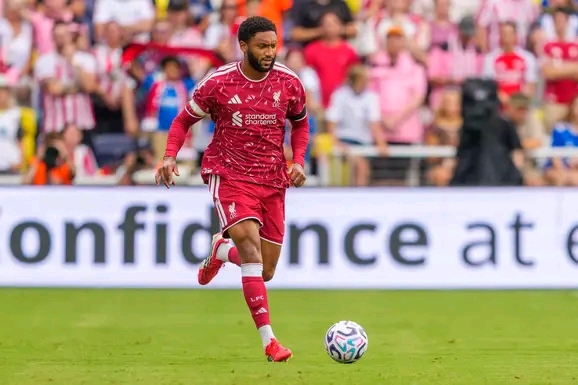
©️ Alisson Becker has been confirmed as Liverpool’s new vice-captain, while Joe Gomez and Dominik Szoboszlai have been added to the Reds’ leadership group. However, Andoni Iraola has revealed the Brazilian will not wear the captain’s armband when Virgil van Dijk is not on the pitch due to Premier League rules.
Every summer at a football club brings a fresh round of small but symbolically loaded decisions, and few carry quite as much weight among supporters as the question of who wears the armband when the regular captain is absent. Andy Robertson’s departure to Tottenham this summer left a genuine vacancy at Liverpool, since the Scot had deputised for Virgil van Dijk for several seasons and was a natural, vocal on-pitch presence whenever the Dutchman was rested, injured, or substituted. With Robertson gone and Mohamed Salah also departing after a decade of service, Andoni Iraola arrived at Anfield facing a leadership puzzle as well as a footballing one, and it is one he has now resolved just days before his first competitive match in charge, away at Newcastle United. Speaking to reporters in his pre-match press conference, Iraola confirmed that Liverpool will move forward with a four-man leadership group: Van Dijk remains captain, with Alisson Becker elevated to the primary vice-captaincy, and Joe Gomez and Dominik Szoboszlai completing the quartet as additional leaders within the squad. It’s a decision that, on the surface, looks entirely sensible given the profiles involved, but it also comes with a fascinating and slightly unusual wrinkle attached, one that says as much about the modern game’s evolving regulations as it does about dressing-room politics at Anfield.
Let’s start with what was actually confirmed. Asked directly whether he had settled on Van Dijk’s official second-in-command, Iraola did not hesitate. “Yes, we took a decision,” he told the assembled press. “The captains will be Virgil, will be Alisson, will be Joe Gomez, and Dom Szoboszlai.” That single sentence effectively closes the book on months of speculation that followed Robertson’s exit, speculation that had touched on several possible candidates but increasingly zeroed in on Szoboszlai as the most likely long-term heir to the armband, given his rising profile both for club and country. Instead of naming one clear-cut vice-captain, Iraola has opted for a small committee approach, spreading responsibility across four senior or high-standing figures rather than concentrating it all in a single individual. It’s worth noting the order in which he listed them too, since Alisson’s positioning directly behind Van Dijk suggests he is viewed as first in line, with Gomez and Szoboszlai forming the next tier of the group. Given Alisson’s status as one of the dressing room’s most respected characters, having spent eight years at the club and established himself as arguably the finest goalkeeper of his generation during that time, there is a natural logic to him being handed such recognition. But it’s also here that the story takes its more unusual turn, because Iraola immediately followed up his announcement with an important caveat regarding exactly what that vice-captaincy would mean in practice.
“But I explained to Alisson especially that it’s not going to be possible that he wears the armband because with the new rule I think there is a big limitation if a ‘keeper wears the armband,” Iraola explained, laying out in some detail the thinking behind what could otherwise look like a strange contradiction: naming someone your official second-in-command while simultaneously telling them they are unlikely to ever actually captain the side on the pitch. The “new rule” Iraola is referring to relates to a tightening of Premier League and IFAB regulations around captaincy and referee communication, changes introduced to streamline on-field conversations between officials and teams during contentious or complex incidents. As Iraola went on to explain, the practical problem with a goalkeeper serving as the on-pitch captain is fundamentally one of geography and logistics. “Because basically, if something happens in the opposition box the referee has to explain to the captains what’s happening, all the decisions,” he said, pointing to the obvious issue that a goalkeeper stationed inside his own penalty area is in no position to sprint the length of the pitch every time a decision needs discussing at the opposite end. It’s a scenario that sounds almost comical when described plainly, but it reflects a genuine tactical and administrative headache that has become more pronounced as referees have been instructed to consult designated captains more frequently and more visibly, particularly around VAR reviews and contentious refereeing calls.
Iraola’s comments carry extra weight because this is not a theoretical concern to him; it’s one he has already lived through directly. He referenced his time as head coach of Bournemouth, where he had experience of exactly this dilemma while working with goalkeeper Neto in a leadership role. “I had one season with Neto in Bournemouth and then you have to start every game to say a different player that can act as a captain, and this is not viable,” Iraola said, describing how the arrangement effectively became unworkable on a week-to-week basis, forcing him to designate a rotating on-field stand-in every single matchday regardless of who technically held the senior vice-captaincy. That lived experience clearly shaped his thinking when it came to handling the same situation at Liverpool, and rather than repeating the same operational headache, he appears to have preemptively built the flexibility into his leadership structure from the very start, ensuring that Gomez and Szoboszlai are already primed and recognised within the group to step into the on-field captaincy role whenever Van Dijk is unavailable, sidestepping the awkward in-season scramble he experienced on the south coast.
What comes through clearly in Iraola’s remarks, though, is that this is not in any way a demotion or a slight against Alisson personally. Quite the opposite, in fact. The Spaniard was clearly conscious of how the decision could be perceived and took pains to frame it as a matter of practical necessity rather than a reflection of where the goalkeeper stands in his estimation. “But I wanted him to feel like we value him,” Iraola said, going on to describe the broader relationship he is still building with his senior professionals in these opening weeks of his tenure. “I’ve had enough time and we will have more time to know each other, but I had to explain also the decision about the armband to Ali because he is a ‘keeper and, unfortunately, they are putting the rules in a way that there is a lot of disadvantages to having a ‘keeper as a captain.” That final phrase is a telling one, because it reframes the entire situation not as a Liverpool-specific quirk but as a wider, structural issue affecting any club that might want to hand genuine on-field leadership responsibilities to a goalkeeper. In an era when goalkeepers are more vocal, more influential, and more central to a team’s overall organisation and build-up play than perhaps at any point in the sport’s history, it is a slightly curious state of affairs that the regulations around captaincy have effectively made them significantly less viable candidates for the armband itself, purely due to positioning rather than any question of character, communication skills, or standing among teammates.
It’s worth pausing to consider just how much Alisson’s standing at Liverpool actually merits this recognition, even in its symbolic, non-armband-wearing form. Since arriving at Anfield in the summer of 2018, he has established himself as one of the most influential and respected figures in the dressing room, someone whose calm authority and consistent excellence between the posts helped underpin the most successful period in the modern history of the club, including a Premier League title and Champions League triumph among his major honours. He was already third in the club’s unofficial pecking order for leadership responsibilities under the previous regime, and his elevation to the more prominent vice-captaincy slot under Iraola reflects both the natural progression of seniority within the squad, given the exits of Robertson and Salah, and a genuine acknowledgment of the influence he already carries around the training ground even without an armband physically strapped to his sleeve. For a goalkeeper who has always spoken thoughtfully and maturely in media duties, and who has long been viewed by teammates as one of the calmer, more reassuring characters in moments of pressure, it is entirely fitting that he would be recognised in this way, even if the on-field practicalities of the modern game mean that recognition manifests itself differently than it might have a decade or two ago.
Joe Gomez’s inclusion in the leadership group is similarly logical when you consider his own tenure at the club. Having joined Liverpool over a decade ago as a teenager from Charlton Athletic, Gomez is now among the longest-serving players in the entire squad, with eleven years of service to draw upon, spanning multiple managerial eras, several serious injury setbacks and recoveries, and long stretches both as a first-choice centre-back and, more recently, as a versatile squad option deployed at right-back and in various defensive permutations depending on need. That longevity carries real currency within a dressing room, particularly one that has lost two of its most experienced voices in the same transfer window. Gomez may not always be a guaranteed starter given the strength and depth of Liverpool’s current defensive options, but his standing among teammates, and his understanding of the club’s culture, standards, and expectations, make him a natural fit to help maintain continuity during what is otherwise a period of considerable turnover both in personnel and coaching philosophy following Iraola’s arrival.
Then there is Szoboszlai, whose inclusion feels less about the present moment and more a clear statement of intent regarding the future. The Hungarian midfielder has spent the past eighteen months steadily building a reputation as one of Liverpool’s most reliable and versatile performers, someone capable of playing across midfield and even filling in at right-back when injuries have bitten, all while maintaining an extremely high work rate and physical output that has repeatedly been highlighted by data showing him among the league’s leaders in distance covered and sprints completed. He already captains Hungary at international level, evidence that leadership responsibility is nothing new to him, and Van Dijk himself has previously spoken publicly about seeing genuine captaincy potential in his younger teammate, praising the way Szoboszlai leads by example through his performances on the pitch while acknowledging there is still more growth for him to do off it. His decision to sign a new five-year contract with the club this past July only reinforces the sense that Liverpool see him as central to their plans for years to come, and slotting him into the leadership group now, while he is still only in his mid-twenties, positions him as the clear long-term successor to Van Dijk’s captaincy once the veteran defender eventually moves on or retires.
There is an interesting subtext running through all of this that speaks to the broader transitional moment Liverpool find themselves navigating as a football club right now. This is a squad that has just said goodbye to two era-defining figures in Robertson and Salah, both of whom carried enormous influence in the dressing room accumulated over the best part of a decade of service and success. Replacing that kind of institutional knowledge and leadership overnight is simply not possible, and Iraola himself was refreshingly candid about this reality when discussing the club’s broader situation. Asked whether he was concerned about a potential leadership vacuum following those departures, he did not pretend the losses were insignificant. “We lost a lot in terms of experience, high-level players who have performed so well for so many years here,” he acknowledged, before pivoting to a more optimistic framing of how the squad might address that gap. “But I think it is also a natural thing in clubs. I think we have a lot of young players willing to take those minutes and ready to take those leadership roles.” That comment captures something important about how Iraola appears to be approaching his first season at the helm: rather than searching for a single dominant like-for-like replacement for what Robertson and Salah provided, he seems focused on distributing responsibility more broadly across a wider group of players, giving several individuals a stake in the club’s leadership culture rather than concentrating it narrowly in one or two hands, as had arguably been the case in recent seasons.
This distributed approach to leadership also mirrors something Iraola touched on when discussing his broader pre-season priorities during Liverpool’s tour of the United States earlier in the summer. Speaking before the group’s period of intensive training and friendly matches, he stressed just how important that block of preparation was for a new head coach walking into an unfamiliar dressing room. “We need the references like Virgil, like Alisson, like Joe Gomez, players that have been here for a long time,” he said at the time, explicitly naming the trio who would go on to form three-quarters of his eventual leadership group, well before the final confirmation of Szoboszlai’s inclusion was made public. That earlier comment suggests the broad shape of this decision had been forming in Iraola’s mind for weeks, if not longer, built on his own observations of who commanded respect and trust within the squad during those crucial early training sessions in Chicago and beyond, rather than being a hastily assembled reaction to the vice-captaincy vacancy in the days immediately before the Newcastle opener.
For Liverpool supporters digesting all of this news, the reaction across fan forums and social media in the hours following Iraola’s press conference has been largely, though not universally, positive. There is broad acceptance that Alisson, Gomez, and Szoboszlai represent sensible, defensible choices given their respective standing, service, and performances, even if a handful of voices questioned whether Gomez’s relatively limited recent playing time should factor into his inclusion in such a prominent group. The more common sentiment, though, has framed Gomez’s inclusion as a fitting piece of recognition for over a decade of dedicated service to the club, quite possibly his final season in a Liverpool shirt given his contract situation and the emergence of younger defensive options, and something that costs the club nothing while meaning a great deal to a player who has weathered significant injury adversity across his career at Anfield without ever losing the respect of his teammates or the fanbase. Meanwhile, the explanation around Alisson and the armband, while initially sounding like an unusual footnote, has generally been well received once supporters have had time to actually digest the reasoning behind it, since Iraola’s explanation is grounded in straightforward, practical logic about the demands of modern refereeing protocols rather than anything resembling a snub.
It’s also worth placing this decision within the wider context of Iraola’s early messaging since arriving at Anfield. Across every press conference he has given so far, from those pre-season briefings in the United States through to his final remarks before kick-off against Newcastle, a consistent theme has emerged: a coach who wants to lean heavily on his most experienced, longest-serving professionals to help bed in a genuinely significant squad and stylistic transition, while simultaneously trying to fast-track trust and responsibility toward emerging leaders like Szoboszlai who represent the club’s medium-term future. Balancing those two priorities, protecting continuity through senior voices while nurturing new leadership for the years ahead, is one of the trickier balancing acts any new head coach has to manage, particularly one inheriting a squad that has just undergone as significant an overhaul in personality and personnel as this current Liverpool group has. The decision to expand the leadership group to four names, rather than simply anointing a single vice-captain, reads as a deliberate attempt to hedge across both of those priorities simultaneously, spreading trust widely enough that no single departure or injury creates the kind of vacuum that Robertson’s exit arguably threatened to create in the first place.
As Liverpool prepare to kick off the new Premier League season away at St James’ Park, the practical reality is that supporters will not necessarily see much visible change from this announcement on a week-to-week basis, since Van Dijk remains captain and will presumably continue wearing the armband in the overwhelming majority of matches he features in. The real test of this new structure will come in matches where Van Dijk is either rested, injured, or substituted, at which point it will most likely be Szoboszlai, rather than Alisson, who steps forward as the on-field captain given the goalkeeper positioning constraints Iraola has been so explicit about. That in itself tells its own quiet story about where the club sees its long-term captaincy succession heading, even as Alisson retains his officially elevated status and continues to be recognised, valued, and consulted as one of the senior statesmen of the dressing room. It is a nuanced, layered arrangement, but one that appears to have been thought through carefully by a head coach determined not to repeat the operational headaches he encountered during a similar situation earlier in his managerial career, while still ensuring that every member of his newly expanded leadership quartet understands exactly where they stand and why .