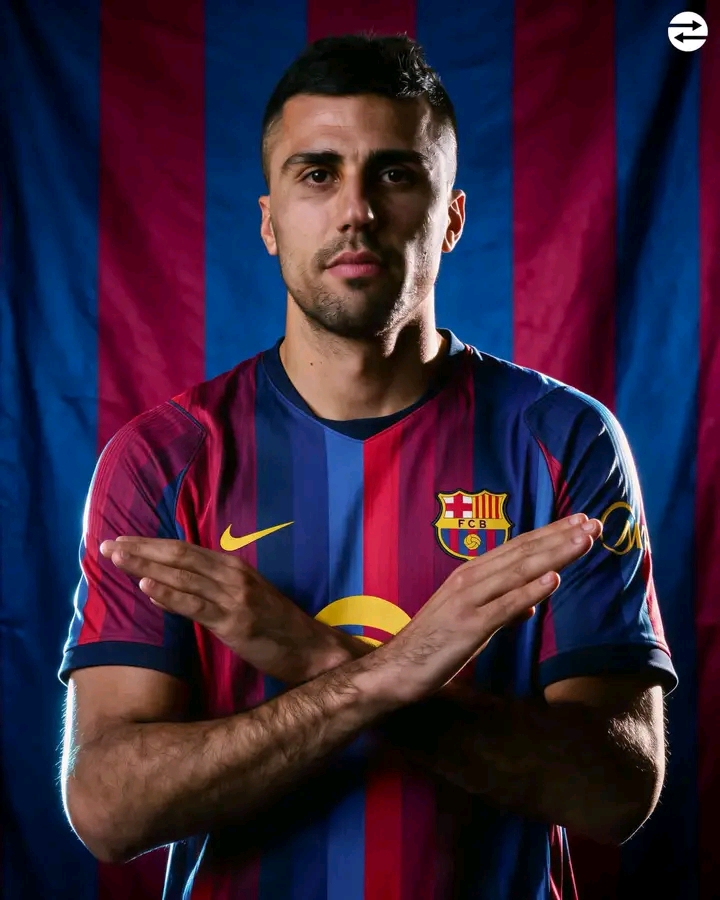
It is official. Rodri is a Barcelona player, or as good as one, with the two clubs having reached full agreement on a transfer that brings to a close one of the most closely followed sagas of the entire summer window. Fabrizio Romano, whose confirmation carries as much weight in the transfer market as almost anyone else working in football journalism, gave the deal his trademark seal of approval, stating plainly that an agreement had been reached on the transfer of the Spanish midfielder from Manchester City to Barcelona, and that everything was done for the former Ballon d’Or winner. Manchester City, in Romano’s words, gave the green light to the last offer submitted by Barcelona, bringing an end to a negotiation that had dragged through rejected bid after rejected bid before finally arriving at a package both clubs could accept. After everything that preceded it, the weeks of speculation, the multiple knocked-back offers, the public posturing from both sides about where their red lines sat, the deal is, at long last, done.
Getting to this point required considerably more patience from Barcelona than they might initially have anticipated. Their opening offer, somewhere in the region of forty five million euros, was given short shrift by a City hierarchy who made clear from the very start of negotiations that they had no intention of letting one of the finest midfielders of his generation leave for anything resembling a bargain, even with just a single year remaining on his contract. From there, Barcelona returned with an improved offer worth around sixty million euros, structured with add-ons that pushed the total value closer to seventy, only to see that rejected as well. City held their position throughout, insisting on a package that reflected Rodri’s true standing in the game rather than simply the leverage created by the final year of his deal, and it was only with a third and decisive offer, one that finally bridged the remaining gap between the two clubs, that an agreement was ultimately reached. Reports on the final structure vary slightly depending on the source, with some describing a fixed fee close to sixty million euros topped up by more than eleven million in achievable performance-related bonuses, taking the total package to somewhere in the region of seventy six and a half million euros, while others have referenced a headline figure closer to eighty million once every component of the deal is accounted for. Whatever the precise final number turns out to be once the paperwork is fully published, there is no ambiguity about the broad shape of the outcome: City extracted a fee considerably higher than Barcelona’s opening gambit, a firm demonstration that letting a player of Rodri’s calibre leave, even one who had made his preference to depart abundantly clear, was never going to happen at a discount.
The player’s own role in accelerating this deal towards its conclusion cannot be overstated. Rodri had made his desire to return to Spain, and specifically to join Barcelona rather than any other suitor, unmistakably clear well before the final terms were agreed. Real Madrid’s interest, which at various earlier points in the saga looked like it might be the more advanced and more likely destination, was ultimately ruled out entirely, with Rodri’s own representatives confirming on Spanish radio that their client preferred a move to Camp Nou over anything Los Blancos were offering, despite Madrid having made what was reportedly a reasonable personal proposal of their own. That kind of clarity from a player about his preferred destination tends to accelerate negotiations considerably, because it removes any lingering uncertainty about whether a rival bidder might swoop in and complicate matters, allowing both selling and buying club to negotiate purely on the substance of fee and structure rather than worrying about being gazumped by a third party. Barcelona’s head coach Hansi Flick is understood to have played a genuinely important role in convincing Rodri that Catalonia represented the right next chapter, with a personal phone call between the two credited in some reports as a decisive moment in cementing the player’s commitment to the move, a reminder that even at the very highest levels of the game, personal relationships and direct communication between manager and player still carry real weight in shaping these outcomes.
There is also something worth reflecting on regarding the timing of all this, arriving as it does in the immediate aftermath of arguably the finest individual and collective spell of Rodri’s career. He was named the best player of the World Cup as Spain lifted the trophy this summer, adding yet another remarkable achievement to a résumé that already included a Champions League winner’s medal, four Premier League titles, two FA Cups, three League Cups, a European Championship triumph and, of course, the Ballon d’Or itself, awarded to him as recognition of being considered the finest footballer on the planet during his peak years at the Etihad. Rodri did not feature for City in their Community Shield defeat to Arsenal in Cardiff, a result that saw City beaten three nil, having been given an extended period of rest following the demands of a long, triumphant international tournament, and with hindsight that absence looks very much like it may prove to have been his final act, or rather non-act, in a City shirt, the last domestic fixture of his Etihad career passing without him so much as being involved. It is a quietly fitting, if slightly understated, way for a player of his stature to bow out of the matchday picture, no grand farewell, no ceremonial final appearance, simply a rest period that turned into the beginning of the end.
Since arriving from Atletico Madrid back in the summer of 2019, in a deal that itself broke City’s transfer record at the time, Rodri went on to make one hundred and ninety six appearances for the club, a body of work that included twenty three goals, among them the winning strike in the 2023 Champions League final that delivered Pep Guardiola his first, long-sought European crown with the club and completed an unprecedented treble in the same campaign. Those numbers, considerable as they are, only tell part of the story of what Rodri actually meant to City’s football over those six years. He became, in a very real sense, the mechanism through which Guardiola’s entire tactical philosophy operated at its most effective, the player whose positional discipline and reading of the game allowed City to control matches in a way that very few sides in the history of English football have managed to sustain over such a lengthy period. Replacing that kind of influence is never simply a matter of finding another talented central midfielder. It requires finding someone who can replicate an entire way of controlling a football match, and City’s business elsewhere in the market this summer, most notably their continued pursuit of a generational young talent in Ayyoub Bouaddi and the club-record fee paid for Elliot Anderson, reflects an organisation that has clearly understood the scale of that challenge for some time and has been actively preparing for it well before this final agreement was reached.
For Barcelona, meanwhile, this represents one of their most significant pieces of transfer business in years, arriving in an area of the pitch where the club has traditionally never lacked for talent or depth. Adding a player of Rodri’s calibre to a midfield that already features considerable quality is not simply about replacing like for like, but about elevating the entire unit to a level capable of competing seriously for the Champions League, a competition Barcelona have craved returning to genuine contention for after a period in which financial constraints and squad limitations occasionally held the club back from matching their ambitions on the biggest continental stage. Rodri’s specific attributes, his composure in possession, his ability to dictate tempo, his defensive positioning and protection of the back line, are expected to allow Flick considerably more tactical flexibility, enabling a higher defensive line and a more aggressive pressing structure with the confidence that the space behind it will be adequately screened. There is also the less quantifiable but equally important dimension of experience and leadership that a player of Rodri’s standing brings to any dressing room, someone who has literally won everything the game has to offer at both club and international level, and who will now be tasked with helping to guide and mentor the considerable amount of young talent already coming through Barcelona’s ranks.
The financial mechanics of this deal, once the final figures are confirmed and made public, will likely be scrutinized closely given the broader context of the fee negotiations that preceded it, and rightly so. City’s insistence on holding out through multiple rejected offers before finally accepting a package worth somewhere between seventy five and eighty million euros represents a fee that, while below the levels sometimes cited earlier in speculation around a player of this profile, is still considered a strong piece of business for a player entering his thirties with just twelve months remaining on his existing contract. Selling clubs in that exact scenario, a star player with one year left who has made his desire to leave unmistakably clear, often find themselves with dramatically reduced leverage, forced either to accept whatever a buying club is willing to offer or risk losing the player for nothing at all once his contract genuinely expires. That City managed to extract a fee in this range, comfortably clear of Barcelona’s initial offers, reflects skilful and patient handling of a genuinely difficult negotiating position, refusing to be rushed into an early discount simply because the broader direction of the deal was, in truth, never seriously in doubt.
What comes next for both clubs is really a story of parallel transitions playing out simultaneously. City move forward into a new era at the base of their midfield, one already being actively shaped by the arrivals secured elsewhere this summer and the continued pursuit of further reinforcements as the market approaches its closing stages, while Barcelona prepare to integrate arguably the most accomplished holding midfielder available anywhere in world football this summer into a project that has been steadily rebuilding its ambitions under Flick’s stewardship. Rodri himself, meanwhile, embarks on the next chapter of a career that has already delivered essentially every honour the sport has to offer, returning to Spanish football for the first time since leaving Atletico Madrid all those years ago, this time not as a promising young talent still building his reputation but as one of the most decorated and respected midfielders of his generation, arriving at Camp Nou with the weight of expectation that comes with being the marquee, decisive signing of Barcelona’s summer. However this next chapter of his career unfolds, the six years he spent at Manchester City will be remembered as among the most influential individual contributions to a team’s sustained period of dominance that English football has ever witnessed, a legacy that no subsequent move, however historic in its own right, will ever diminish.