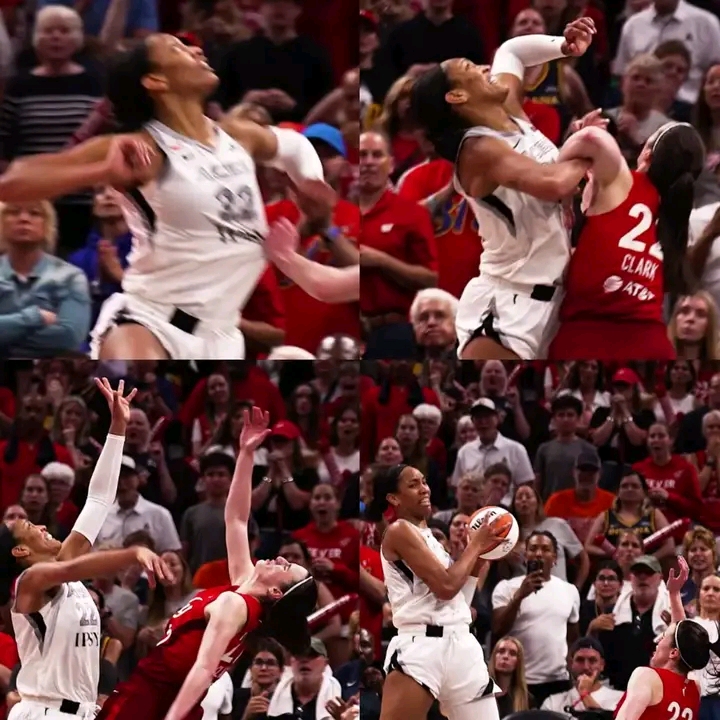
The WNBA has issued a formal apology to the Indiana Fever after reviewing a disputed foul call from the closing moments of their intense overtime battle against the Las Vegas Aces, a game that featured a high-stakes showdown between A’ja Wilson and Caitlin Clark.
In a statement released Friday, the league acknowledged that officials erred on a key late-game whistle that impacted the Fever’s chances in the final minute of regulation and the ensuing overtime period. The call, involving contact near Wilson as Clark and the Fever pushed for a decisive advantage, was determined upon further review to have been incorrect.
“We strive for accuracy and fairness in every contest,” the WNBA said. “After a thorough review of the sequence involving A’ja Wilson and Caitlin Clark in the closing stages, we have determined the foul call was not supported by the available evidence. We apologize to the Indiana Fever organization, players, coaches, and fans for the error.”
The apology comes amid ongoing scrutiny of WNBA officiating, particularly in high-profile matchups featuring Clark, the league’s biggest drawing card, and established stars like Wilson, the reigning Defensive Player of the Year and a multi-time MVP. Thursday night’s game in Indianapolis lived up to the billing as a last-minute battle. Clark finished with 20 points and eight assists but was haunted by late free-throw misses and a costly turnover against Wilson’s defense. Chelsea Gray’s two buzzer-beating threes—one to force overtime and another for the 86-84 Aces victory—sealed the dramatic result.
Fever supporters and analysts had immediately questioned several calls throughout the contest, including defensive fouls on Clark while guarding Wilson and offensive fouls earlier that shifted momentum. Coach Stephanie White has repeatedly called for greater consistency in how Clark is officiated, a theme that has defined much of the 2026 season’s discourse around physicality and free-throw disparities.
While the league’s apology does not alter the final score, it represents a rare public admission of error on a high-visibility play. The WNBA noted that the play will be used in ongoing referee training and that it continues to expand tools such as centralized replay review to reduce similar mistakes.
Clark has largely focused on her own performance in postgame comments, taking responsibility for free-throw misses and the late turnover. Still, the league’s acknowledgment arrives as the Fever fight to solidify playoff positioning and as broader conversations about officiating standards persist across the league.
The statement closes a contentious chapter from one of the season’s most memorable finishes while underscoring the pressure on officials when superstars collide in decisive moments.