Caitlin Clark has quickly transformed from one of the most exciting players in women’s basketball into one of the biggest sports personalities in the world. Her influence now extends far beyond what happens on the court, as her popularity, marketability, and commercial appeal continue to reshape conversations around the WNBA. The attention surrounding Clark has created a new reality for the league, forcing teams, executives, and business leaders to reconsider how they handle the rise of a player whose global impact has reached a level rarely seen in women’s basketball.
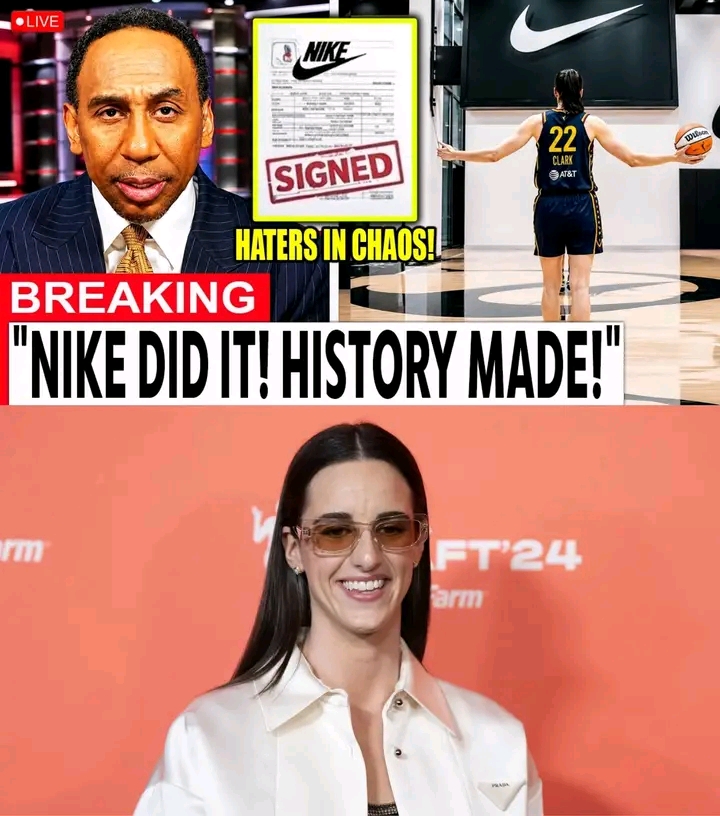
The latest discussion centers around Nike’s major investment in Caitlin Clark, which has been viewed as a landmark moment for both the player and the sport. The partnership, which includes a signature shoe and a large-scale marketing campaign, highlights the confidence major brands have in Clark’s ability to attract fans and generate worldwide interest. Unlike traditional sponsorship deals that often remain closely tied to league structures, Nike’s approach has positioned Clark as a standalone superstar with a powerful identity that reaches audiences far beyond the WNBA.
This development has sparked intense debate among basketball analysts, including comments from figures such as Stephen A. Smith, who have pointed toward deeper issues within the league’s growing popularity. The rise of Clark has exposed a complicated situation where a league that has spent years fighting for recognition is now dealing with the challenge of managing an individual star whose commercial value has rapidly expanded. Instead of simply celebrating the attention she brings, some observers believe the situation has revealed uncomfortable questions about leadership, marketing strategies, and the way superstar players are valued.
For years, the WNBA has worked to build its brand, increase viewership, and create more opportunities for its players. However, Caitlin Clark’s arrival has accelerated that growth in a way that few expected. Her ability to attract new fans, increase media coverage, and create excitement around games has changed the conversation about women’s basketball. The challenge for league officials is finding a way to use this momentum while ensuring that the entire league benefits from the attention surrounding one of its biggest stars.
At the same time, Clark’s rapid rise has also brought discussions about competition, recognition, and the emotional reactions that often come with major success. Whenever an athlete reaches a level of popularity this quickly, questions about fairness, attention, and opportunity naturally emerge. The situation surrounding Clark reflects a larger issue in sports, where individual greatness can sometimes challenge existing systems that were designed around shared growth rather than the influence of one extraordinary figure.
The business side of professional sports is ultimately driven by demand, visibility, and the ability to connect with audiences. Caitlin Clark’s value comes from her unique combination of talent, personality, and the attention she brings to the game. Major companies recognize that influence, and their willingness to invest heavily in her shows how much the sports industry believes in her long-term potential. Her success represents not only a personal achievement but also a major opportunity for women’s basketball as a whole.
The conversation surrounding Nike’s investment is therefore bigger than a single endorsement or a player’s individual success. It represents a turning point for the WNBA and highlights the challenges that come with having a global superstar emerge within a growing league. Executives now face the responsibility of creating a structure where the popularity of one player can strengthen the entire organization rather than create divisions or uncertainty.
Ultimately, Caitlin Clark’s rise has become a defining moment for women’s basketball. Whether viewed as a challenge or an opportunity, her impact cannot be ignored. The attention she has generated has pushed the WNBA into a new era where star power, business decisions, and league growth are more connected than ever. The way the league responds to this moment could shape the future of women’s basketball for years to come.