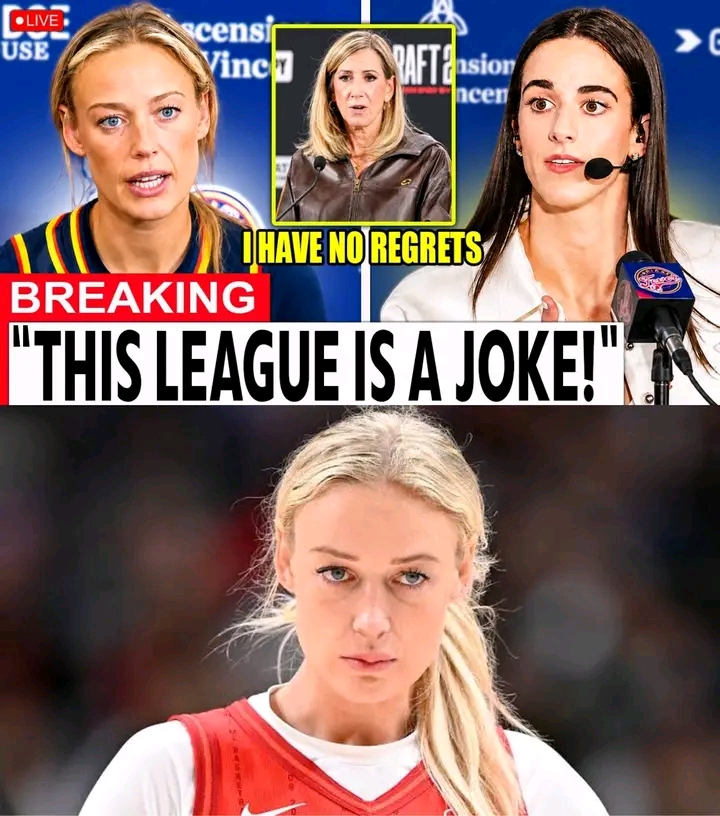
The WNBA has enjoyed remarkable growth in recent years, drawing larger television audiences, selling out arenas, and generating unprecedented attention from basketball fans across the country. With more eyes on the league than ever before, expectations have risen for league officials to manage the competition fairly while protecting the players who have helped fuel this surge in popularity. Against this backdrop, reports that Indiana Fever guard Sophie Cunningham faced league discipline have sparked widespread debate among fans, many of whom believe the situation raises broader questions about transparency, player expression, and the league’s overall priorities. Instead of celebrating the sport’s continued rise, conversations have shifted toward controversy, leaving supporters wondering whether the league is responding to criticism in the most constructive way.
According to the narrative shared by critics, the disciplinary action followed comments or social media activity by Cunningham that allegedly highlighted concerns about the league. Supporters of the Fever guard argue that the issue extends far beyond a single player, insisting that athletes should be allowed to express frustrations over matters that affect competition without immediately becoming the focus of punitive measures. In their view, the discussion should center on improving the product on the court rather than discouraging players from speaking openly. As a result, the incident has become a flashpoint in a larger debate about accountability and the balance between protecting the league’s image and allowing honest conversations to take place.
Many observers have also pointed to officiating as one of the league’s most frequently discussed challenges. Throughout the season, fans, analysts, and even players have questioned the consistency of certain calls and the standard applied from game to game. Critics argue that concerns about officiating deserve careful evaluation because they directly influence competitive fairness and player confidence. They believe that when these conversations are overshadowed by disciplinary headlines, attention is diverted from issues that could ultimately strengthen the league if addressed openly. Whether those criticisms are entirely justified or not, the perception among a segment of the fan base is that meaningful dialogue is essential for the WNBA’s continued growth.
The conversation has also expanded to player safety, another topic that has remained at the forefront of public discussion. Basketball is an intensely physical sport, but many supporters believe star players should receive consistent protection under the rules regardless of their popularity or marketability. They argue that reducing unnecessary physical play and ensuring fair officiating would not only benefit individual athletes but also improve the overall quality of the game. As debate surrounding Cunningham’s reported discipline continues, it has become intertwined with broader concerns about how the league manages physical competition and whether current standards adequately protect every player on the floor.
For others, the controversy reflects a wider communication challenge between the WNBA and its athletes. Professional sports leagues rely on trust between players, coaches, officials, and executives, and that trust can erode when disciplinary decisions appear unclear or inconsistent to the public. Fans have increasingly called for greater transparency whenever fines or other penalties are issued, believing that clear explanations help prevent speculation and misinformation. Without detailed communication, even routine disciplinary actions can quickly become major talking points that dominate headlines and fuel polarized opinions across social media.
The reaction from basketball supporters has demonstrated just how invested people have become in the future of the WNBA. Online discussions have featured passionate arguments from every perspective, with some defending the league’s authority to enforce its rules while others insist that constructive criticism should never be mistaken for disloyalty. This diversity of opinion reflects the league’s expanding audience, where every major decision is now scrutinized by millions of engaged viewers. While disagreements are inevitable in any growing sport, many fans hope future controversies will be addressed in ways that encourage dialogue rather than deepen divisions.
Ultimately, the attention surrounding Cunningham’s reported discipline illustrates the challenges that accompany rapid growth in professional sports. Increased popularity brings greater expectations for fairness, transparency, and consistency from everyone involved. As the WNBA continues to attract new audiences and elevate its profile, every decision made by league leadership is likely to receive intense public examination. How those decisions are communicated may prove just as important as the decisions themselves in maintaining confidence among players and fans alike.
Whether this episode becomes a brief controversy or a catalyst for broader change remains to be seen. What is clear is that many supporters want the conversation to extend beyond individual disciplinary actions and toward long-term improvements that strengthen the league as a whole. By fostering open communication, maintaining consistent officiating standards, and prioritizing player welfare alongside competitive integrity, the WNBA can continue building on its recent success while reinforcing the trust of the athletes and fans who have contributed to its remarkable rise.