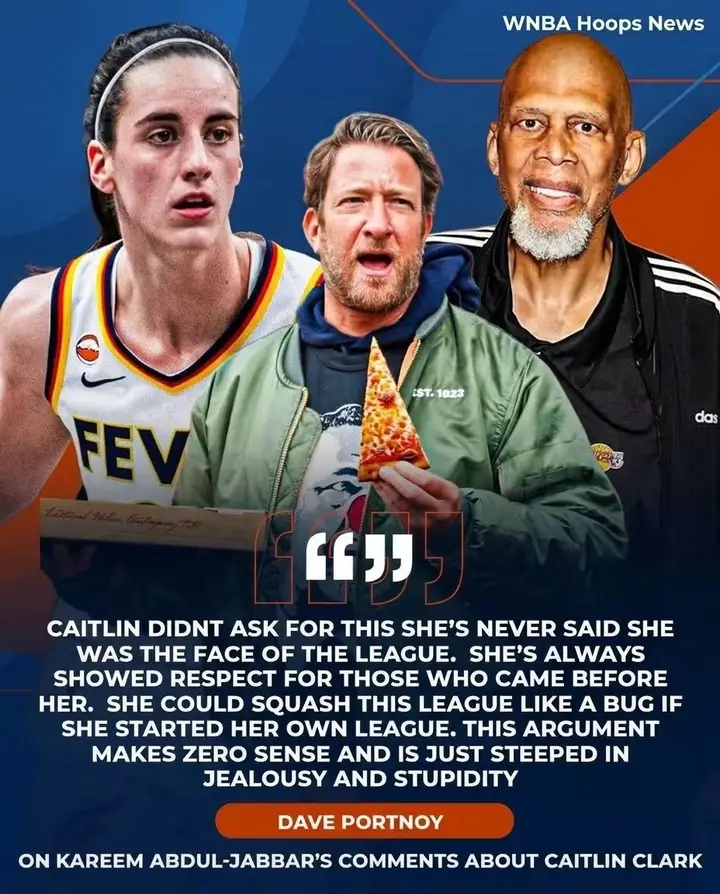
The discussion surrounding Caitlin Clark’s influence on the WNBA has intensified once again after media personality Dave Portnoy publicly defended the Indiana Fever star in response to comments attributed to NBA legend Kareem Abdul-Jabbar. The conversation has reignited one of the league’s most polarizing debates—whether Clark’s unprecedented popularity has unfairly overshadowed other stars or simply reflects the impact she has had on women’s basketball.
Portnoy argued that Clark has never claimed to be the face of the WNBA and has consistently shown respect to the players who paved the way before her. According to his remarks, the criticism directed toward Clark often ignores her humility and professionalism while focusing on narratives she has never created herself.
WHY THE CONTROVERSY MATTERS
Few athletes have transformed the visibility of a professional league as quickly as Caitlin Clark. From record-breaking television audiences to increased ticket demand and merchandise sales, her arrival has generated attention that extends well beyond traditional basketball fans. As a result, conversations about her role within the league have become increasingly emotional.
The debate highlights a broader challenge for the WNBA: balancing appreciation for its established stars while embracing the commercial momentum brought by a new generation of players. Rather than viewing these developments as competing interests, many observers believe the league benefits when both longtime veterans and emerging superstars receive recognition.
PORTNOY’S COMMENTS ADD FUEL TO THE DISCUSSION
Portnoy’s defense centered on the idea that Clark should not be blamed for the attention she receives. He suggested that criticism aimed at the Fever guard is misplaced because she has consistently acknowledged the contributions of previous generations and has avoided portraying herself as the league’s defining figure.
His comments quickly spread across social media, prompting supporters and critics alike to weigh in. While many fans agreed that Clark has handled the spotlight with maturity, others argued that discussions about the league’s growth should include the accomplishments of numerous WNBA veterans who helped build the sport long before Clark entered the professional ranks.
WHAT THIS COULD MEAN FOR THE WNBA’S FUTURE
As the league continues to attract larger audiences, debates over popularity, marketing, and player recognition are likely to remain part of the conversation. The WNBA now has an opportunity to capitalize on unprecedented public interest while ensuring that its history and current stars receive equal appreciation.
For Clark, the focus will remain on her performances on the court. Continued success with the Indiana Fever would only strengthen her influence, while the league’s overall growth could create greater opportunities for every franchise and player.
FINAL THOUGHTS
Whether one agrees with Dave Portnoy’s perspective or not, his comments reflect a larger conversation about how sports leagues evolve when transformational athletes emerge. Caitlin Clark’s popularity has undoubtedly changed the WNBA’s landscape, but sustained growth will depend on celebrating both the league’s established legends and its exciting new generation of stars. As the season progresses, the attention surrounding Clark is unlikely to fade, making every performance—and every public comment—a significant part of the WNBA’s ongoing story.