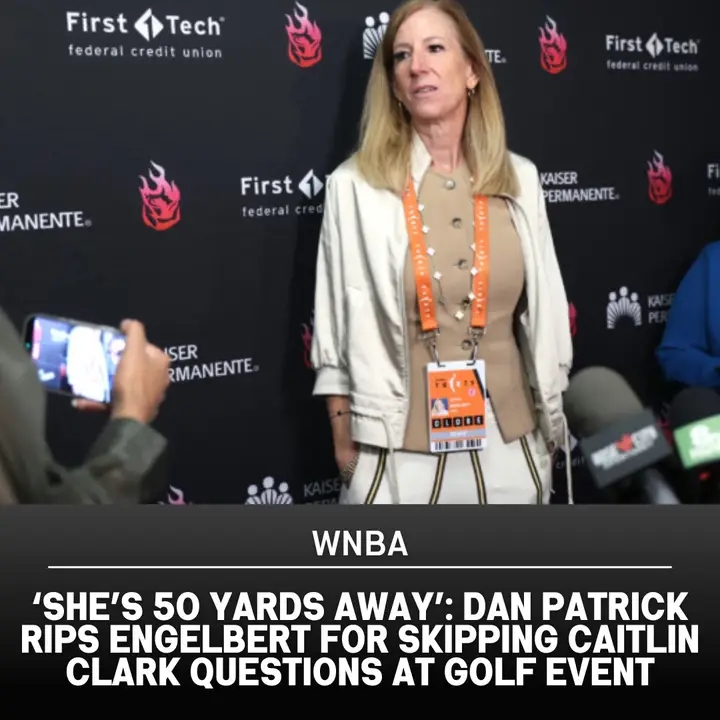
The spotlight surrounding Caitlin Clark continues to shape nearly every major conversation in the WNBA, and the latest controversy has once again highlighted just how influential the Indiana Fever superstar has become. Veteran sports broadcaster Dan Patrick recently criticized WNBA Commissioner Cathy Engelbert after she reportedly declined to answer questions about Clark during a golf event, arguing that avoiding the league’s biggest story sends the wrong message.
Patrick’s comments quickly gained traction across basketball circles, with fans and analysts debating whether the WNBA should embrace Clark’s enormous popularity more directly rather than steering conversations elsewhere. While the commissioner has consistently emphasized promoting the league as a whole, critics believe refusing to address questions about its biggest attraction risks missing valuable opportunities to engage fans.
WHY THE INCIDENT GENERATED SO MUCH ATTENTION
The controversy wasn’t simply about one unanswered question. Instead, it reflected a broader discussion about how professional sports leagues balance promoting individual superstars while supporting every team and player.
Caitlin Clark has transformed the visibility of the WNBA since entering the league. Television ratings have surged, arenas regularly sell out when the Indiana Fever are in town, merchandise sales continue to reach new highs, and national media coverage has expanded significantly. Because of that impact, many believe questions about Clark are inevitable at virtually any WNBA-related event.
Dan Patrick’s criticism centered on the idea that embracing the league’s most recognizable player should be viewed as an opportunity rather than something to avoid. His argument resonated with many fans who believe Clark’s popularity benefits every franchise through increased exposure and commercial growth.
CAITLIN CLARK REMAINS THE LEAGUE’S BIGGEST DRAW
Whether supporters love or dislike the constant attention surrounding Clark, there is little debate about her influence on the sport.
Indiana Fever games consistently attract some of the league’s largest television audiences. Road arenas frequently experience their highest attendance of the season when Clark visits, while sponsors continue investing heavily in women’s basketball thanks to unprecedented public interest.
Clark’s arrival has also introduced millions of first-time viewers to the WNBA. Many initially tuned in to watch the former Iowa star but have since become familiar with other elite players throughout the league.
This is precisely why discussions involving Clark often extend beyond basketball itself—they represent conversations about the league’s overall business growth and future direction.
THE CHALLENGE FACING THE WNBA
Commissioner Cathy Engelbert faces a difficult balancing act.
On one hand, highlighting Clark’s popularity can accelerate the league’s momentum, attract additional sponsors, and increase national exposure. On the other, the WNBA has long emphasized showcasing its depth of talent rather than allowing one player to dominate every headline.
Veteran stars such as A’ja Wilson, Breanna Stewart, Napheesa Collier, and many others continue performing at elite levels and deserve significant recognition. League officials understandably want to celebrate the entire product instead of focusing exclusively on one athlete.
However, sports history shows that successful leagues often experience tremendous growth through iconic superstars. Michael Jordan elevated the NBA globally. Tiger Woods transformed golf’s popularity. Serena Williams brought unprecedented attention to women’s tennis.
Many observers believe Caitlin Clark has the potential to become a similarly transformative figure for women’s basketball.
WHAT THIS MEANS FOR THE INDIANA FEVER
For the Indiana Fever, Clark’s continued prominence brings both opportunity and pressure.
Every media appearance, every nationally televised game, and every off-court discussion increases expectations surrounding the franchise. Opposing teams consistently treat Fever matchups as marquee events, creating playoff-like atmospheres throughout the regular season.
While that attention creates additional pressure, it also gives Indiana one of the strongest platforms in professional sports. If the Fever continue developing into a championship contender, Clark’s influence could grow even further, helping establish Indiana as one of the WNBA’s flagship organizations for years to come.
HOW THIS COULD SHAPE THE LEAGUE’S FUTURE
The debate sparked by Dan Patrick’s comments is unlikely to disappear anytime soon.
As long as Clark remains the WNBA’s biggest attraction, questions about her will naturally dominate press conferences, television coverage, and league events. The challenge for league leadership is finding the right balance between embracing a generational superstar and ensuring the league’s many other talented players receive meaningful attention.
If handled effectively, that balance could help sustain the WNBA’s current surge in popularity rather than allowing it to become a short-term phenomenon.
FINAL THOUGHTS
Dan Patrick’s criticism reflects a larger conversation taking place throughout women’s basketball. The issue is not simply whether one question should have been answered—it is about how the WNBA chooses to market itself during one of the most important growth periods in its history.
With Caitlin Clark continuing to drive record-breaking interest in the Indiana Fever and the league overall, every public appearance involving WNBA leadership is likely to attract questions about its brightest star. How those moments are handled may play a significant role in shaping the league’s image, fan engagement, and long-term success as women’s basketball enters a new era of unprecedented visibility.