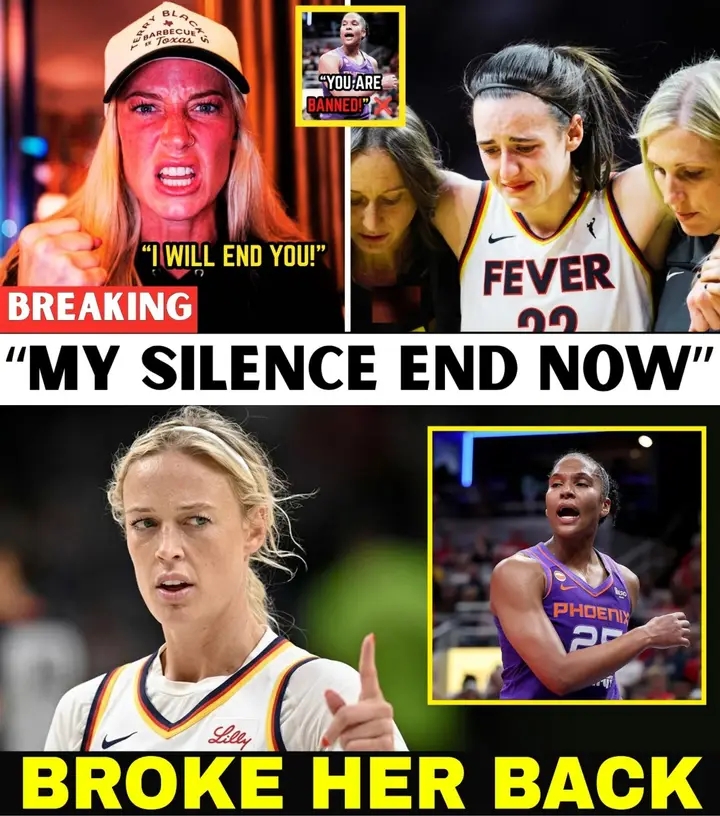
The Indiana Fever’s latest setback extends far beyond another result in the standings. Following the physical matchup with the Phoenix Mercury and Caitlin Clark’s continued injury concerns, the conversation across the WNBA has shifted from wins and losses to a much larger question: Is the league doing enough to protect its biggest stars while maintaining the physical style that has always defined professional basketball?
Clark has transformed the WNBA since entering the league, bringing record-breaking television audiences, sold-out arenas, and unprecedented national attention. That spotlight means every hard foul, controversial officiating decision, and injury instantly becomes headline news. While physical basketball has always been part of the sport, recent events have intensified discussions about where officials should draw the line.
THE PLAY THAT REIGNITED THE CONVERSATION
The Fever-Mercury matchup quickly became one of the season’s most talked-about games after a physical sequence involving Phoenix veteran Alyssa Thomas and Indiana star Caitlin Clark.
Following the league’s review, the play resulted in disciplinary action, reigniting debate among fans, analysts, and former players over consistency in officiating and player safety. Some viewed the contact as an example of playoff-style intensity, while others argued it crossed the line into unnecessary physicality.
Regardless of where opinions fall, the incident highlighted a growing issue for the WNBA. As the league attracts larger audiences than ever before, every officiating decision is receiving greater scrutiny than in previous seasons.
WHY CLARK’S HEALTH MATTERS TO THE FEVER
For Indiana, Clark’s availability is about much more than individual statistics.
She remains the offensive engine of the Fever, creating scoring opportunities with her elite passing, deep shooting range, and ability to control the pace of the game. Any time she is limited physically, Indiana’s offensive rhythm changes dramatically.
Back injuries can be especially challenging for guards whose games rely on quick changes of direction, explosive movement, and shooting mechanics. Even a minor issue can affect mobility, balance, and long-range accuracy.
The Fever’s medical staff will naturally prioritize Clark’s long-term health over short-term results, particularly with significant portions of the season still remaining.
SOPHIE CUNNINGHAM CONTINUES TO EMERGE AS A TEAM LEADER
One storyline that has gained attention is Sophie Cunningham’s passionate support for her teammates.
Cunningham has earned a reputation throughout her career as one of the league’s toughest competitors, and her willingness to stand up for teammates has only strengthened her popularity among Fever fans.
Every successful team benefits from veterans who bring energy, accountability, and toughness. While emotions can run high after physical games, that competitive edge often helps establish the identity of a championship-caliber locker room.
Indiana appears to be building exactly that kind of culture.
PLAYER SAFETY REMAINS A LEAGUE-WIDE ISSUE
The Clark incident is not just an Indiana story—it reflects a broader discussion happening throughout professional basketball.
The WNBA has become faster, more athletic, and more physical over the past several years. Officials face the difficult challenge of allowing competitive defense while preventing dangerous contact that risks injury.
Consistency is ultimately what players are asking for.
If similar plays are officiated differently from game to game, frustration naturally grows among athletes, coaches, and fans alike. Clear enforcement of the rules benefits every team, not just the Fever.
THE BUSINESS IMPACT OF LOSING A SUPERSTAR
Few athletes have influenced a league’s popularity as quickly as Caitlin Clark.
Games featuring the Fever routinely attract some of the season’s highest television ratings. Arenas continue to sell out whenever Indiana visits, and merchandise sales remain among the strongest in the league.
Whenever a player with that level of influence misses time, the impact extends beyond basketball. Fans lose opportunities to watch one of the sport’s biggest attractions, broadcasters lose marquee matchups, and teams lose some of the excitement surrounding nationally televised games.
That reality makes protecting elite talent an important priority for every professional sports league.
WHAT THIS MEANS FOR INDIANA’S PLAYOFF HOPES
The Fever have shown significant growth this season, but maintaining momentum depends heavily on staying healthy.
If Clark returns fully fit, Indiana possesses enough offensive firepower and defensive intensity to compete with many of the league’s top contenders.
Veteran leadership, improving chemistry, and a more balanced roster have given the Fever optimism that they can challenge for a deep postseason run.
However, injuries could quickly change those expectations, making roster depth more important than ever.
THE BIGGER PICTURE FOR THE WNBA
The league’s rapid growth has created new opportunities—and new challenges.
Higher television ratings and increased media attention mean controversial moments now receive national coverage almost instantly. Every suspension, flagrant foul review, and officiating decision becomes part of a larger conversation about the league’s direction.
While physical basketball remains part of the game’s identity, maintaining player safety must remain equally important.
Finding that balance will help ensure the WNBA continues building on its remarkable momentum while protecting the stars who have helped drive its recent success.
FINAL THOUGHTS
The Fever’s focus now shifts toward keeping Caitlin Clark healthy and maintaining their push toward the postseason.
The debate surrounding physical play is unlikely to disappear anytime soon, but it does provide an opportunity for the league to reinforce confidence in its officiating standards and player safety policies.
Indiana has demonstrated resilience throughout the season, and if the Fever can navigate this challenging stretch with a healthy roster, they remain one of the WNBA’s most dangerous teams.
For fans, the hope is simple: let the biggest games be decided by elite basketball—not controversy.