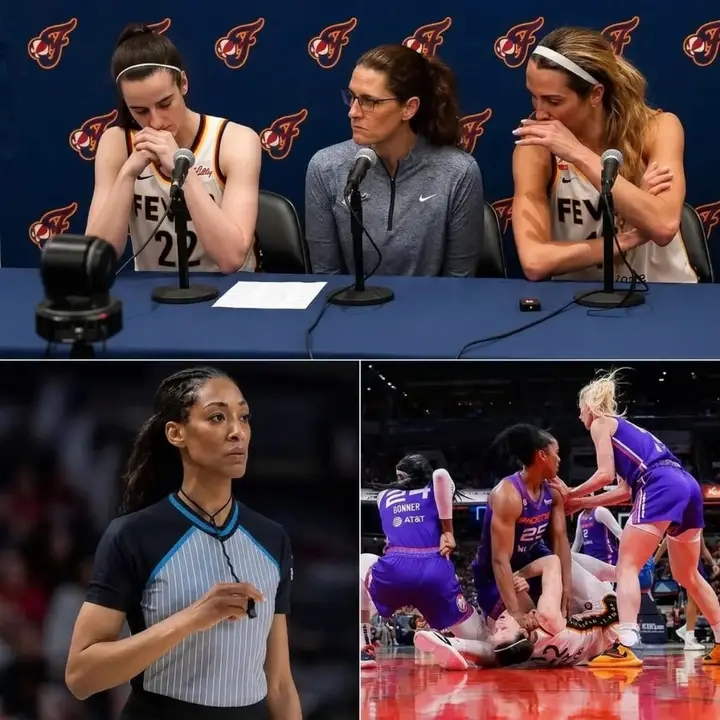
Few topics have dominated the WNBA this season more than officiating, and the latest rumors surrounding a referee suspension connected to an Indiana Fever game featuring Caitlin Clark have only intensified the conversation.
While social media has been flooded with claims that an official was suspended because of a controversial Clark game, there has been no official confirmation from the WNBA that a referee has been disciplined specifically for that contest. What is undeniable, however, is that the controversy has once again placed the league’s officiating standards under a microscope.
WHY THIS STORY HAS CAPTURED THE ENTIRE WNBA
Every close call involving Caitlin Clark instantly becomes national news. As the face of the Indiana Fever and one of the league’s biggest attractions, nearly every whistle—or lack of one—is replayed, analyzed, and debated across television and social media.
That attention has created enormous pressure on WNBA officials. Every controversial decision now carries consequences that extend far beyond a single game, influencing public perception of the league and fueling debates about consistency.
The latest speculation surrounding referee accountability reflects growing frustration from fans who believe officiating has become one of the season’s biggest storylines.
THE OFFICIATING ISSUE DID NOT BEGIN WITH ONE GAME
The current debate is the result of months of controversy.
Indiana Fever head coach Stephanie White has repeatedly criticized officiating after games involving Clark. Clark herself has voiced frustration over technical fouls and inconsistent calls while also calling for improvements to officiating standards.
The most notable incident came when Phoenix Mercury star Alyssa Thomas made contact with Clark during a heated game. Officials did not immediately penalize the play, but the league later upgraded the foul and suspended Thomas for one game, reigniting criticism over missed calls during live action.
Those events have led many fans to question whether referees are being held sufficiently accountable.
WHAT A REFEREE SUSPENSION WOULD MEAN
If officials are evaluated or disciplined internally after controversial games, it would demonstrate that the WNBA reviews performance behind the scenes.
However, because the league rarely discusses referee evaluations publicly, rumors often spread much faster than verified information.
Without official confirmation, claims about specific referee suspensions should be treated cautiously.
Still, the widespread discussion highlights one important reality: confidence in officiating has become a major issue for players, coaches, and fans alike.
WHY THIS MATTERS FOR THE INDIANA FEVER
For Indiana, every possession matters as the team continues battling for playoff positioning.
Questionable whistles can change momentum, impact player rotations through foul trouble, and even influence late-game strategy.
With Clark drawing constant defensive attention, Fever supporters argue that consistent officiating is essential to ensuring games are decided by basketball rather than controversy.
As the postseason approaches, Indiana cannot afford distractions that overshadow its performance on the court.
CAITLIN CLARK CONTINUES TO BE THE CENTER OF EVERY CONVERSATION
Whether discussing record-breaking performances, injuries, physical play, or officiating, Clark remains at the center of nearly every major WNBA headline.
She has also urged fans to avoid personal attacks against players, coaches, and officials, emphasizing that criticism should never become harassment.
That message is particularly important as emotions surrounding officiating continue to escalate.
WHAT THE WNBA SHOULD DO NEXT
The league has an opportunity to strengthen trust by increasing transparency around officiating reviews.
While every sport experiences missed calls, explaining review procedures and accountability measures could reduce speculation and improve confidence among fans.
Many observers have also suggested expanding the use of full-time officials and improving replay procedures to create greater consistency throughout the season.
FINAL THOUGHTS
Regardless of whether the latest referee suspension rumors prove accurate, the controversy underscores a larger issue facing the WNBA.
The Indiana Fever are one of the league’s biggest attractions, and every nationally televised game involving Caitlin Clark brings unprecedented attention. That spotlight makes accurate, consistent officiating more important than ever.
If the WNBA wants its championship race to be remembered for elite basketball rather than disputed whistles, improving officiating transparency and consistency must remain a top priority.
For now, the debate shows no signs of slowing down—and every Indiana Fever game will continue to be watched as closely as any contest in professional basketball.