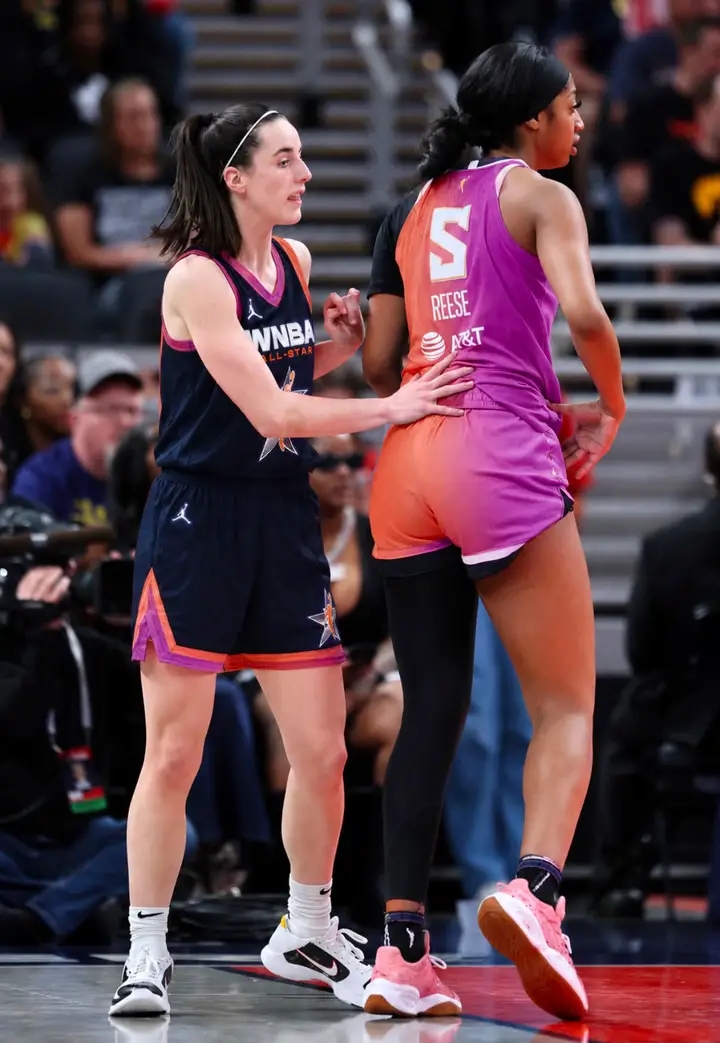
The WNBA All-Star Game is designed to celebrate the league’s biggest stars, but every year the same debate returns: should popularity outweigh performance?
Fan voting creates excitement and helps grow the game, while media and player voting provide additional perspectives. However, if the goal is to reward the players who have been the most productive throughout the season, the results would look dramatically different.
Using one simple measurement—combined points, rebounds, and assists per game—the list of the WNBA’s most productive players tells a fascinating story. It highlights elite veterans, rising superstars, and several players who may deserve far more recognition than they’ve received.
WHAT THE NUMBERS REVEAL
Based on combined points, rebounds, and assists per game, the league’s leaders are:
1. A’ja Wilson – 38.00
2. Caitlin Clark – 33.35
3. Kelsey Plum – 32.50
4. Breanna Stewart – 31.20
5. Jessica Shepard – 30.65
6. Paige Bueckers – 30.11
7. Alyssa Thomas – 29.68
8. Angel Reese – 29.14
9. Olivia Miles – 29.00
10. Aliyah Boston – 28.50
If All-Star starters were determined strictly by on-court production rather than a combination of fan, media, and player voting, this group would dominate the starting lineup conversation.
While basketball is more complex than a single statistic, these numbers provide a compelling snapshot of who has consistently filled the box score throughout the season.
CAITLIN CLARK CONTINUES TO PROVE HER VALUE
Caitlin Clark’s place near the top of the rankings reinforces what Indiana Fever fans have watched all season.
Even while battling injuries and facing relentless defensive pressure, Clark continues to impact games as both an elite scorer and one of the league’s premier playmakers.
Her combination of scoring and passing makes her one of the WNBA’s most complete offensive weapons. Few guards influence every possession the way she does, and these numbers demonstrate that her production extends far beyond highlight-reel three-pointers.
For Indiana, Clark’s consistency has been central to the Fever’s playoff ambitions.
A’JA WILSON REMAINS THE GOLD STANDARD
No player has been more productive than A’ja Wilson.
Leading the league with a combined 38.00 points, rebounds, and assists per game, Wilson continues to dominate both ends of the floor.
Whether protecting the rim, controlling the glass, or carrying the offensive load, she remains the benchmark for excellence in the WNBA.
If individual performance alone determined All-Star recognition, Wilson would be an unquestioned first-choice starter.
UNSUNG STARS ARE MAKING THEIR CASE
Perhaps the biggest surprise on the list is Jessica Shepard.
Despite receiving significantly less national attention than many of the league’s biggest names, Shepard’s all-around production has been exceptional.
Her rebounding, passing, and efficient scoring have quietly made her one of the WNBA’s most valuable contributors.
Similarly, Alyssa Thomas continues to stuff the stat sheet in every imaginable way, while Aliyah Boston remains one of the league’s most dependable interior players.
These performances suggest that consistent production doesn’t always translate into the same level of public recognition.
THE NEW GENERATION IS ALREADY HERE
The presence of Paige Bueckers, Angel Reese, Olivia Miles, and Caitlin Clark among the league’s statistical leaders shows just how quickly the WNBA’s next generation has arrived.
These young stars are no longer simply promising rookies or rising talents—they are producing at an elite level against veteran competition.
Their emergence is changing the competitive balance across the league while attracting unprecedented attention from fans, television audiences, and sponsors.
The future of the WNBA appears brighter than ever.
SHOULD ALL-STAR VOTING CHANGE?
The current All-Star voting system combines fan, media, and player votes because the event is designed to celebrate both performance and fan engagement.
However, statistics like these inevitably fuel debate about whether individual production should carry greater weight.
A player can be among the league’s most productive performers yet receive less recognition simply because they play in a smaller market or generate fewer headlines.
At the same time, fan voting remains an important part of what makes the All-Star Game a showcase event, rewarding players who connect with audiences and help grow the sport.
Finding the right balance between popularity and performance will likely remain one of the league’s biggest annual discussions.
WHAT THIS MEANS FOR THE PLAYOFF RACE
Individual statistics don’t guarantee team success, but they often highlight the players capable of changing games when the postseason arrives.
For the Indiana Fever, Caitlin Clark and Aliyah Boston ranking among the league’s most productive players is an encouraging sign. Their ability to contribute across multiple categories gives Indiana a strong foundation as the team pushes toward playoff positioning.
Meanwhile, established contenders led by stars like A’ja Wilson, Breanna Stewart, and Alyssa Thomas remain formidable championship threats.
As the regular season progresses, these statistical leaders are likely to play an even bigger role in determining who ultimately competes for the WNBA title.
FINAL THOUGHTS
The All-Star Game will always be about more than numbers. Fan support, entertainment value, and league-wide popularity are essential parts of the event.
Still, this statistical ranking offers an interesting perspective on who has delivered the most complete performances this season. It highlights stars who receive constant national attention while also shining a light on productive players who deserve more recognition.
Whether or not the voting system ever changes, one thing is clear: the race to be considered the WNBA’s best player has never been more competitive, and every game continues to reshape that conversation.