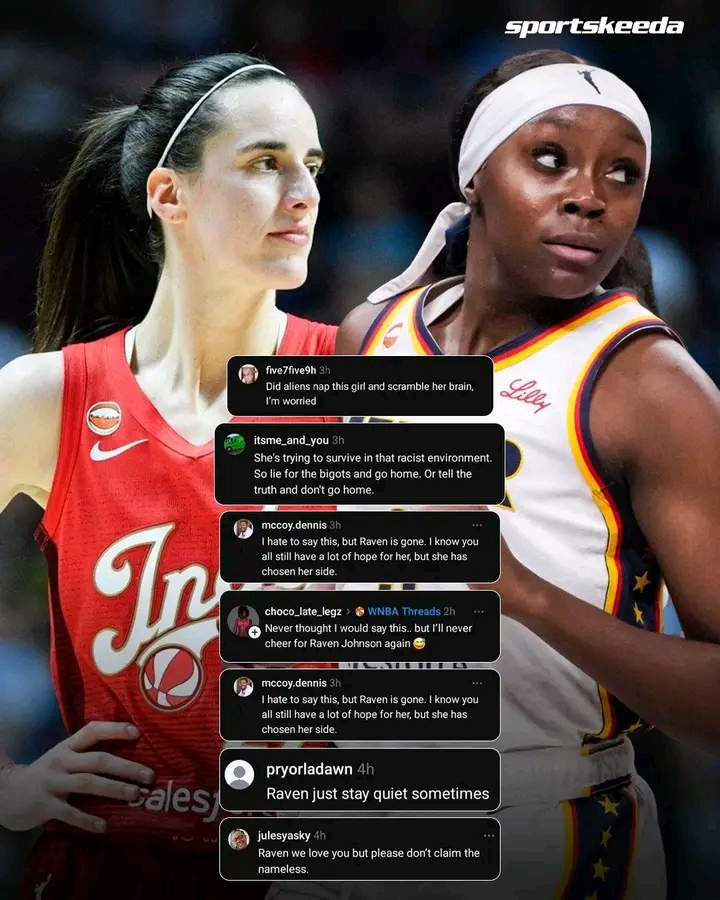
In the world of women’s basketball, where rivalries often spill into personal territory and social media amplifies every interaction, Indiana Fever rookie Raven Johnson has found herself at the center of an unwelcome storm. All she did was offer heartfelt congratulations to her superstar teammate Caitlin Clark for earning a starting spot in the 2026 WNBA All-Star Game—and for that simple act of sportsmanship, Johnson is enduring heavy trolling online.
Johnson, drafted by the Fever in 2026, joined Clark on a roster aiming for championship contention. Their shared history dates back to the 2023 NCAA Final Four, where Clark’s memorable “wave-off” of Johnson during a game became a viral moment that subjected the then-South Carolina player to intense online scrutiny. Johnson has repeatedly addressed the incident, calling it “in the past” and emphasizing her focus on team success. The two have since built a positive rapport as teammates, evident in lighthearted videos and interactions shared by the Fever organization.
On July 2, 2026, following the All-Star starters announcement, Johnson publicly celebrated Clark along with other Fever teammates. In a video, she used affectionate nicknames and expressed genuine support: “Caitlin Clark, my sister, my cousin…” The message was warm, inclusive, and typical of locker-room camaraderie. Yet, instead of praise for team unity, Johnson faced a barrage of criticism, memes, and accusations across platforms. Some commenters questioned her authenticity, while others revived old college narratives or suggested ulterior motives.
This backlash highlights deeper fractures in WNBA discourse. Clark’s meteoric rise has polarized fans, with her popularity drawing both fervent support and resentment. Johnson’s congratulations, a standard gesture among teammates, was twisted by some into betrayal of past rivalries or identity-based drama. Posts accused fans of “disowning” Johnson, while others decried the harassment as racially charged or simply toxic.
Sports analysts note that such incidents reveal the dark side of digital fandom. Athletes, especially women in a league still fighting for broader respect, navigate immense pressure. Johnson, who once admitted the earlier online hate nearly made her quit basketball, is demonstrating resilience once again. Her response—or lack of one—shows maturity beyond her years.
Fever fans and neutral observers have pushed back, praising Johnson for prioritizing team over personal history. Clark’s own leadership and the duo’s growing chemistry on the court offer hope that on-court performance will overshadow keyboard drama.
This episode serves as a reminder: in an era where every post is dissected, basic decency like congratulating a teammate shouldn’t be controversial. As the WNBA grows, its community must evolve beyond tribalism. Raven Johnson’s experience underscores the need for kinder discourse, allowing players to compete fiercely yet support each other as professionals. True fans celebrate wins—individual and collective—without tearing others down.