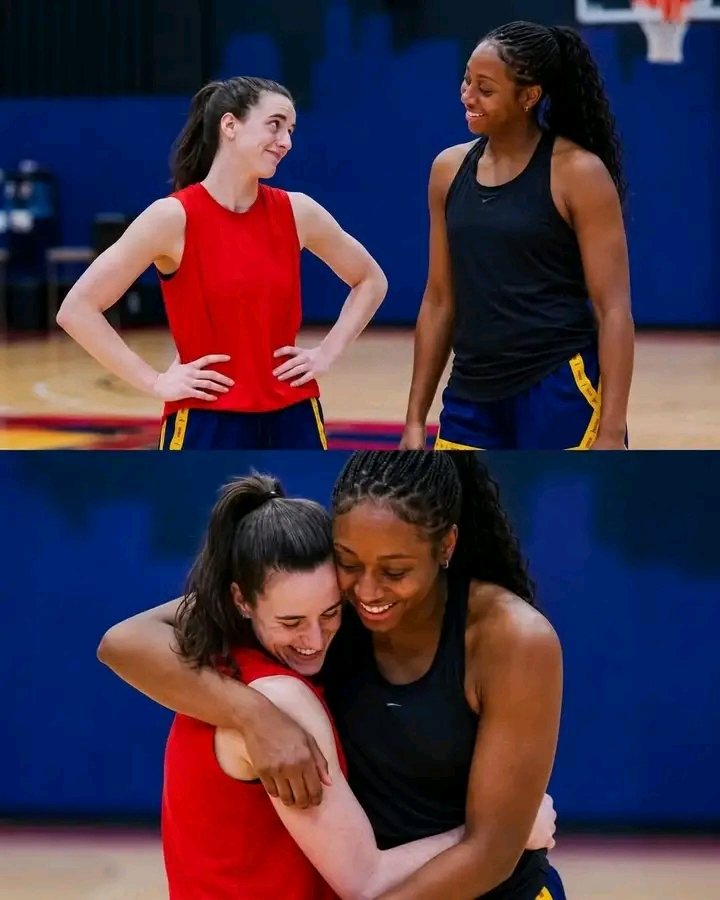
In a boost for Indiana Fever fans and the WNBA, superstar guard Caitlin Clark has returned to practice following a physical altercation with Phoenix Mercury forward Alyssa Thomas that left her sidelined with a back injury. The resilient rookie-turned-All-Star showed no signs of lingering effects as she rejoined her teammates on the court, signaling a potential quick recovery and renewed momentum for the Fever.
The incident unfolded during Wednesday’s matchup between the Fever and Mercury, which Phoenix won 111-109. In the second quarter, Clark drove toward the basket and lost her footing in a scramble for the loose ball. Thomas, in the ensuing pile-up, appeared to drive her fist into Clark’s throat area before stepping over her. No foul was called in real time, sparking immediate outrage from fans and Fever coach Stephanie White, who labeled the sequence “absolutely unacceptable.” Clark also tweaked her back on a separate play after landing awkwardly on a three-point attempt.
She exited the game in the third quarter with the score tied and was ruled out for Friday’s contest against the Los Angeles Sparks due to the back issue. Clark had been performing at an elite level beforehand, leading the league in points and assists over her previous six games. The WNBA reviewed the Thomas play post-game, upgrading it to a Flagrant Foul 2 for “recklessly making contact with her fist to the throat area.” Thomas received a one-game suspension, which she served Saturday.
Coach White expressed appreciation for the league’s review while voicing frustration over the on-court officiating. “We have a generational talent… who had two cheap shots right there that weren’t called,” she said. Despite the physical toll, Clark’s return to practice has been met with optimism. Reports indicate she participated in drills, looking sharp and engaged, which is welcome news for a player whose 2025 season was hampered by multiple injuries, including a season-ending groin issue.
This episode highlights ongoing debates about player safety and physicality in the WNBA, especially surrounding high-profile stars like Clark, whose arrival has elevated the league’s visibility. Critics argue that inconsistent officiating fails to protect dynamic scorers, while supporters of tougher play see it as part of the game’s evolution. Thomas, a veteran known for her intensity, defended her approach in post-incident comments, but the suspension underscores the league’s stance against reckless actions.
For the Fever, Clark’s availability couldn’t come at a better time. The team has navigated injuries and close games, relying on her playmaking and scoring to stay competitive. Her return boosts morale and offensive firepower as they push through the mid-season stretch. Clark has spoken previously about maintaining health through smarter training and recovery, lessons from last year’s setbacks that appear to be paying off.
Fans have flooded social media with support, celebrating the “great news” of her practice participation. Many view Clark as a transformative figure for women’s basketball, drawing record crowds and attention. Her ability to bounce back from adversity—both physical and in the spotlight—further cements her status.
As the Fever prepare for upcoming games, all eyes will be on Clark’s minutes and performance. While day-to-day updates will continue, her early return to the floor suggests the back issue may not sideline her long-term. In a league where resilience defines champions, Caitlin Clark’s latest chapter reinforces why she remains one of its brightest stars.