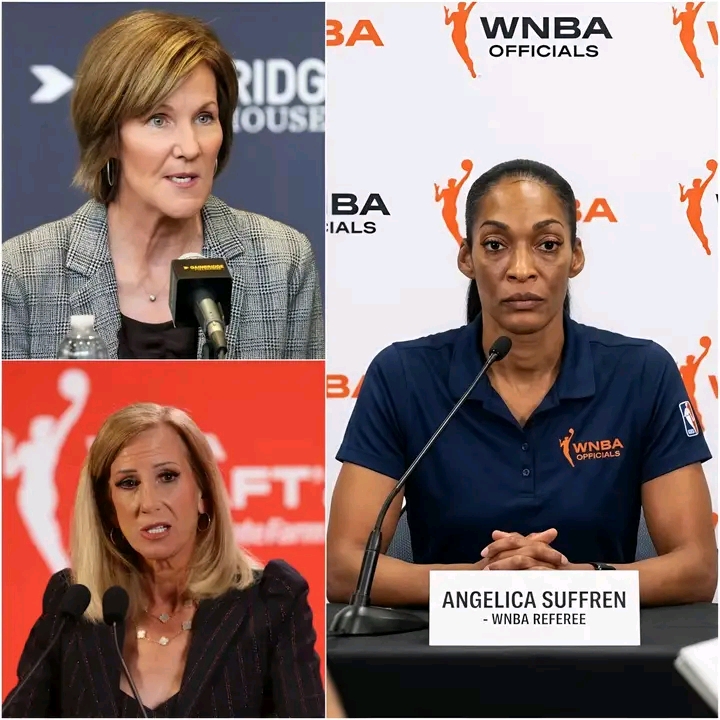
In a dramatic escalation of one of the WNBA’s most contentious games this season, veteran referee Angelica Suffren has issued a public apology to Indiana Fever supporters following the Phoenix Mercury’s narrow 111-109 victory over the Fever on June 24. After reviewing post-game footage, Suffren reportedly expressed deep regret over several controversial calls that many believe swung momentum in Phoenix’s favor.
The matchup, already tense with star guard Caitlin Clark leaving due to a back injury, featured multiple disputed no-calls and fouls that left Fever players and coaches visibly frustrated. Social media erupted immediately after the final buzzer, with fans pointing to specific sequences—particularly involving physical play in the paint and late-game possessions—as evidence of inconsistent officiating.
“I deeply regret the impact some of my calls had on the game and the fans,” Suffren is said to have stated in her apology. While the gesture was intended to acknowledge errors, it has done little to quell the outrage. Fever faithful have flooded platforms with hashtags demanding accountability, accusing the crew of bias and questioning the league’s ability to ensure fair competition as viewership and stakes continue to rise.
Adding fuel to the fire, Indiana Fever President Kelly Krauskopf has reportedly filed a formal complaint with WNBA Commissioner Cathy Engelbert. The complaint allegedly accuses Suffren of officiating bias and calls for a comprehensive league investigation into the game’s handling, including a review of all crew decisions and potential disciplinary measures.
League insiders suggest this could lead to further scrutiny of WNBA officiating standards. The association has faced growing criticism in recent seasons over inconsistent enforcement, particularly in high-profile games featuring superstars like Clark. Supporters argue that with the league’s rising popularity, such incidents risk undermining fan trust and the integrity of the product.
Analysts remain divided. Some defend the physical nature of the Mercury-Fever rivalry and note the challenges officials face in real time, while others highlight replay evidence showing missed opportunities for corrective calls. Phoenix, led by Kahleah Copper’s strong free-throw performance, secured the win, but the post-game narrative has centered far more on the stripes than the stars.
As the WNBA season intensifies, all eyes turn to Commissioner Engelbert’s office. Will the league issue suspensions, implement new training protocols, or take stronger measures to address fan concerns? For now, the apology has failed to silence critics, turning a thrilling thriller into a flashpoint for broader conversations about fairness in women’s professional basketball.
Fever fans, known for their passionate support, vow to keep the pressure on, hoping this incident sparks meaningful change rather than fading into another unresolved controversy.