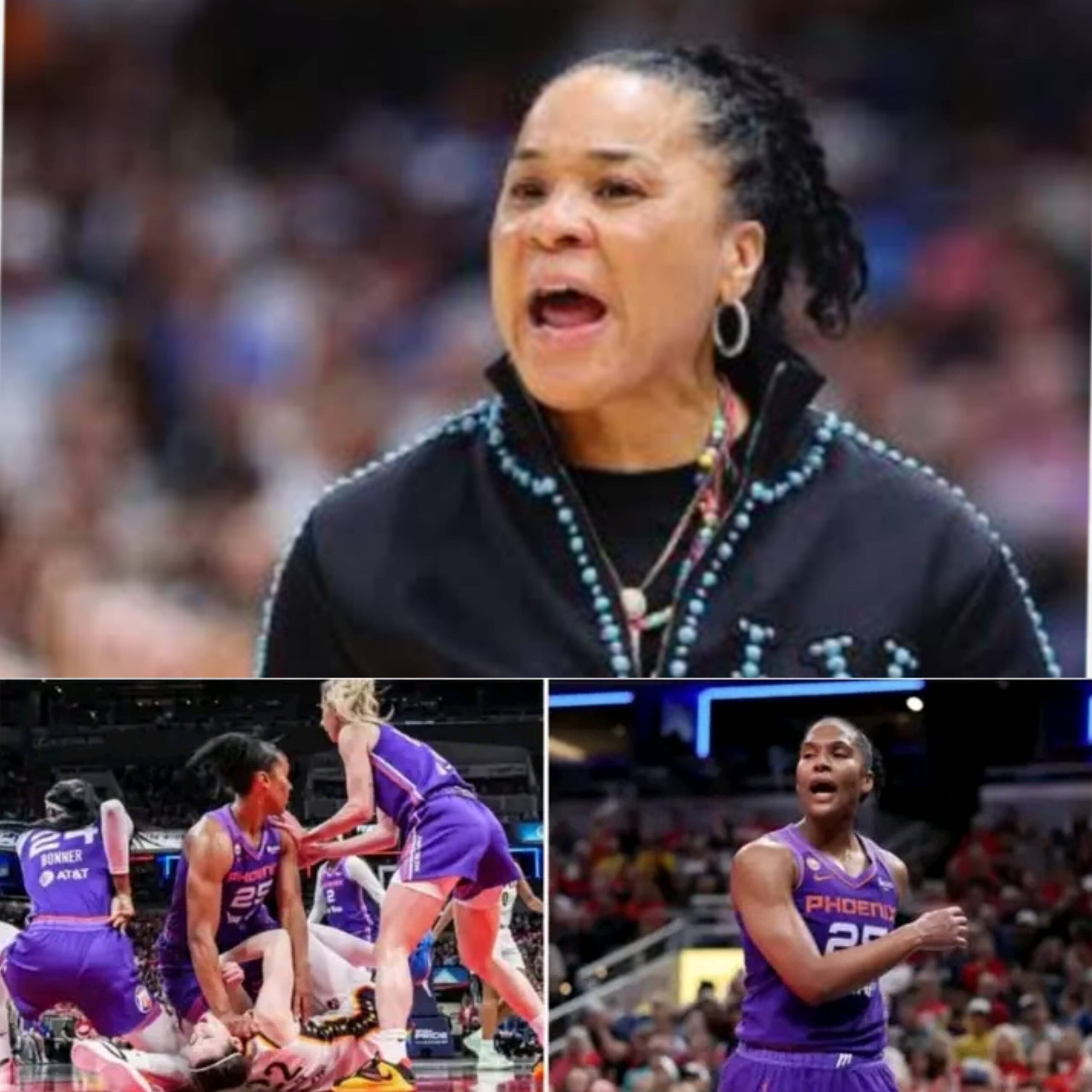
In a moment that has transcended the hardwood, legendary South Carolina coach Dawn Staley has issued a powerful call to action, urging Black athletes across sports to rally in defense of WNBA veteran Alyssa Thomas. Following a controversial on-court incident involving Thomas and Indiana Fever star Caitlin Clark, Staley’s message highlights deeper issues of player safety, league accountability, and the racial undercurrents shaping women’s basketball today.
The flashpoint occurred during a June 24 matchup between the Phoenix Mercury and Indiana Fever. In a scramble for a loose ball, Thomas made contact with Clark, including a fist to the throat area as both players fell. No foul was initially called on the floor, but after review, the WNBA issued Thomas a Flagrant Foul 2 and a one-game suspension—the first of her career. Clark briefly exited with back issues, fueling heated debates about physical play, officiating, and star treatment.
Staley, a three-time NCAA champion coach and advocate for Black women in sports, sees this not merely as a basketball foul but as a symptom of broader challenges. “This has gone beyond basketball,” she reportedly emphasized in circles close to the game. Veterans like Thomas, a six-time All-Star known for her toughness and leadership, represent the backbone of the WNBA—a league that is predominantly Black. Staley’s call urges Black athletes in the NBA, WNBA, college programs, and beyond to “protect their own,” fostering solidarity against what some perceive as selective scrutiny and uneven protection for players.
Critics argue the suspension reflects the league’s attempt to address “cheap shots” amid growing visibility, particularly with Clark’s meteoric rise drawing massive audiences. Supporters of Thomas counter that physicality has long defined the WNBA, and heightened attention on incidents involving Clark risks painting Black players as aggressors while ignoring the rough-and-tumble nature of the sport. Past hard fouls on stars like Angel Reese have similarly sparked conversations, yet the Clark-Thomas clash has amplified racial narratives, with social media divided along familiar lines.
Staley’s leadership has long championed equity. As a Black woman who has navigated coaching’s highest levels, she understands the pressures on athletes of color. Her message echoes historical calls for unity in sports, from civil rights-era protests to modern advocacy for fair treatment. By framing the Thomas situation as a community issue, Staley challenges the league to ensure consistent rules, better officiating, and respect for veterans who built the foundation Clark now benefits from.
This isn’t just about one play. It’s about the soul of the WNBA as it grows. Increased ratings and charter flights owe much to new stars, but the league’s heart remains its experienced core. Black athletes answering Staley’s call could mean collective advocacy—through unions, media, and mentorship—to demand safer conditions and unbiased enforcement.
As women’s basketball booms, protecting players like Alyssa Thomas ensures the league’s progress doesn’t come at the expense of its pioneers. Unity isn’t division; it’s survival in a spotlight that magnifies every collision. The game has evolved, but the fight for equity on and off the court endures.