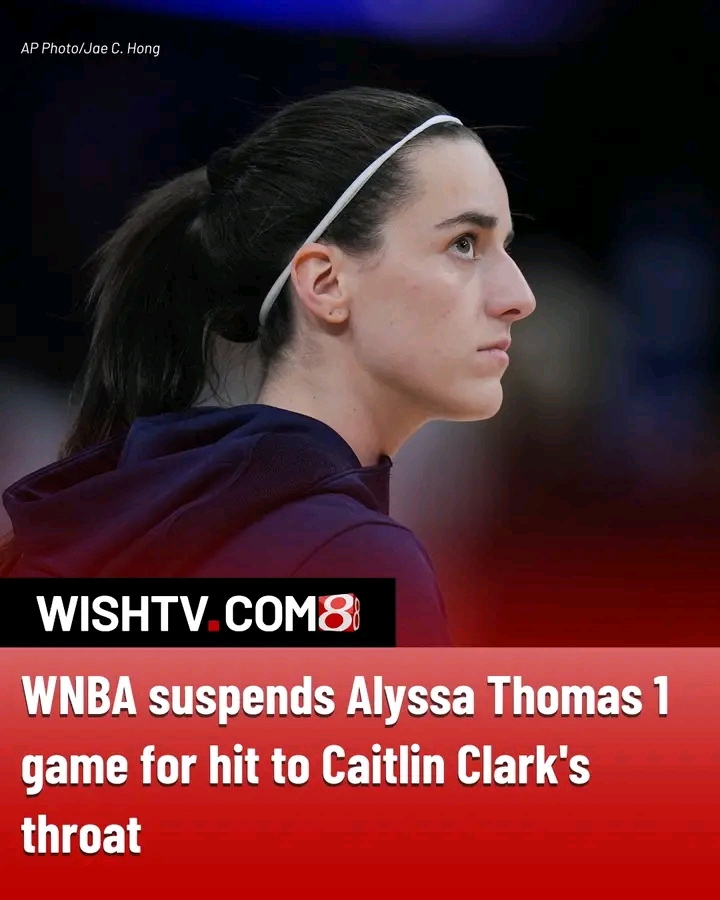
The WNBA has officially handed Phoenix Mercury forward Alyssa Thomas a one-game suspension following an on-court incident involving Indiana Fever star Caitlin Clark during Wednesday night’s matchup. The league announced the disciplinary action after reviewing the play and determined that Thomas had made reckless contact with her fist to Clark’s throat. Although the officials did not call a foul during the game itself, the WNBA later upgraded the play to a Flagrant Foul 2 after conducting a postgame review.
The controversial moment unfolded during a scramble for the ball in the second quarter, with both players ending up on the floor after Clark drove toward the basket. Video replays showed Thomas making contact with Clark’s throat area while attempting to get up from the play. The sequence immediately sparked widespread discussion among fans, analysts, and former players, many of whom questioned why no foul was assessed during the game despite the apparent nature of the contact.
Following its review, the WNBA concluded that the play warranted stronger disciplinary action than what occurred on the court. League officials stated that Thomas’ actions were considered reckless and imposed a one-game suspension in addition to upgrading the play to a Flagrant Foul 2. The suspension means Thomas will miss Phoenix’s next scheduled game, reinforcing the league’s authority to review incidents after games and issue additional penalties when necessary.
The incident added to an already physical contest between the Indiana Fever and the Phoenix Mercury. Throughout the game, emotions ran high as both teams battled intensely, resulting in several hard collisions and heated exchanges. The matchup drew significant attention because of the competitive atmosphere, and the confrontation involving Clark quickly became one of the game’s defining talking points.
Indiana Fever head coach Stephanie White did not hide her frustration after the final buzzer. She criticized the officiating crew for failing to call what she described as a dangerous play, arguing that Clark had been subjected to unnecessary physical contact. White emphasized that the league’s brightest stars deserve proper protection under the rules and expressed disappointment that such an incident went unpenalized during live action before later being addressed by the league office.
Clark’s night became even more concerning when she exited the game in the third quarter because of a back issue and did not return. While the league’s suspension specifically relates to the throat contact involving Thomas, Clark’s departure fueled additional conversations about player safety and the physical style of play that has surrounded several of the Fever’s recent games. Fans immediately voiced concern and hoped the young superstar would avoid a lengthy absence.
The league’s decision has generated mixed reactions across the basketball community. Some supporters believe the one-game suspension was an appropriate punishment that reflects the seriousness of the incident while maintaining consistency with previous disciplinary actions. Others, however, argued that the penalty should have been more severe, insisting that dangerous plays involving a player’s head or neck deserve stricter consequences to discourage similar actions in the future.
As the WNBA season continues, the incident is expected to remain a major topic of discussion, particularly regarding officiating consistency and player protection. The league’s willingness to review missed calls after games demonstrates its commitment to enforcing the rules, but many fans and analysts believe preventing these situations during live play should remain the ultimate goal. With Caitlin Clark continuing to be one of the league’s biggest attractions, every decision involving her health, safety, and treatment on the court will likely receive close attention from the basketball world.