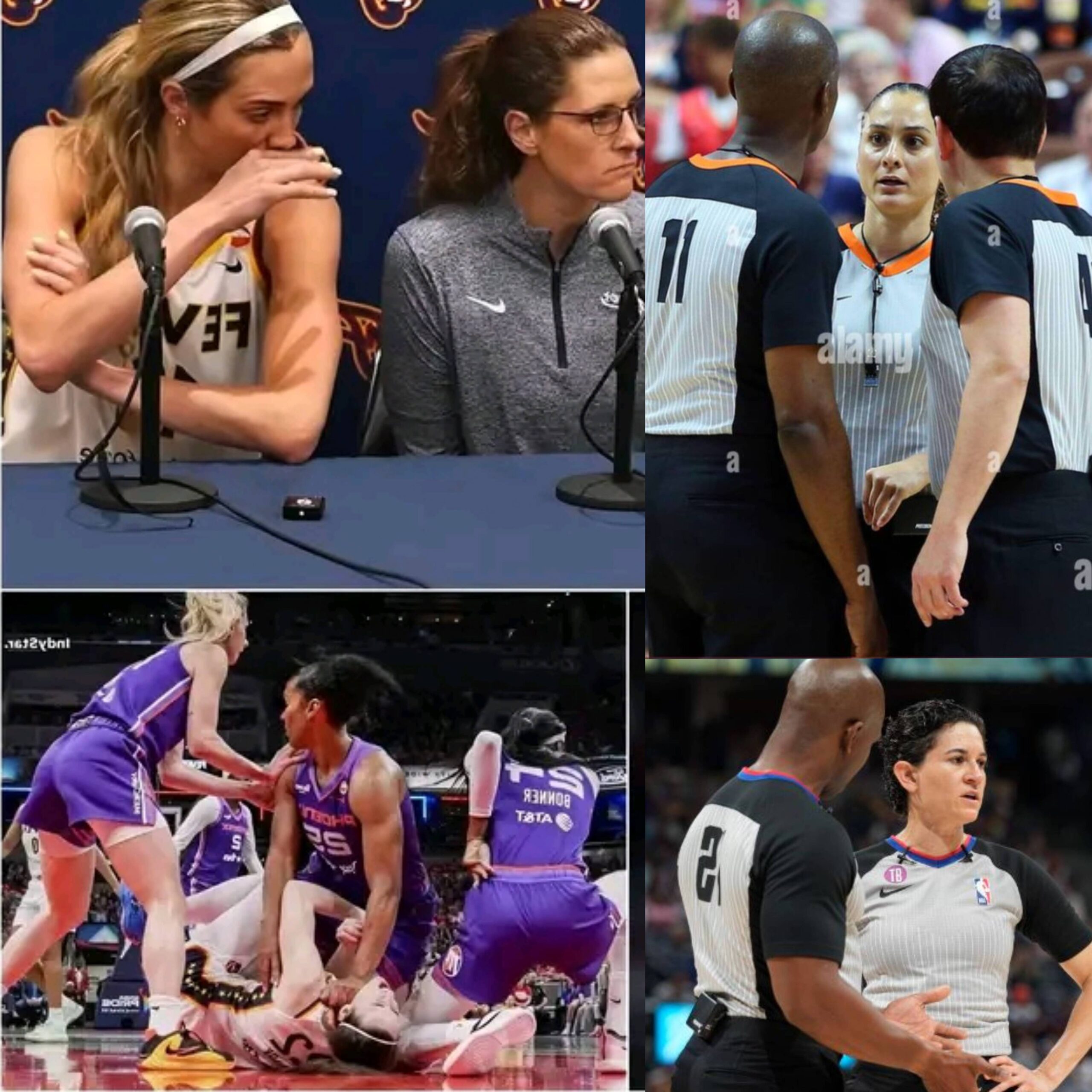
In one of the most explosive nights in recent WNBA history, league officials have handed down unprecedented discipline to the officiating crew from Wednesday night’s Indiana Fever versus Phoenix Mercury matchup. Veteran referee Angelica Suffren and two members of her crew have reportedly been suspended for three months amid intense backlash over their failure to call a dangerous play involving superstar Caitlin Clark and Phoenix forward Alyssa Thomas.
The incident unfolded in the second quarter of the Mercury’s narrow 111-109 victory at Gainbridge Fieldhouse. As Clark battled for a loose ball on the floor, Thomas appeared to drive her fist into Clark’s neck and throat area while stepping over the fallen guard. No foul was called in real time, despite clear video evidence showing the reckless contact. Clark, already absorbing heavy physical play, exited the contest in the third quarter with a back injury that left Fever fans and analysts livid.
Fever head coach Stephanie White did not mince words in her postgame press conference, labeling the no-call “egregious” and “utterly disrespectful” to a generational talent like Clark. “We have a superstar who had two cheap shots that weren’t called,” White said, referencing an earlier knee contact as well. The league’s postgame review upgraded Thomas’ actions to a Flagrant Foul 2, resulting in a one-game suspension for the Mercury veteran, to be served Saturday against the Toronto Tempo.
However, the league did not stop there. In a rare move reflecting growing pressure to protect star players amid the WNBA’s surging popularity, officials announced lengthy suspensions for the referees involved. Sources indicate Suffren and select crew members will sit out the next three months, pending further review and potential retraining. This decision comes as viral clips of the missed call amassed millions of views, sparking widespread criticism of officiating standards and player safety.
The Fever organization and Clark herself have remained relatively measured publicly. A short team statement emphasized focus on basketball and resilience, but insiders say frustration behind closed doors is high. Many analysts argue this incident highlights broader issues: inconsistent rule enforcement and the physical toll on high-profile players like Clark, who continues to draw record viewership.
League Commissioner Cathy Engelbert addressed the controversy briefly, stating the WNBA is committed to “fair play and player protection.” The three-month referee suspensions mark one of the longest such penalties in league history and signal a stronger stance on accountability.
As the WNBA season intensifies, all eyes remain on how this drama affects upcoming games, playoff positioning, and the league’s ongoing efforts to balance physicality with star safety. Fans on both sides are divided, but one thing is clear — the spotlight on officiating has never been brighter.