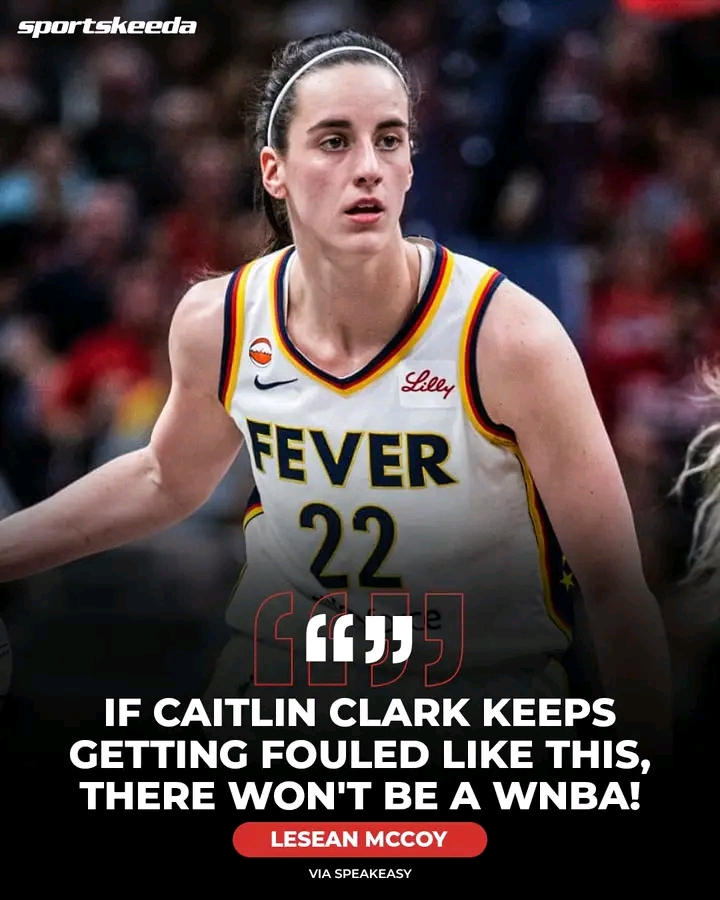
The debate surrounding Caitlin Clark’s treatment on the court continues to grow, and now a prominent voice from outside basketball has joined the conversation. Former NFL star LeSean McCoy recently weighed in on the ongoing discussions about physical play against the Indiana Fever superstar, arguing that the WNBA must do more to protect one of the league’s biggest attractions.
McCoy’s comments reflect a sentiment that has been building throughout Clark’s professional career. While physical basketball has always been part of the WNBA’s identity, many fans, analysts, and former athletes believe the balance between competitive toughness and player protection deserves closer examination.
As Clark continues to be one of the most-watched athletes in professional sports, every hard foul, controversial non-call, and heated on-court moment quickly becomes national news.
WHY LESEAN MCCOY’S COMMENTS MATTER
McCoy is not just another social media commentator. As a former NFL All-Pro and Super Bowl champion, he understands the demands of playing a physical sport at the highest level.
When an athlete with that background publicly questions whether a league is adequately protecting one of its stars, people listen.
The comparison is especially interesting because professional football has spent years evolving its rules to protect quarterbacks and marquee players. The NFL recognized that its biggest stars drive television ratings, fan engagement, and overall league growth.
McCoy appears to believe the WNBA should adopt a similar mindset when it comes to Clark.
His comments are less about giving special treatment and more about ensuring that elite talent can thrive without becoming the target of excessive physicality.
CAITLIN CLARK’S UNIQUE POSITION IN THE WNBA
Few athletes have entered a professional league carrying as much attention as Clark.
Since arriving from college, she has transformed television ratings, increased merchandise sales, boosted attendance numbers across the league, and attracted new audiences who previously paid little attention to women’s basketball.
The impact has been impossible to ignore.
Road arenas routinely see attendance spikes when Indiana visits. National broadcasts featuring the Fever often outperform expectations. Social media engagement surrounding Clark consistently ranks among the highest in professional sports.
That level of influence naturally places a spotlight on how opponents defend her and how officials manage games involving the Fever.
Every controversial whistle—or lack thereof—becomes part of a much larger discussion about the league’s future.
THE OFFICIATING DEBATE IS NOT GOING AWAY
The conversation surrounding officiating and Clark did not begin this season, and it likely will not end anytime soon.
Supporters argue that Clark absorbs an unusual amount of contact because opponents are determined to disrupt her rhythm. Critics counter that she receives the same treatment many elite guards have faced throughout basketball history.
The truth likely falls somewhere in between.
Great players have always attracted extra defensive attention. Physical defense is part of the game.
However, when questionable hits repeatedly dominate headlines, it creates the perception that officials are struggling to maintain consistency.
For the WNBA, perception matters almost as much as reality.
The league has experienced unprecedented growth over the past two years, and maintaining confidence in officiating standards is essential for sustaining that momentum.
WHAT THIS MEANS FOR THE INDIANA FEVER
For Indiana, the issue goes beyond one player.
The Fever have positioned themselves as legitimate championship contenders, and Clark is the engine driving that ambition.
When she is healthy, productive, and confident, Indiana becomes one of the most dangerous teams in the league.
If physical play consistently disrupts her effectiveness, it impacts the entire roster.
Players such as Aliyah Boston, Kelsey Mitchell, and the rest of Indiana’s supporting cast benefit from the attention Clark commands. Her playmaking creates opportunities throughout the lineup.
Protecting Clark is not simply about safeguarding an individual star—it’s about preserving the competitive integrity of a team with championship aspirations.
THE WNBA’S CHALLENGE MOVING FORWARD
The league faces a difficult balancing act.
Nobody wants basketball to become overly officiated. Fans appreciate the intensity and competitiveness that make the WNBA unique.
At the same time, the league must ensure that physical play does not cross the line into unnecessary risk.
The ideal solution is consistency.
Players, coaches, and fans can accept tough officiating when standards remain clear from game to game. Problems emerge when similar plays receive different rulings depending on the situation.
The WNBA’s continued growth will depend in part on its ability to strike that balance.
COULD RULE CHANGES BE COMING?
While no major rule changes appear imminent, increased scrutiny often leads leagues to review officiating standards.
The NFL, NBA, and other major sports organizations have historically adjusted points of emphasis when concerns about player safety or competitive fairness gained widespread attention.
If conversations like McCoy’s continue to gain traction, league officials may face increased pressure to evaluate how games involving high-profile stars are officiated.
That does not necessarily mean creating special rules for Clark. Instead, it could mean reinforcing existing standards and emphasizing player safety across the board.
CHAMPIONSHIP IMPLICATIONS FOR THE FEVER
Looking ahead, Indiana’s title hopes may depend on how effectively the team handles the physical defenses it will continue to face.
Opponents are not going to stop targeting Clark’s strengths. Every contender understands that slowing her down remains the fastest path to beating the Fever.
The next step in Clark’s evolution may be learning to thrive regardless of how aggressively defenses attack her.
The greatest players eventually reach a point where physicality becomes part of the challenge they overcome rather than an obstacle that defines the conversation.
If Clark reaches that stage—and there is every reason to believe she will—the Fever could become even more dangerous during the playoff push.
FINAL THOUGHTS
LeSean McCoy’s comments have reignited a debate that sits at the center of the WNBA’s current growth story. Caitlin Clark is more than a rookie sensation or a franchise cornerstone; she is one of the faces of professional basketball.
The discussion is not about granting special treatment. It is about ensuring that the league’s brightest stars can showcase their talents while competing in a fair and safe environment.
As the season progresses, every hard foul, controversial whistle, and officiating decision involving Clark will continue to attract attention. For the Indiana Fever, the WNBA, and basketball fans everywhere, how those situations are handled could influence not only this season’s championship race but also the league’s long-term trajectory.