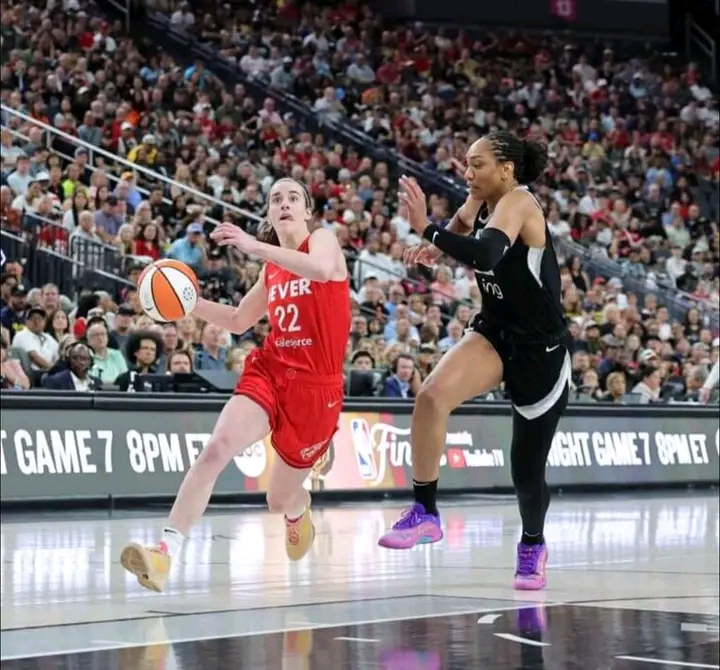
The latest WNBA All-Star voting update has generated one of the biggest discussions of the season, and it centers around a name most fans expected to see comfortably at the top: Caitlin Clark.
Instead, Clark found herself sitting fifth in the latest fan voting results, a position that has left many Indiana Fever supporters scratching their heads. Considering her popularity, television ratings impact, and massive social media following, the ranking has sparked questions about whether the voting accurately reflects fan support—or whether something unusual may be influencing the results.
While there is currently no evidence of manipulation or bot activity, the conversation itself highlights just how influential Clark has become in women’s basketball.
WHY CLARK’S RANKING SURPRISED SO MANY FANS
Since entering the WNBA, Clark has transformed the league’s visibility in ways few athletes ever achieve. Games featuring the Indiana Fever consistently attract larger television audiences, merchandise sales have surged, and road arenas frequently experience sellout crowds when the Fever come to town.
Given that level of popularity, many fans assumed Clark would be among the leading vote-getters throughout the All-Star process.
Instead, seeing her ranked fifth immediately triggered skepticism across social media. Some supporters questioned whether dedicated fan bases of other players had simply become more organized, while others wondered whether online voting systems could be vulnerable to automated voting patterns.
The reality may be much simpler.
Modern fan voting campaigns are often highly coordinated. Players with passionate college fan bases, international followings, and strong social media communities can generate enormous vote totals through organized efforts that have nothing to do with bots.
THE LESSON FROM PREVIOUS ONLINE VOTING CONTROVERSIES
Many basketball fans remember previous voting events where unexpected results fueled speculation.
One example often cited is international fan voting competitions, including FIBA awards, where voting swings sometimes appeared dramatic or difficult to explain in real time. When certain players suddenly surged ahead, some observers questioned whether automated systems or coordinated voting campaigns were responsible.
However, unusual voting patterns do not automatically indicate manipulation.
Large fan communities can mobilize quickly through social media platforms, group chats, university networks, and international fan pages. When thousands of supporters receive reminders to vote multiple times a day, the numbers can change rapidly.
That can create the appearance of suspicious activity even when the voting remains legitimate.
IS THERE ACTUALLY EVIDENCE OF BOTS IN WNBA ALL-STAR VOTING?
At this point, there is no public evidence suggesting bots are affecting WNBA All-Star voting.
That’s an important distinction.
It is reasonable for fans to question surprising results, especially when a player with Clark’s visibility is not leading the standings. But without concrete evidence from the league, accusations of automated voting remain speculation.
Professional sports leagues invest significant resources into protecting fan voting systems because credibility is essential. While no online system is completely immune to abuse, leagues continuously monitor unusual activity and can investigate suspicious patterns when necessary.
Until evidence emerges, the most likely explanation remains a combination of organized fan voting efforts and strong support for multiple star players across the league.
WHY CLARK DOESN’T NEED TO LEAD THE VOTING TO PROVE HER IMPACT
One interesting aspect of this debate is that Clark’s influence extends far beyond fan-voting rankings.
Her impact can be measured through:
- Television ratings
- Attendance figures
- Merchandise sales
- Social media engagement
- Sponsorship interest
- Overall league visibility
In many ways, Clark has already achieved something more significant than finishing first in a voting contest. She has become one of the central figures driving the WNBA’s unprecedented growth.
Whether she finishes first, fifth, or tenth in fan voting does little to change the reality that she remains one of the league’s most important stars.
WHAT THIS MEANS FOR THE INDIANA FEVER
For the Indiana Fever, the discussion reflects the broader expectations surrounding the franchise.
Every Clark-related statistic now receives national attention. Every ranking becomes a headline. Every vote count is analyzed.
That level of scrutiny is both a challenge and a sign of success.
The Fever are no longer simply rebuilding a franchise—they are one of the league’s biggest attractions. As the season progresses, team success will ultimately matter more than fan-voting positions.
If Indiana continues improving and competing for a playoff spot, Clark’s reputation and popularity are unlikely to suffer regardless of where she finishes in All-Star voting.
PREDICTION: THE DEBATE IS FAR FROM OVER
Expect discussions about All-Star voting to continue until final results are announced.
If Clark remains outside the top few positions, questions about fan engagement and voting dynamics will only grow louder. On the other hand, a late surge would reinforce the argument that organized voting campaigns can dramatically reshape standings over a short period.
Either way, the controversy reveals something important: fans care deeply about Clark’s place in the league.
That level of passion is exactly what sports organizations hope to generate.
FINAL THOUGHTS
Caitlin Clark sitting fifth in All-Star voting may feel surprising given her enormous popularity, but surprise alone is not proof of wrongdoing.
Could organized voting campaigns influence results? Absolutely.
Could passionate fan bases create unexpected swings? Certainly.
Is there currently evidence that bots are affecting the WNBA All-Star vote? No.
For now, the most reasonable approach is to view the rankings as a reflection of an increasingly engaged and competitive fan landscape rather than evidence of manipulation. Regardless of where Clark ultimately finishes, her impact on the Indiana Fever and the WNBA remains undeniable—and that influence will likely outlast any single voting controversy.