The atmosphere around Celtic F.C. has once again been thrown into sharp focus after club legend Frank McAvennie delivered a scathing assessment of the club’s recent conduct, branding their handling of key developments as “embarrassing.” His criticism comes at a time when uncertainty, silence, and significant squad changes have combined to create a tense mood among supporters ahead of a crucial summer.
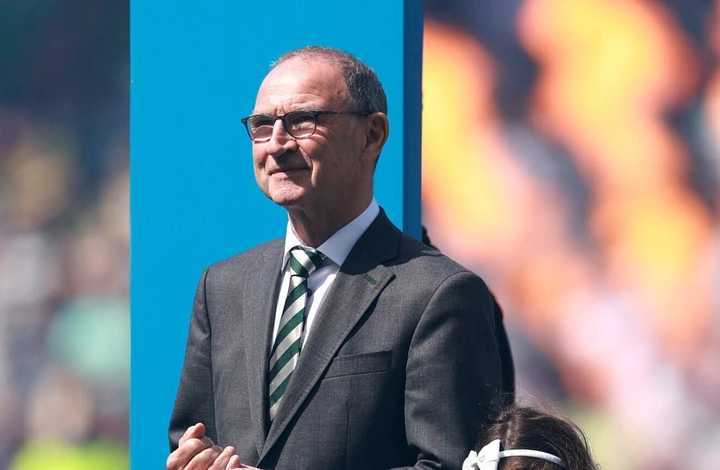
 McAvennie’s comments were primarily aimed at the club’s lack of communication regarding the future of manager Martin O’Neill. Despite widespread reports confirming O’Neill’s continuation in charge following a successful campaign, Celtic’s hierarchy had remained noticeably quiet, leaving fans to rely on speculation rather than official confirmation. This silence, according to McAvennie, reflects poorly on a club of Celtic’s stature.
The former striker did not hold back, openly questioning the club’s public relations approach and suggesting that such a communication gap is unacceptable in modern football. He pointed out that while major developments were circulating widely in the media, the club itself failed to address them directly, creating confusion and frustration among the fanbase. For a club with global support, such lapses risk undermining trust and credibility.
Ironically, this controversy comes at a time when O’Neill’s return has largely been viewed as a stabilizing move. The experienced manager guided Celtic through a turbulent period and delivered domestic success, earning himself a longer-term role at the club. However, instead of capitalizing on that positivity, the club’s muted response has allowed criticism to dominate headlines.
Adding to the growing discontent is the wave of transfer activity involving several first-team players. Defender Stephen Welsh’s early departure, along with exits involving players like Luis Palma and Hayato Inamura, has reinforced the sense of a squad in transition. These moves, while not entirely unexpected, have further highlighted the need for clarity and direction from the club’s leadership.
Celtic are no strangers to periods of upheaval, but the current situation feels particularly delicate. With expectations rising following their recent domestic achievements, fans are eager to see a clear strategy in place—both in terms of recruitment and long-term planning. Instead, the perceived lack of transparency has fueled concerns that the club may be repeating past mistakes.
McAvennie’s remarks also tap into a broader narrative surrounding Celtic’s governance in recent years. Criticism of decision-making, communication, and transfer strategy has been a recurring theme, with tensions occasionally spilling over into public protests and fan unrest. His latest outburst serves as another reminder that many supporters remain unconvinced by how the club is being run.
There is also the question of timing. With the summer transfer window approaching and preparations for European competition underway, this is a period when clarity and decisiveness are most needed. O’Neill’s experience could prove invaluable, but only if he is backed by a coherent and well-communicated plan from the boardroom.
Ultimately, McAvennie’s “embarrassing” label may be harsh, but it reflects a deeper frustration shared by sections of the Celtic support. In modern football, communication is as important as results, and clubs are expected to engage openly with their fans—especially during times of change.
As Celtic move forward, the challenge will be to restore confidence both on and off the pitch. That means not only strengthening the squad but also improving how key decisions are communicated. Otherwise, the noise surrounding the club may continue to grow louder, regardless of what happens on matchday.