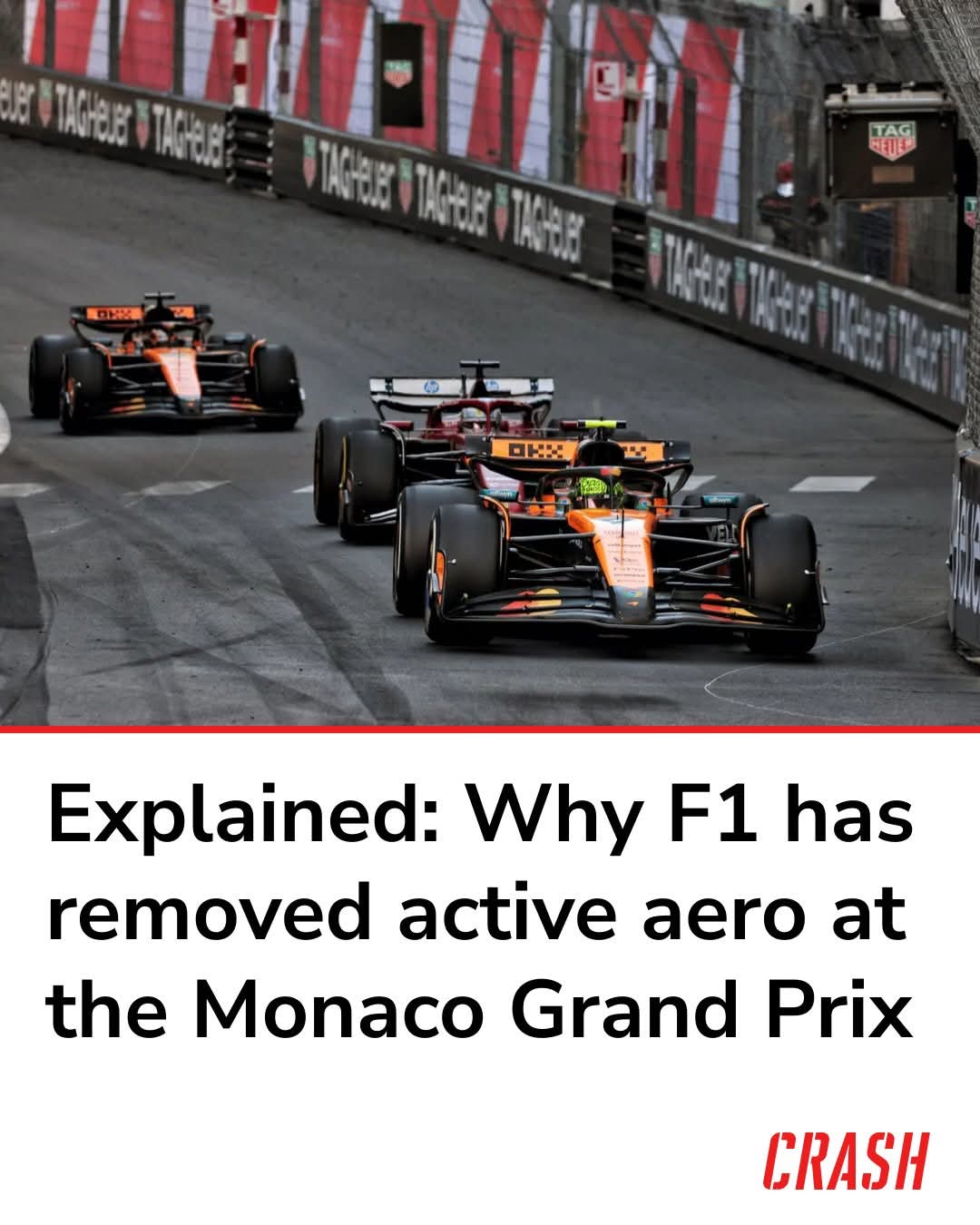
The Monaco Grand Prix has always occupied a unique place on the Formula 1 calendar. Famous for its narrow streets, unforgiving barriers, and glamorous backdrop, the race remains one of motorsport’s most iconic events. However, the 2026 edition will introduce another major talking point after the FIA confirmed that Formula 1’s new active aerodynamic system, known as Straight Mode, will not be available throughout the Monaco race weekend.
The decision marks the first time this season that the sport’s new active aero technology will be completely absent from a Grand Prix. Introduced under the 2026 regulations, Straight Mode replaced the Drag Reduction System (DRS) that had been used from 2011 through 2025. The technology allows drivers to reduce aerodynamic drag by adjusting both the front and rear wings, increasing straight-line speed and creating additional overtaking opportunities. While the system has become an important part of racing under the new regulations, Monaco’s unique layout has convinced the FIA that safety must take precedence over performance gains.
According to the FIA, Monaco does not feature any section of track that meets the criteria required for a Straight Mode activation zone. The governing body requires each activation area to last a minimum of three seconds, something that Monaco’s compact street circuit simply cannot provide. In addition, several sections of the circuit combine heavy braking zones, traction-sensitive corners, and rapid directional changes. Activating active aero in such areas could create instability and increase the risk of accidents. As a result, the FIA has chosen to eliminate Straight Mode entirely for the event rather than introduce unnecessary safety concerns.
While some fans may see the removal of active aero as a setback for overtaking opportunities, the reality is more complicated. Monaco has traditionally been one of the most difficult circuits on the calendar for passing, regardless of technological innovations. Even during the DRS era, overtaking remained extremely challenging due to the narrow nature of the track. Audi driver Gabriel Bortoleto recently acknowledged that racing around Monaco is unlikely to change dramatically despite the introduction of new overtaking tools elsewhere in the championship. However, Formula 1 will still allow drivers to use Overtaking Mode, another feature of the 2026 regulations designed to provide strategic attacking opportunities. Whether that proves enough to create more exciting wheel-to-wheel action remains one of the biggest questions heading into race weekend.
The removal of active aero also highlights a broader challenge facing modern Formula 1. Although the 2026 regulations were designed to improve racing and reduce aerodynamic turbulence, Monaco remains a circuit that resists technological solutions. The cars are still significantly larger than many would like for a street circuit built decades before modern Formula 1 existed. As a result, qualifying is expected to remain the single most important session of the weekend, with track position likely determining the outcome of the race. Teams will place enormous emphasis on securing pole position, knowing that opportunities to recover during the race itself may be limited.
Looking ahead, Monaco could provide one of the most unpredictable weekends of the season despite the expected lack of overtaking. Strategy, tire management, safety cars, weather conditions, and driver precision could all play decisive roles. The absence of Straight Mode may actually place greater emphasis on driver skill, rewarding those capable of extracting maximum performance from their machinery on one of the sport’s most demanding circuits. While fans hoping for frequent overtakes may be disappointed, Monaco’s enduring appeal has never been about high-speed passing. Instead, it remains a test of concentration, courage, and perfection. The 2026 Monaco Grand Prix is now set to showcase exactly that, with Formula 1 choosing safety over spectacle as the championship returns to the streets of Monte Carlo.