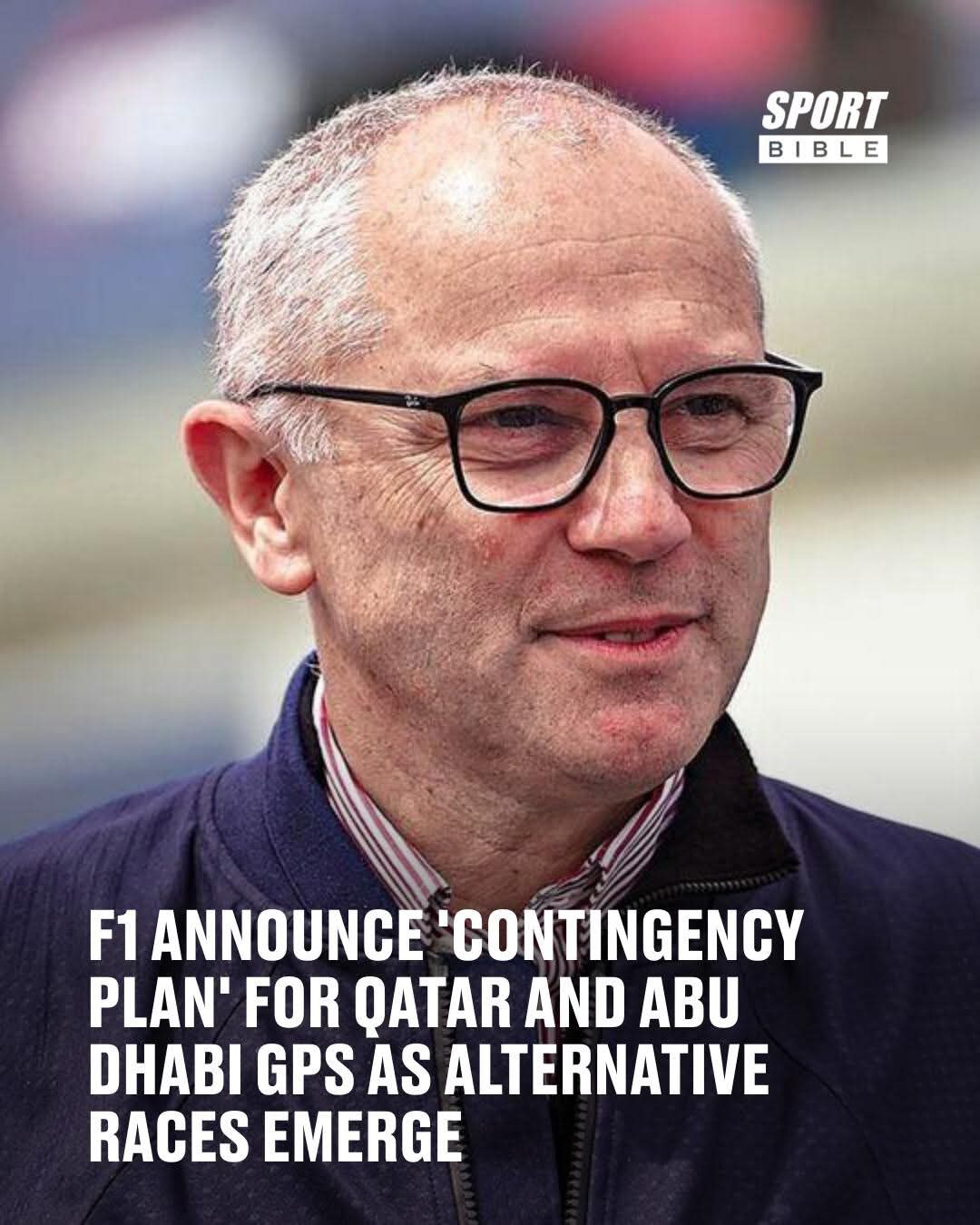
Formula 1 CEO Stefano Domenicali has confirmed that the sport has prepared a contingency plan in case the Qatar and Abu Dhabi Grands Prix cannot go ahead later this season, adding fresh uncertainty to what has already become one of the most disrupted calendars in modern F1 history.
The 2026 season was originally scheduled to feature 24 races, but geopolitical tensions in the Middle East forced the cancellation of both the Bahrain and Saudi Arabian Grands Prix earlier in the year. That decision immediately reduced the championship to 22 races and created major logistical headaches for Formula 1 management.
Now, with concerns continuing to surround the stability of the region, speculation has intensified over whether Qatar and Abu Dhabi will be able to safely host the final races of the campaign.
Domenicali’s latest comments strongly suggest Formula 1 is preparing for every possible scenario.
Formula 1 Facing Unprecedented Calendar Challenges
The modern Formula 1 calendar is one of the most complex operations in global sport.
Unlike many championships, F1 does not simply transport athletes and equipment. Entire team factories are effectively moved around the world every week, with thousands of staff, hundreds of tons of cargo, and massive infrastructure needing to arrive on time for every event.
That reality explains why Domenicali emphasized the logistical complications surrounding any potential late-season changes.
According to the F1 CEO, contingency plans are already in place if the races in Qatar and Abu Dhabi become impossible to stage. While he did not publicly reveal which circuits are being considered, his comments confirmed that alternatives are actively being evaluated behind the scenes.
Importantly, Domenicali also hinted that Las Vegas would not become the season finale, suggesting Formula 1 remains determined to preserve a lengthy calendar despite the uncertainty.
Imola and Other Circuits Waiting for Opportunity
Several circuits are already positioning themselves as possible replacement venues.
Imola mayor Marco Panieri recently stated that the iconic Italian circuit would be ready if Formula 1 called upon them. The track remains popular among fans and drivers alike due to its old-school layout and historic atmosphere.
Meanwhile, Istanbul Park has also re-emerged in discussions after confirmation that the Turkish Grand Prix will permanently return from 2027 onward.
Turkey previously delivered several memorable races during its temporary return to Formula 1 and could become an attractive emergency option if additional flexibility is required.
The challenge for Formula 1, however, lies in timing.
There are limited gaps remaining in the schedule, meaning any replacement race would need to fit into already narrow windows between existing events.
Why Formula 1 Cannot Afford More Disruption
The financial side of the situation cannot be ignored.
Promoters in Qatar and Abu Dhabi are already selling tickets, organizing hospitality packages, and preparing major commercial operations tied to Formula 1 weekends.
Domenicali acknowledged that sales for both events are reportedly still performing strongly despite the uncertainty.
However, Formula 1 also understands that delaying decisions too long could create even greater problems for teams, sponsors, broadcasters, and fans planning international travel.
The sport now faces a difficult balancing act between patience and preparation.
Waiting too long risks operational chaos.
Acting too early could create unnecessary cancellations if conditions improve.
Could Bahrain and Saudi Arabia Return Later in the Year?
One of the more intriguing possibilities involves Bahrain and Saudi Arabia potentially returning if regional tensions ease later in the season.
While nothing official has been confirmed, reports have suggested Formula 1 has explored options to reinsert the races into vacant schedule gaps if circumstances allow.
That scenario would still present enormous logistical complications, but it demonstrates how determined Formula 1 remains to protect the scale of its global calendar.
The championship has spent years expanding into a massive international entertainment product, and reducing the schedule significantly would impact both revenue and global momentum.
Prediction: Formula 1 Will Push Hard to Maintain a Full Calendar
At this stage, Formula 1 appears fully committed to preserving as many races as possible.
The existence of contingency plans shows the FIA and Formula 1 leadership are already preparing for rapid adjustments if necessary. Given the financial stakes involved, replacing events rather than outright canceling them will almost certainly remain the preferred strategy.
If Qatar and Abu Dhabi become impossible to host, European circuits like Imola could receive unexpected opportunities, while Turkey may also emerge as a serious candidate depending on logistics.
What seems increasingly clear is that Formula 1 cannot afford prolonged uncertainty.
The 2026 season has already been shaped by disruption, and how the sport handles the remainder of the calendar could become one of the defining stories of the entire championship.