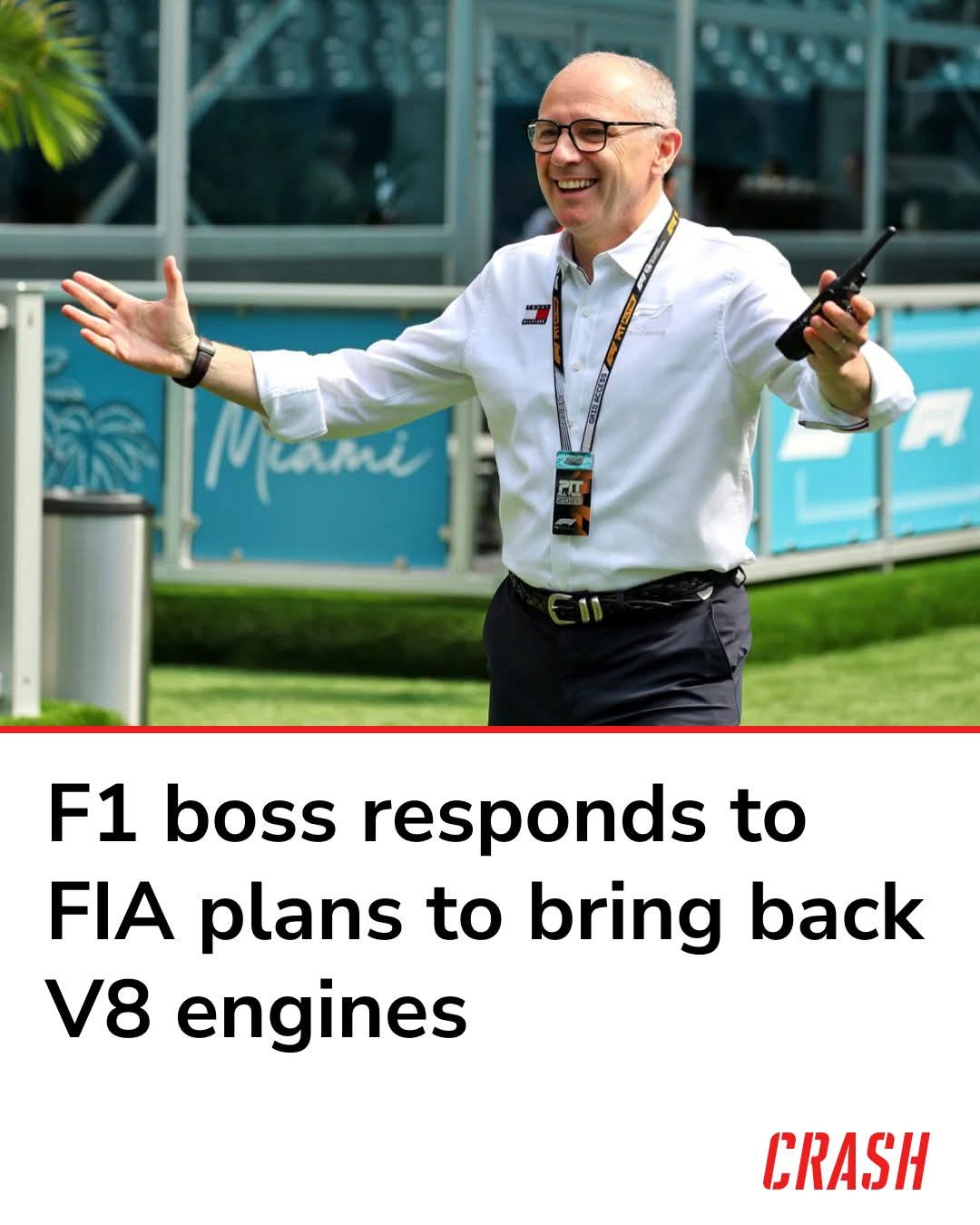
Formula 1 could be heading toward one of the most dramatic technical transformations in modern history after Formula 1 CEO Stefano Domenicali publicly threw his support behind proposals to reintroduce V8 engines. For longtime fans of the sport, the news immediately triggered nostalgia, while for teams and manufacturers it opened the door to an entirely new debate over the future identity of Formula 1.
The sport has spent more than a decade pursuing advanced hybrid technology and increased sustainability, but now momentum appears to be building behind a return to one of the most iconic sounds and eras F1 has ever known.
And with Domenicali declaring that he supports the concept “1000%,” this is no longer a discussion that can simply be dismissed as wishful thinking.
Formula 1 Could Be Moving Toward a New Era
Formula 1 has experienced multiple engine eras throughout its history. Fans witnessed the raw power of V12 engines, the unforgettable scream of V10 units, and later the highly popular V8 generation before the sport entered its hybrid era in 2014.
The transition to turbo-hybrid V6 power units represented one of the biggest technological shifts in the sport’s history. The objective was clear: align Formula 1 with future automotive development and attract manufacturers focused on efficiency and sustainability.
That move achieved many of its goals.
Major manufacturers continued investing heavily, technological innovation accelerated, and hybrid systems pushed engineering boundaries to levels previously unseen.
However, despite the success from an engineering perspective, many drivers and fans have repeatedly voiced concerns over one issue that never fully disappeared: emotion.
Domenicali Fully Supports the V8 Return
Stefano Domenicali did not hesitate when discussing the possibility of bringing V8 engines back to Formula 1.
According to his comments, the vision combines sustainable fuel, lighter cars, and V8 engines as a pathway toward rediscovering the sport’s traditional identity.
That statement matters because Formula 1 currently finds itself balancing two different priorities.
On one side sits technological advancement and sustainability goals.
On the other side sits the emotional experience that made Formula 1 globally iconic.
The sound of naturally aspirated engines created a sensory connection with fans that many believe modern power units struggle to replicate.
The roar of V8s and V10s was not just noise; it became part of Formula 1’s identity.
Why Current Power Units Continue Facing Criticism
While Formula 1 has introduced modifications to improve the racing product, several concerns surrounding the modern power units still remain.
Drivers have recently criticized issues such as energy management limitations and superclipping effects that reduce acceleration in areas where cars traditionally ran flat-out.
Instead of maximum attack throughout a lap, drivers sometimes find themselves balancing battery deployment and conserving energy.
This can occasionally create racing scenarios that feel overly engineered.
Formula 1 has always represented a combination of technology and driver skill, but many believe the balance may have shifted too heavily toward complexity.
Fans generally want strategy and intelligence to remain part of the sport, but they also want drivers pushing cars to the absolute limit.
That is where the V8 conversation becomes interesting.
Could KERS Make a Surprise Return?
One of the biggest questions surrounding any future V8 proposal involves the electrical component.
Formula 1 is unlikely to completely abandon its sustainability direction, especially after investing heavily in environmentally friendly fuel development.
A more realistic possibility could involve a modern version of KERS returning.
KERS, which operated between 2009 and 2013, acted as a temporary power boost system and added tactical elements without dominating the driving experience.
A combination of V8 engines with sustainable fuels and limited electrical assistance could potentially satisfy both traditionalists and modern manufacturers.
Such a formula would preserve innovation while restoring some of Formula 1’s historic character.
What This Could Mean for Teams and Manufacturers
Any major regulation change creates winners and losers.
Manufacturers such as Mercedes, Ferrari, Audi, and Red Bull Powertrains are currently investing enormous resources into existing engine projects. Any shift toward V8 architecture would significantly alter development priorities.
Some teams may adapt quickly.
Others could face substantial challenges.
That explains why Domenicali also carefully defended the current regulations. He acknowledged that previous compromises were necessary to keep manufacturers involved and avoid moving toward a fully electric future.
Formula 1 cannot ignore commercial realities.
Innovation keeps manufacturers interested, while entertainment keeps fans invested.
The challenge is finding a balance between the two.
Prediction: Formula 1 May Be Entering Its Most Important Technical Debate in Years
The return of V8 engines is still far from becoming reality, but the conversation itself feels increasingly serious.
A few years ago, suggestions of abandoning hybrid technology would have sounded unrealistic.
Today, some of Formula 1’s most influential figures appear willing to explore alternatives.
If sustainable fuel technology continues improving and pressure from drivers and fans keeps growing, Formula 1 could eventually enter a fascinating middle ground between tradition and innovation.
One thing is becoming increasingly clear.
The future of Formula 1 may not be fully electric, fully hybrid, or entirely traditional.
Instead, it may become a blend of everything that made the sport successful in the first place — speed, sound, emotion, and technological ambition.