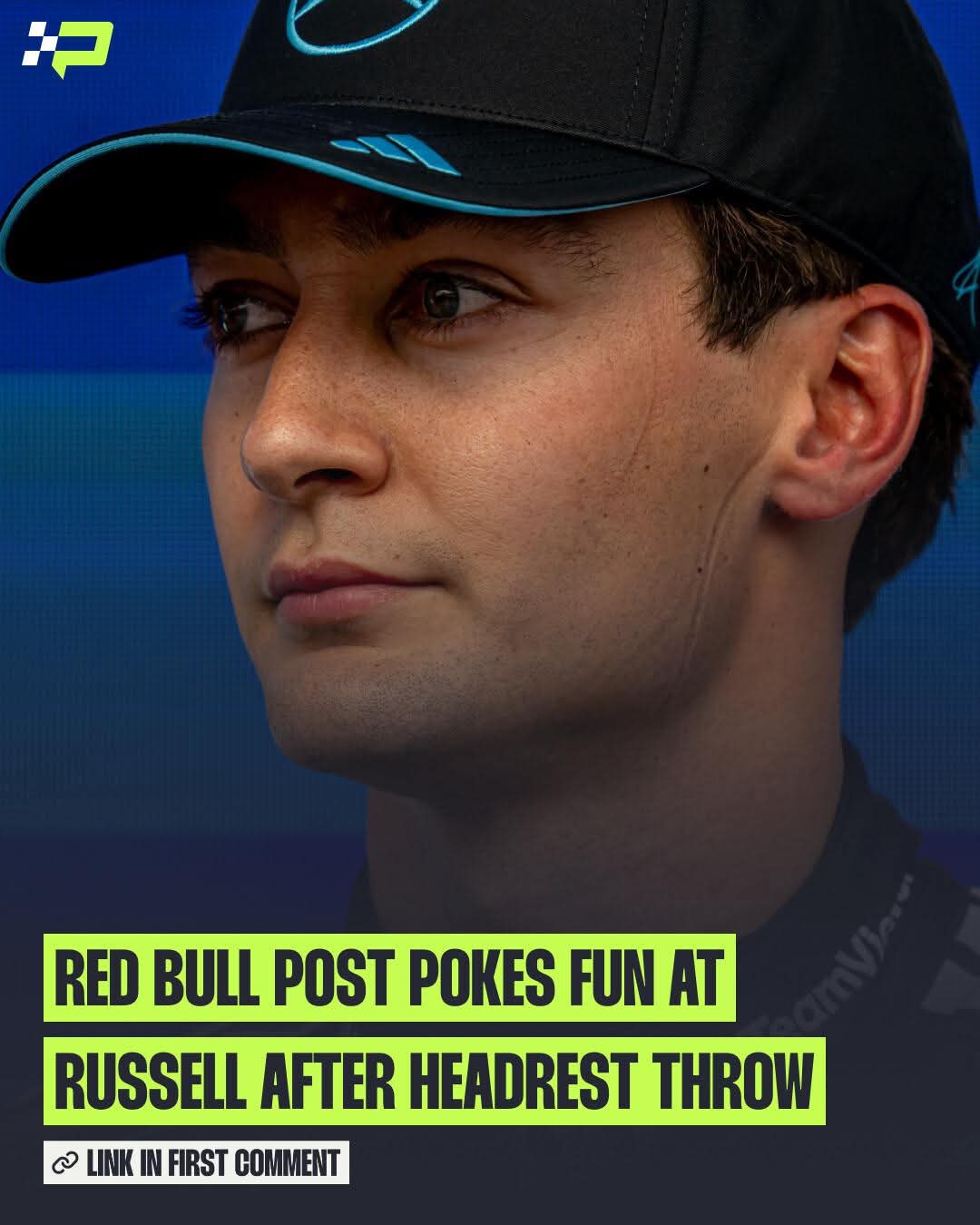
The fallout from the Canadian Grand Prix continued long after the chequered flag dropped, with Red Bull appearing to take a subtle swipe at George Russell following his emotional retirement from the race. What started as a painful afternoon for Mercedes quickly evolved into a social media moment that reignited old tensions and added another chapter to Formula 1’s growing rivalry narratives.
Russell had looked in complete control for large parts of the race weekend in Montreal. After delivering an impressive sprint performance and showing race-winning pace, the British driver was engaged in an intense battle with teammate Kimi Antonelli before disaster struck. On lap 29, Russell’s race suddenly came to an end after a power unit issue shut his car down entirely, ending what had been one of his strongest weekends of the season.
The frustration was immediate and visible. As Russell climbed from his stricken Mercedes, cameras captured him throwing his headrest onto the track in anger. It was a rare public display of emotion from a driver often viewed as calm and composed under pressure. While emotional reactions are common in Formula 1, especially after a crushing retirement, the FIA took notice of the incident.
Stewards later handed Russell a €5,000 fine, although the penalty was suspended for twelve months. The FIA categorized the act as unsafe behavior and reviewed footage before reaching a decision. According to the stewards, Russell acknowledged his mistake, admitted his actions did not set a good example, and reportedly apologized while offering to make a public apology as well. The governing body accepted his explanation, avoiding any harsher consequences.
However, the story took an unexpected twist when Red Bull’s official social media account joined the conversation. Replying to a fan’s image of Russell throwing the headrest, Red Bull posted a message reading: “Borderline something something.” The post immediately exploded online, drawing massive engagement and sparking debate across the Formula 1 community.
The wording appeared far from random. Many fans quickly connected it to the heated verbal battle between Russell and Max Verstappen at the end of the 2024 season. Following a controversial incident in Qatar that year, Russell had accused Verstappen of displaying “borderline violence” whenever situations did not go his way. The relationship between the two drivers has remained tense ever since, and Red Bull’s social media response looked very much like a deliberate callback to those comments.
This latest exchange highlights how Formula 1’s rivalries now extend far beyond the circuit itself. Teams are becoming increasingly active online, using social media to strengthen fan engagement while occasionally adding fuel to existing storylines. Red Bull has often embraced a more playful and aggressive online personality, but the post also raised questions about whether official team accounts should be involved in personal rivalries between drivers.
Meanwhile, the bigger issue for Mercedes may be what happened before Russell’s retirement rather than what happened afterward. Kimi Antonelli secured yet another victory in Canada and now holds a commanding 43-point advantage in the championship standings. The teenager’s rise is becoming one of the defining stories of the season, and Russell suddenly finds himself not only chasing points but also attempting to stop momentum building on the opposite side of the garage.
Looking ahead, this could become a critical turning point in the season. Emotional moments often reveal pressure points inside championship campaigns, and Russell’s reaction may simply reflect the frustration of watching a potential victory disappear through circumstances outside his control. But Formula 1 rarely waits for drivers to recover emotionally. With Antonelli continuing to win and rival teams improving, Russell may need to quickly reset mentally before the championship fight slips further away.
For Red Bull, the social media moment generated headlines and reactions. For Mercedes, the focus now shifts back to performance. Because in Formula 1, jokes disappear quickly, but lost points have a habit of staying around for a very long time.