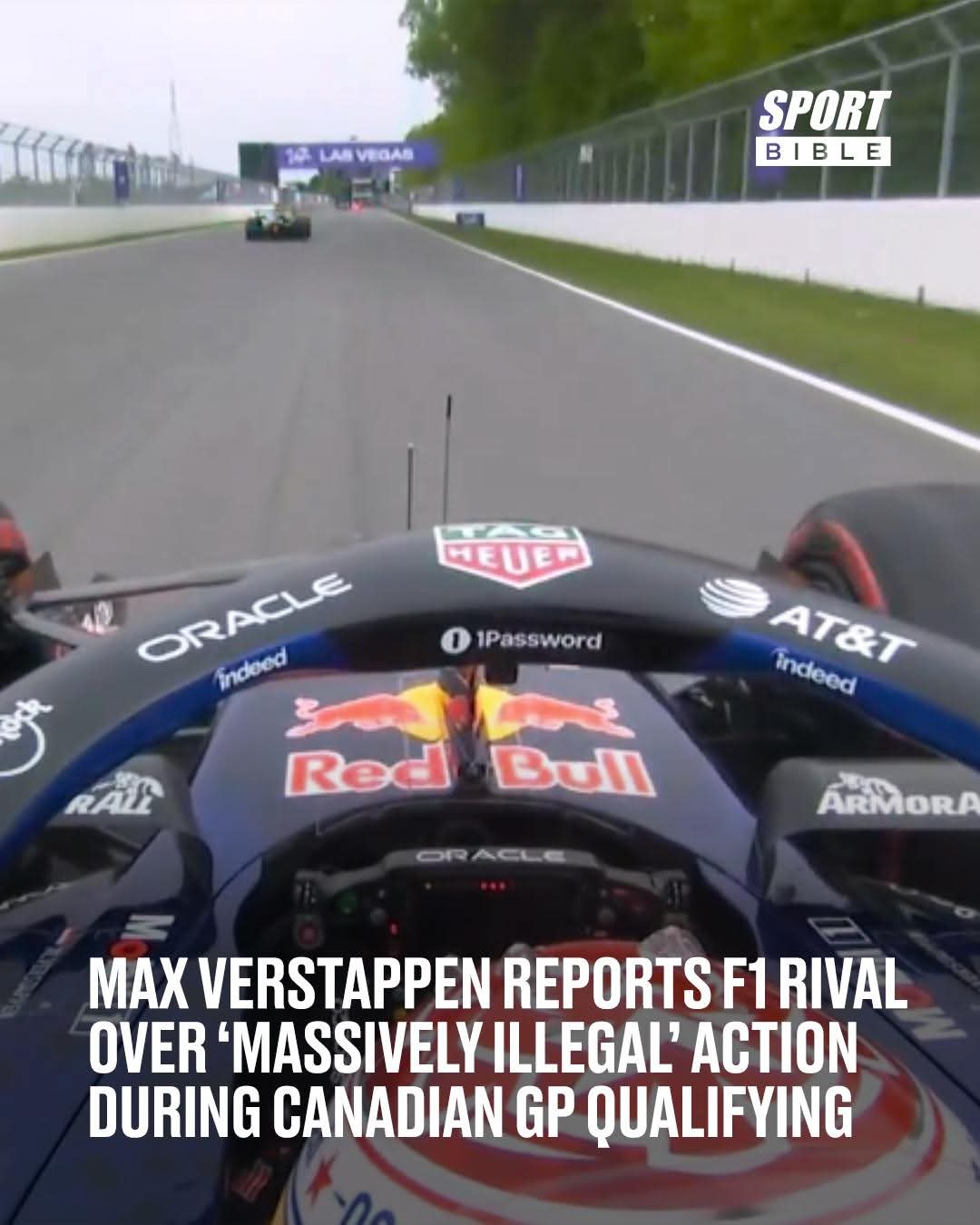
Tension continued to rise at the Canadian Grand Prix after Max Verstappen became involved in another heated moment during qualifying, this time accusing a rival team of operating outside the limits. The Red Bull star voiced his frustration over team radio during the final qualifying session after claiming a Mercedes driver was behaving in a way he described as “massively illegal.” The dramatic complaint added another layer to an already chaotic day in Montreal, where internal battles, changing weather concerns, and setup struggles had already dominated headlines.
Verstappen eventually secured sixth place on the grid for Sunday’s race, finishing slightly more than three tenths behind pole-sitter George Russell. While the result itself was not disastrous, the Dutchman was clearly unhappy throughout the session. During both Q1 and Q2 he repeatedly complained about a lack of straight-line performance from his Red Bull, admitting afterward that the issue was difficult to explain. For a driver known for understanding every detail of his machinery, uncertainty can often be more frustrating than outright lack of speed.
The situation escalated during Q3 when Verstappen was preparing for a crucial flying lap. As he followed one of the Mercedes cars ahead, he immediately voiced concern to race engineer Gianpiero Lambiase. The four-time world champion claimed the Mercedes was operating “massively illegal on its delta” and questioned why it was happening. While he did not go into further detail during the radio exchange, the likely concern centered around the minimum lap-time and speed requirements drivers must respect during preparation laps in qualifying.
These regulations exist for a reason. During qualifying sessions, drivers frequently slow down to create space before beginning their fast laps. Without controls in place, cars could dangerously back up on track and create hazardous traffic situations. The FIA introduced delta targets specifically to prevent drivers from exploiting gaps too aggressively or compromising safety. If Verstappen believed a rival was operating outside those limits, his frustration becomes easier to understand, especially when every tenth of a second can reshape the starting order.
From an analytical perspective, Verstappen’s reaction also highlights the intense pressure currently surrounding Red Bull. The team has not enjoyed the same dominant comfort seen during previous seasons, and recent weekends have revealed signs of vulnerability. When a team is fighting from slightly behind rather than controlling races from the front, every small detail suddenly becomes magnified. Drivers begin noticing traffic management, strategy decisions, and tiny setup imperfections that may have once gone unnoticed.
The timing of the incident is particularly interesting because Mercedes entered the weekend carrying momentum of their own. George Russell had already claimed Sprint victory earlier in the day, while Kimi Antonelli continued demonstrating the confidence of a future title contender despite his own controversial clash with Russell. Momentum can be a powerful force in Formula 1, and for Mercedes, seeing Verstappen frustrated may only reinforce growing belief that the competitive balance is shifting.
Weather may now become one of the biggest variables heading into race day. The FIA had already declared a rain hazard before the Grand Prix, allowing teams additional setup flexibility under parc fermé conditions. Historically, Verstappen has thrived when conditions become unpredictable. Rain introduces chaos, rewards instinctive driving, and often reduces pure machinery advantages. Even if Red Bull appears slightly off the pace over a single lap, mixed conditions could rapidly change the competitive picture.
Looking ahead, Verstappen starting sixth does not automatically remove him from victory contention. Formula 1 history has repeatedly shown that races in Montreal can transform dramatically through safety cars, changing weather, and strategic surprises. However, the bigger story emerging from Canada may be Red Bull’s visible frustration. When Verstappen starts questioning rivals and expressing confusion about performance, it suggests the championship battle is entering a new phase. Rivals are no longer chasing Red Bull — they may finally believe they can beat them outright.