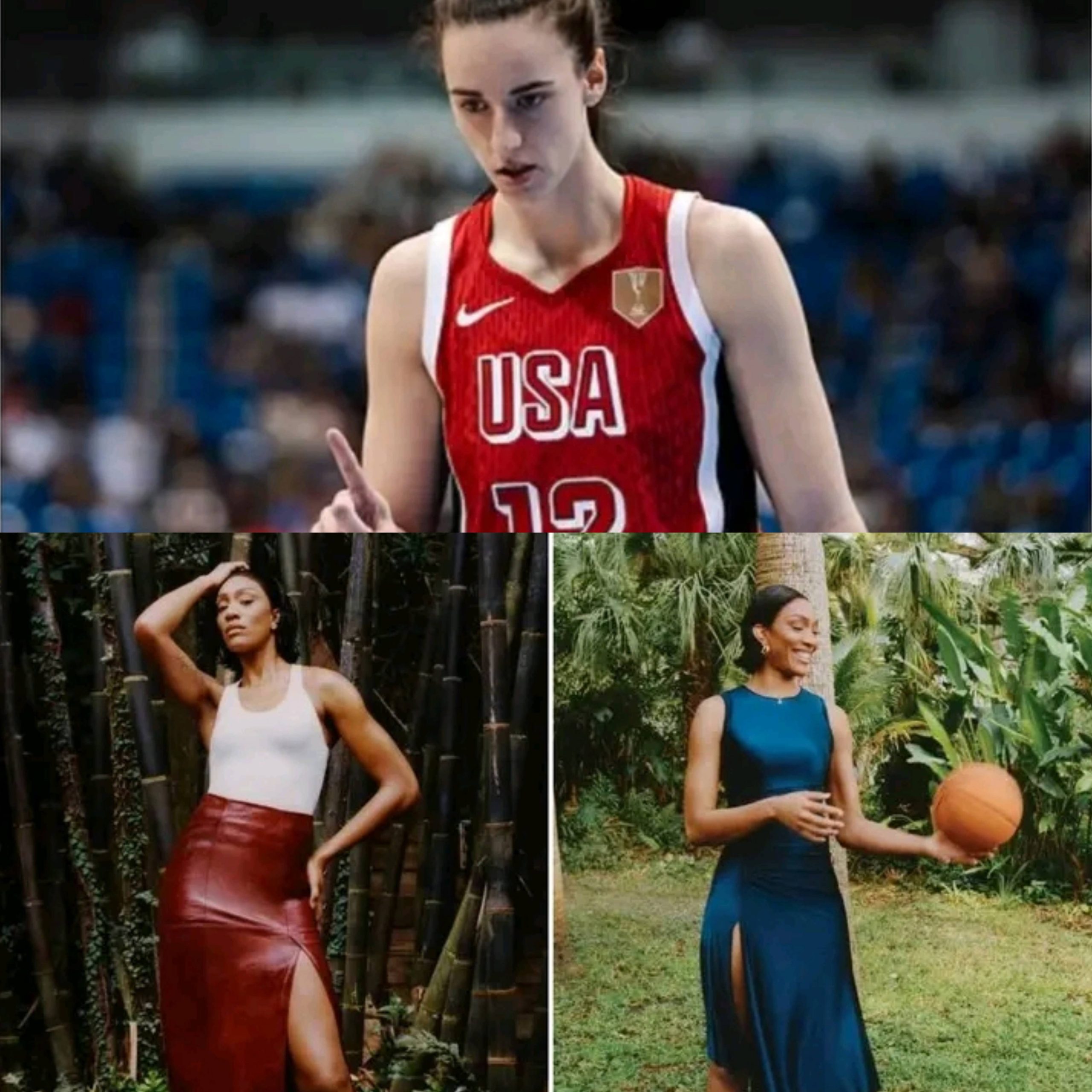
In a move that has ignited fierce debate across social media, Vogue magazine has once again turned its glamorous lens on Las Vegas Aces superstar A’ja Wilson for a high-profile photoshoot, while seemingly overlooking Indiana Fever phenom Caitlin Clark. The fashion bible’s latest feature celebrates Wilson’s dominance as a three-time WNBA MVP and champion, showcasing her in elegant, empowering poses that highlight her status as one of the league’s most accomplished talents.
Fans, particularly Clark supporters, erupted online, accusing Vogue of deliberate bias in an era when Clark’s explosive popularity has shattered viewership records and drawn millions of new eyes to women’s basketball. Clark, the 2024 WNBA Rookie of the Year known for her record-breaking three-point shooting and electric playmaking, has become a cultural phenomenon. Her games routinely outperform expectations, boosting league-wide attendance and merchandise sales. Yet, critics argue, major outlets like Vogue continue to prioritize established stars like Wilson over the rookie whose “Clark Effect” has transformed the WNBA’s mainstream appeal.
The backlash intensified with hashtags like #VogueSnub and #WhereIsCaitlin trending, as supporters pointed to similar patterns in other publications. Some fans viewed it as part of a broader narrative where Clark’s rapid rise is downplayed to protect legacies built over years. “Vogue had every chance to feature the player driving this league’s growth but chose the safe, familiar face instead,” one viral post read. Others defended the choice, emphasizing Wilson’s elite résumé, championships, and advocacy for Black women in sports.
This controversy underscores deeper tensions in the WNBA: the clash between generational talent, marketing strategies, and racial dynamics in how stars are elevated. While Wilson continues to redefine excellence on and off the court, Clark’s absence from such spotlights fuels accusations of gatekeeping. As the league grows, fans demand recognition that reflects both history and the surging new wave of interest.
Whether intentional or not, Vogue’s decision has amplified calls for balanced coverage. In a booming era for women’s hoops, sidelining the league’s biggest draw risks alienating the very audience fueling its success. The photoshoot may dazzle, but the uproar reveals a league—and its media partners—still navigating fame, fairness, and the future.