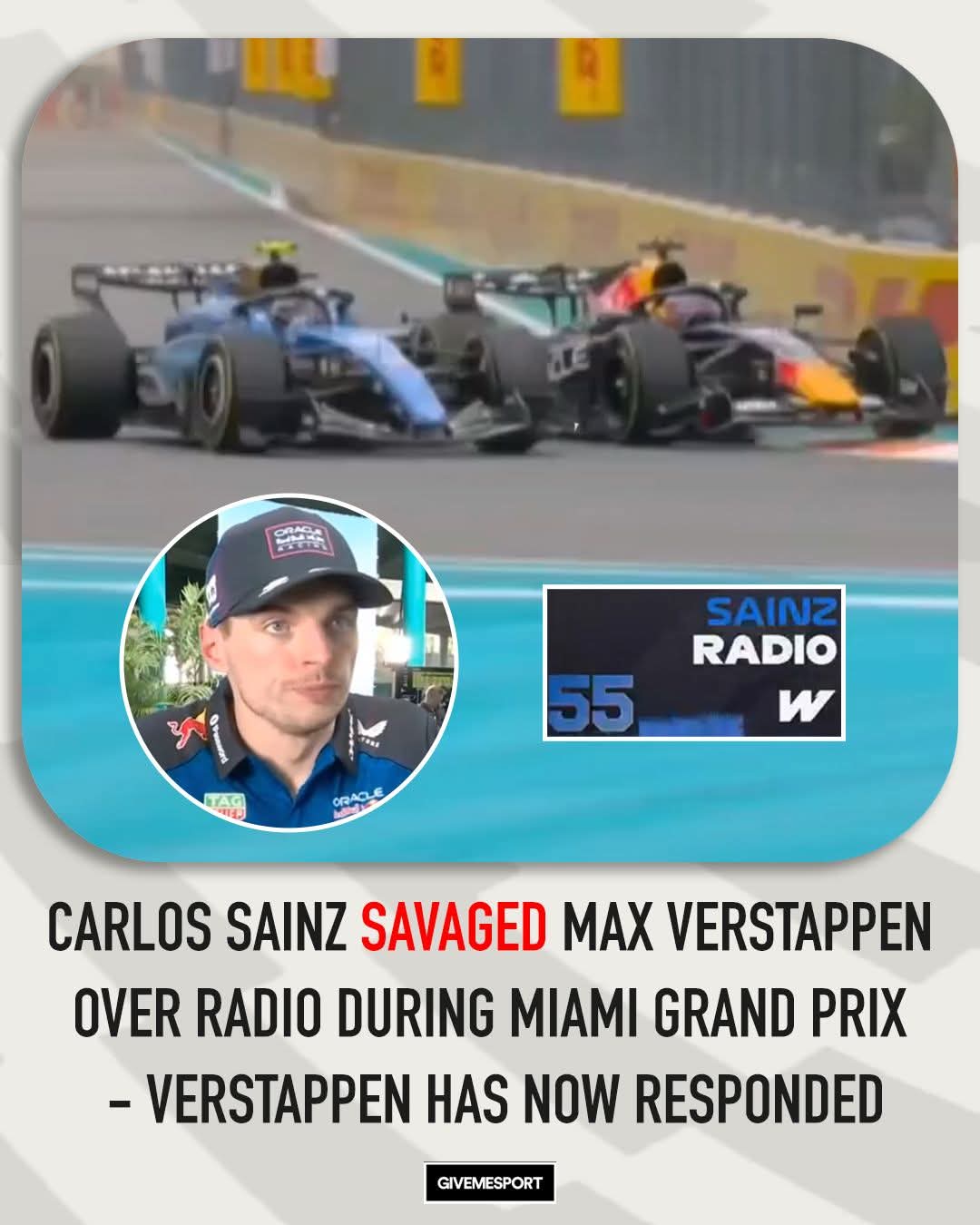
Tensions erupted at the Miami Grand Prix after a heated on-track battle between Max Verstappen and Carlos Sainz triggered one of the most talked-about moments of the race weekend. What began as a recovery drive for Verstappen quickly escalated into a flashpoint, highlighting the fine line between aggressive racing and outright risk in modern Formula 1.
Starting from the front row after an impressive qualifying performance, Verstappen’s race took an early hit when he spun at Turn 2 while battling for the lead. The mistake dropped the Red Bull driver deep into the midfield, forcing him into a series of aggressive overtakes as he attempted to salvage his race. It was during this recovery phase that he encountered Sainz, who was fighting his own battle in the congested pack.
The defining moment came at the final hairpin, where Verstappen launched a bold move on the Williams driver. While the Dutchman successfully completed the overtake, Sainz was forced to take evasive action to avoid a collision. The consequence was immediate—Sainz lost multiple positions, allowing rivals like Alex Albon and Pierre Gasly to slip through. Frustration spilled over instantly on team radio, with Sainz accusing Verstappen of overstepping the boundaries of fair racing.
After the race, Sainz doubled down on his criticism, describing the move as “too aggressive” and suggesting Verstappen took advantage of the midfield dynamic. His argument was clear: drivers outside the lead battle are often expected to yield, but that expectation should not be exploited recklessly. Verstappen, however, dismissed the complaints with a blunt response, describing the midfield as “a jungle” and implying that such incidents are part of the chaos drivers must navigate when fighting through traffic.
From an analytical standpoint, the clash underscores a deeper issue in Formula 1—how top drivers adapt when forced out of position. Verstappen’s instinct to attack is part of what makes him elite, but moments like this raise questions about risk management, especially in tightly packed midfield scenarios. With the championship already slipping away and competitors like Kimi Antonelli building momentum, Verstappen’s aggressive approach may become both his greatest weapon and his biggest liability as the season progresses.