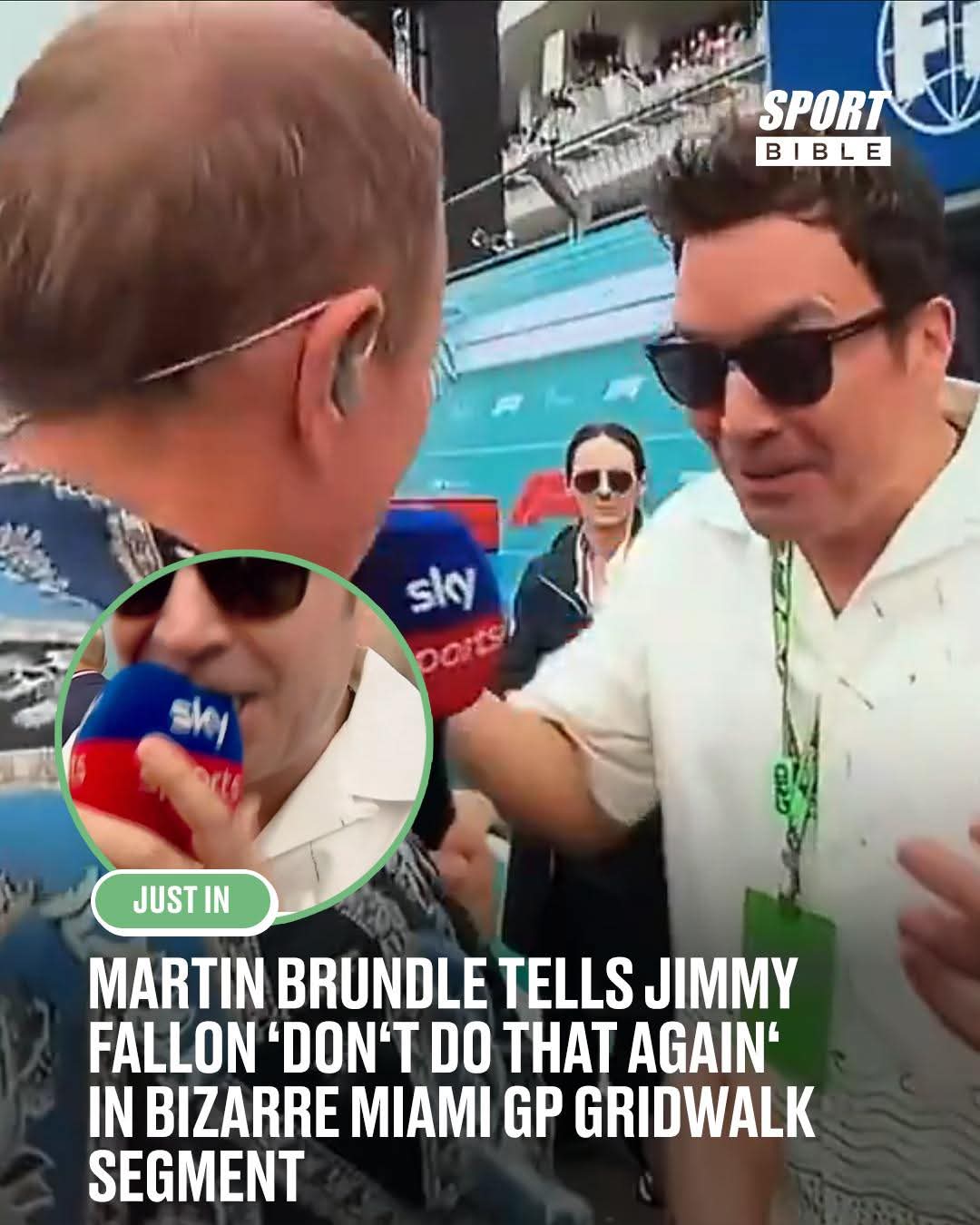
The Miami Grand Prix once again delivered more than just on-track drama, as a bizarre celebrity moment involving Martin Brundle and Jimmy Fallon stole headlines during the iconic pre-race gridwalk. Known for its star-studded atmosphere, the Miami event blended sport and entertainment in a way only Formula 1 can—but this time, things took an unexpectedly chaotic turn.
Held around the Hard Rock Stadium, the race weekend attracted global icons including Lionel Messi, DJ Khaled, and Serena Williams. The gridwalk, a staple of F1 broadcasts, gives fans a behind-the-scenes glimpse into the pre-race tension—but it also doubles as a platform for spontaneous celebrity interactions. This year, Fallon’s appearance added an unpredictable twist that quickly went viral.
As Brundle approached Fallon for a light-hearted exchange, the comedian appeared visibly excited, even starstruck. What followed, however, was far from routine. When prompted for a joke, Fallon playfully—but bizarrely—bit the foam top of Brundle’s microphone and pulled it off mid-interview. The unexpected move left Brundle momentarily stunned before he regained composure, shaking Fallon’s hand and delivering a dry, humorous warning: “Do not take my mic sock again!”
The moment instantly gained traction across social media, reinforcing how Formula 1’s growing cultural crossover is reshaping its global appeal. While traditionalists focus on racing performance, moments like this highlight how F1 has evolved into a broader entertainment spectacle—especially in markets like the United States, where celebrity integration plays a major role in audience engagement.
From an analytical perspective, this incident underscores Formula 1’s strategic expansion into mainstream entertainment. The Miami Grand Prix, in particular, has positioned itself as a hybrid event—part elite motorsport, part celebrity showcase. While such moments risk distracting from the sport’s competitive core, they undeniably amplify visibility and attract new audiences, which remains a key objective for F1’s commercial growth.
Looking ahead, expect more of these crossover moments as Formula 1 continues to push into entertainment-heavy markets. The challenge will be maintaining balance—ensuring that the sport’s integrity isn’t overshadowed by spectacle. As for Brundle, his gridwalk legacy remains intact, but this encounter with Fallon may go down as one of the most unusual—and memorable—moments in its history.