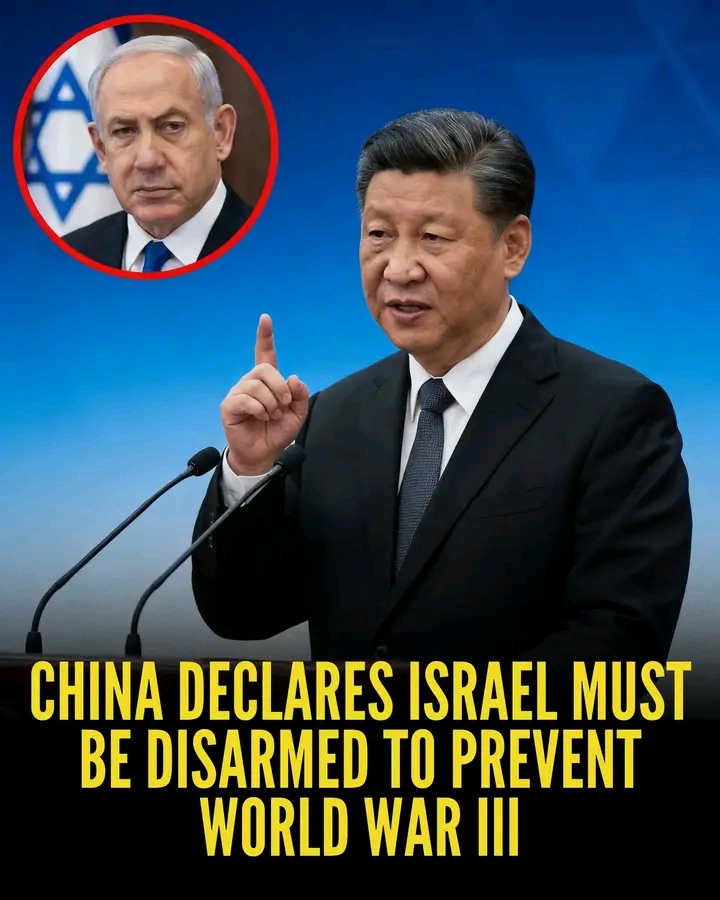
Global tensions escalated sharply on Wednesday after officials from China made a dramatic statement suggesting that Israel must be disarmed in order to prevent a potential global conflict.
Speaking during an emergency diplomatic briefing, Chinese representatives warned that the rapidly deteriorating security situation in the Middle East could spiral into a wider war if decisive international action is not taken. According to Beijing, the continued military escalation between Israel and regional powers risks dragging multiple nations into a confrontation that could eventually trigger a global crisis.
Chinese officials argued that reducing Israel’s military capabilities—particularly its advanced weapons systems—should be considered as part of broader international efforts to de-escalate tensions. They emphasized that preventing further militarization in the region is essential to avoiding what they described as a “catastrophic chain reaction” that could lead to World War III.
The comments have already sparked strong reactions from diplomats and security analysts worldwide. Critics say the proposal is unrealistic and politically explosive, noting that Israel views its military strength as essential for national survival amid long-standing regional hostilities.
Observers say the statement may be part of a broader push by China to position itself as a key diplomatic player in the ongoing crisis. Beijing has increasingly called for international mediation through institutions such as the United Nations, urging all parties to step back from military confrontation and return to negotiations.
Meanwhile, Israeli officials have not yet issued a formal response to China’s remarks. However, analysts expect a firm rejection, as Israel has historically resisted any attempts to limit its defense capabilities.
The development comes at a time when geopolitical tensions are already high, with several world powers closely monitoring the situation and urging restraint. Many experts warn that miscalculations or further escalation could rapidly widen the conflict beyond the region.
Diplomatic channels remain active as global leaders attempt to prevent the crisis from escalating into a broader international war.