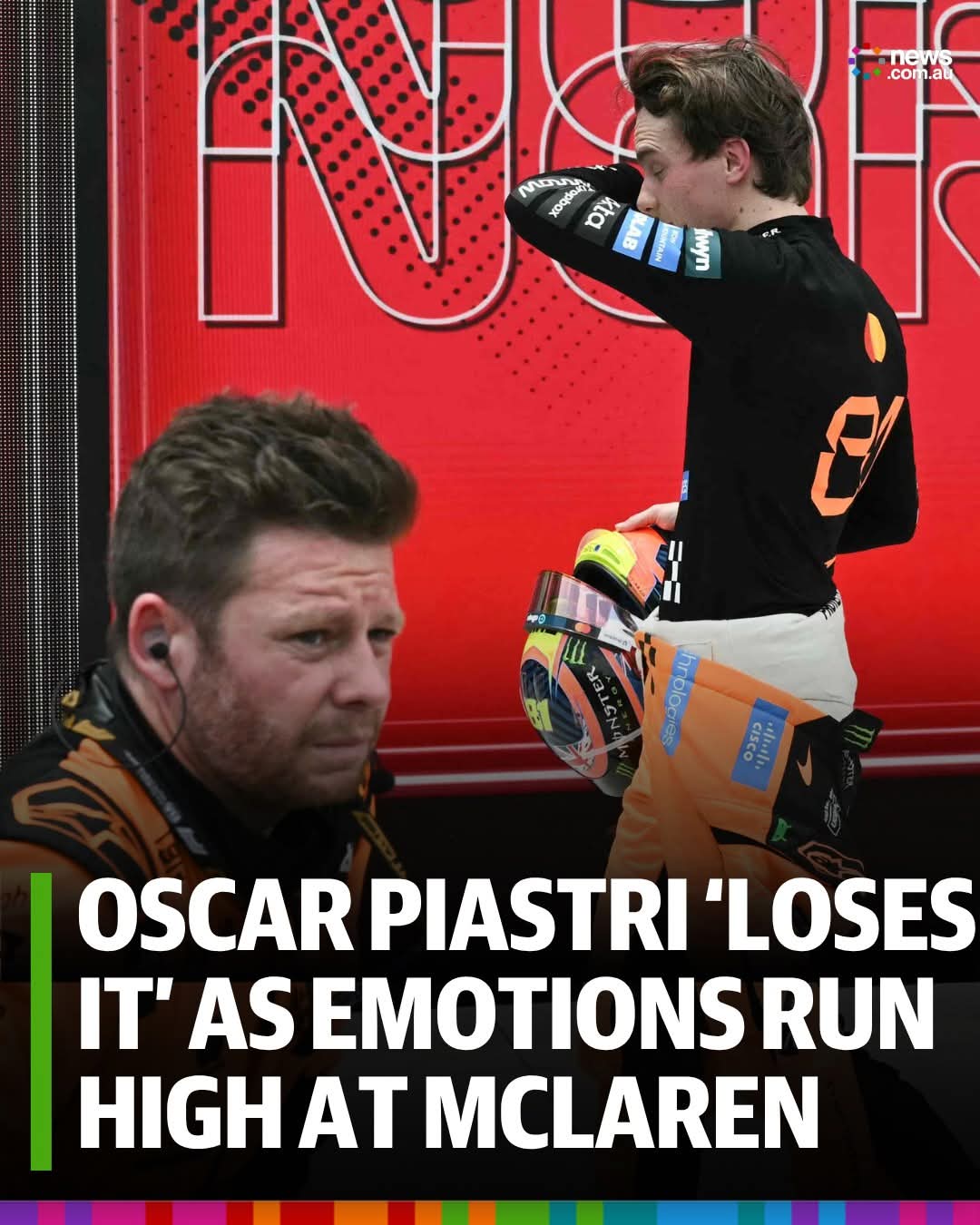
The 2026 Miami Grand Prix delivered one of the most dramatic turnarounds of the season, as Oscar Piastri and McLaren went from dominant sprint race winners to struggling contenders within hours. What initially looked like a statement weekend quickly unraveled, exposing inconsistency and raising serious questions about McLaren’s ability to maintain performance under pressure.
Fresh off a commanding sprint race performance, where Lando Norris led a McLaren 1-2 finish ahead of Piastri, expectations were sky-high heading into qualifying. However, the narrative flipped dramatically. Piastri narrowly avoided elimination in Q1, finishing P16, before a chaotic Q3 lap filled with errors dropped him to P7. Meanwhile, Norris could only manage P4, a clear sign that the team’s pace advantage had suddenly evaporated.
At the front, Andrea Kimi Antonelli delivered a stunning lap to secure pole position for Mercedes, edging out Max Verstappen and Charles Leclerc. The result highlighted just how quickly Formula 1’s competitive order can shift, with four different teams occupying the top four positions. For McLaren, the sudden drop-off was described by analysts as “bizarre,” especially after their earlier dominance.
Piastri himself admitted something felt “weird” with the car, pointing to unexpected energy deployment behavior that disrupted his lap. Data suggested he was exceptionally quick in the middle sector but lost crucial time elsewhere due to instability and overcorrections. This inconsistency hints at deeper setup or software issues—problems that can be difficult to resolve quickly, especially during a packed race weekend.
Despite qualifying struggles, McLaren’s sprint race dominance cannot be ignored. Norris secured his fourth sprint victory, while Piastri backed him up in second, marking another strong showing for the team’s upgrade package. However, the contrast between sprint pace and qualifying performance raises concerns about adaptability. If the car performs differently under changing track conditions, McLaren may struggle to consistently challenge for pole positions and race wins.
Looking ahead, weather forecasts predicting wet and unpredictable conditions for race day could either worsen McLaren’s issues or play into their hands. Rain often neutralizes performance gaps and rewards driver skill and strategic boldness. If Piastri and Norris can capitalize on chaos, a recovery is possible. But if underlying technical inconsistencies persist, Miami could mark a turning point where McLaren’s early promise gives way to a more uncertain fight in the 2026 championship battle.