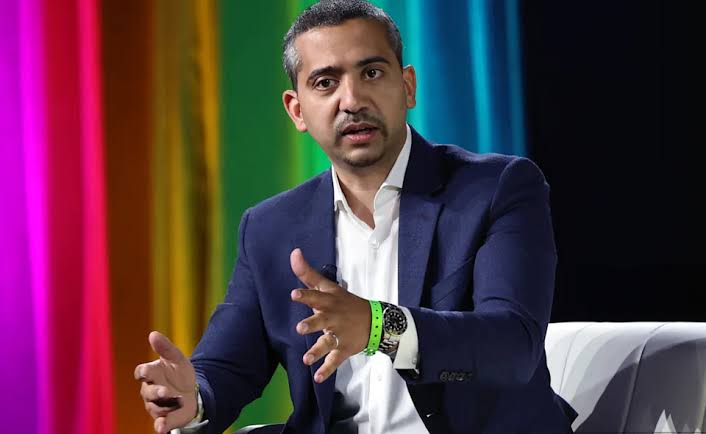

A fierce political storm has erupted online and across media circles after political commentator Mehdi Hasan made a controversial comparison between U.S. military actions in Iran and the conduct of Nazi forces during World War II.
The remarks came during a televised discussion about the ongoing conflict between the United States and Iran. Hasan sharply criticized the military strategy of the administration of Donald Trump, accusing it of reckless conduct that he claimed endangered civilians and violated moral standards.
During the broadcast, Hasan referenced reports that a U.S. strike targeting a naval facility in Iran resulted in heavy casualties, including children, after explosions reportedly hit an area near a girls’ school. Reacting to the incident, Hasan said the attack represented a “moral abomination” and argued that such actions undermined the stated goal of protecting the Iranian people.
In the most controversial moment of the discussion, Hasan declared that U.S. forces had bombed a submarine and allowed sailors to drown, adding that “even the Nazis didn’t do that during World War II,” claiming that German forces historically attempted to rescue sailors from the water.
Political Firestorm
Hasan’s comments quickly triggered widespread backlash from politicians, military supporters, and commentators who condemned the comparison as offensive and historically inappropriate. Critics argued that equating U.S. troops with Nazi forces trivializes the atrocities committed by Nazi Germany and unfairly attacks American service members.
Several commentators described the remarks as “extreme rhetoric,” accusing Hasan of crossing a line in political discourse during a time of war. Supporters of the U.S. military also pushed back on the claim that American forces intentionally target civilians, emphasizing that investigations into the strike are ongoing.
Supporters Defend the Criticism
Despite the backlash, some analysts and activists defended Hasan’s comments as a harsh but necessary critique of military conduct. They argue that raising moral questions about civilian casualties is essential during wartime and that strong language can draw attention to the human cost of conflict.
Hasan himself doubled down on his criticism during the broadcast, accusing the Trump administration of disregarding Iranian lives and warning that the escalating war could lead to even greater suffering for civilians in the region.
A Growing War of Words
The controversy highlights the increasingly heated debate surrounding the U.S. military campaign in Iran, which has already triggered global concern, rising geopolitical tensions, and deep political divisions within the United States.
As the conflict continues to unfold, the backlash over Hasan’s remarks illustrates how media commentary and political rhetoric are becoming almost as explosive as the events on the battlefield itself.