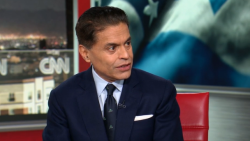
International affairs analyst Fareed Zakaria has warned that the appointment of Mojtaba Khamenei as Iran’s new Supreme Leader could significantly worsen the ongoing regional conflict, describing the development as “a very bad sign for the war.”
Mojtaba Khamenei was recently elevated to the position following the death of his father, Ali Khamenei, who was killed during the early stages of the escalating confrontation involving Iran, the United States, and Israel. His appointment marks one of the most dramatic political transitions in the Islamic Republic in decades and has already drawn sharp reactions from global analysts and political leaders.
Zakaria, speaking during a television interview, argued that the decision signals a consolidation of hard-line power in Tehran at a moment when diplomatic solutions are desperately needed. According to him, the leadership change suggests that Iran may double down on confrontation rather than pursue negotiations or de-escalation.
The veteran journalist also criticized the optics of the succession itself. He noted that the Islamic Revolution originally sought to eliminate hereditary rule, yet the transfer of power from father to son resembles the kind of dynastic politics the revolution once opposed. Zakaria suggested that this could deepen internal dissatisfaction within Iran while also hardening attitudes abroad.
Analysts say Mojtaba Khamenei has long been an influential figure behind the scenes, maintaining close ties with Iran’s powerful Islamic Revolutionary Guard Corps. His leadership is widely viewed as a victory for the country’s most conservative factions, which may favor a more aggressive military and political posture toward Western powers and regional rivals.
The leadership transition comes amid an already volatile conflict. Recent weeks have seen intensified airstrikes, missile attacks across the Gulf region, and growing fears that the fighting could expand into a broader Middle East war. Civilian casualties and military losses have mounted on multiple sides, raising concerns about the humanitarian and geopolitical consequences of the escalating confrontation.
Zakaria warned that the emergence of a new hardline leader during wartime could complicate efforts to end the fighting. In his view, it may reduce the chances of compromise and push both sides toward a more prolonged and dangerous phase of the conflict.
For now, the world is watching closely to see how Mojtaba Khamenei’s leadership will shape Iran’s strategy—and whether the new era in Tehran will bring escalation or an eventual path toward diplomacy.